CM Samrat Choudhary: 10,579 Poshan Vatikas Set Up in Bihar
Synopsis
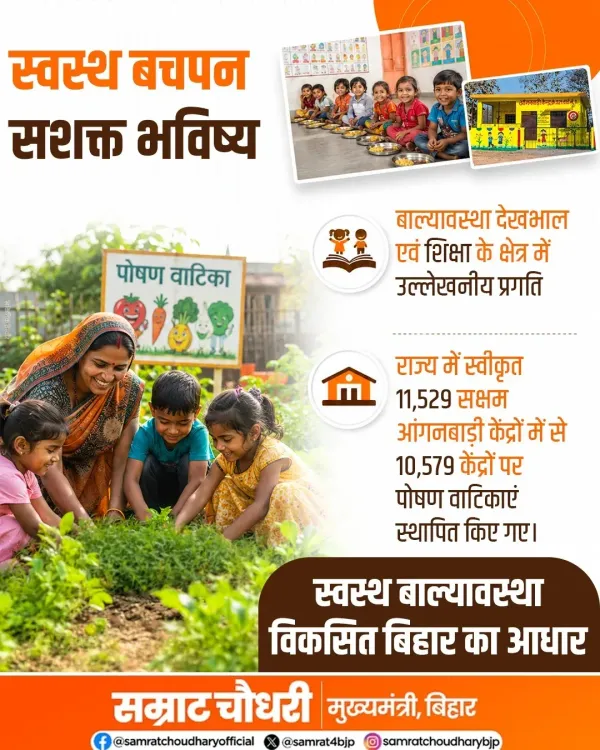
Bihar Chief Minister Samrat Choudhary announced that 10,579 of 11,529 sanctioned Saksham Anganwadi centres now have Poshan Vatikas — on-site nutrition gardens — marking a major milestone in the state's drive to reduce child malnutrition under the Poshan 2.0 framework.
Key Takeaways
10,579 Poshan Vatikas have been established at Saksham Anganwadi centres across Bihar, out of 11,529 sanctioned — roughly 91.7 per cent coverage.
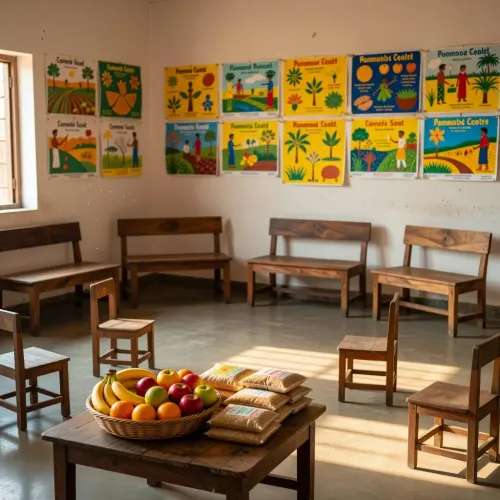
The initiative aims to supply fresh vegetables and fruits directly to children enrolled at Anganwadi centres, reducing dependence on external supply chains.
Poshan Vatikas are part of the central government's Saksham Anganwadi and Poshan 2.0 framework approved in 2021 .
The programme builds on the POSHAN Abhiyaan (2018) and the decades-old ICDS network to address stunting, wasting, and anaemia in children under six.
Approximately 950 sanctioned centres are yet to receive Poshan Vatikas, making completion the next measurable target for the Bihar government.
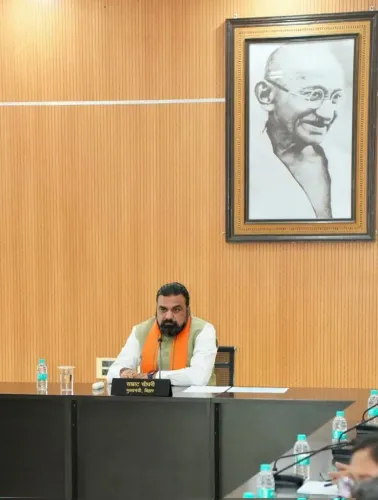
Bihar Chief Minister Samrat Choudhary announced on Friday, 12 June 2026 that 10,579 nutrition gardens — known as Poshan Vatikas — have been established across the state's approved Saksham Anganwadi centres, underscoring the government's commitment to tackling child malnutrition at the grassroots level.
Context
In his post, CM Choudhary stated: 'पोषित बाल्यावस्था, समृद्ध बिहार की आधारशिला' — 'A nourished childhood is the foundation of a prosperous Bihar.' He noted that out of 11,529 sanctioned Saksham Anganwadi centres in the state, 10,579 have already had Poshan Vatikas installed, representing roughly 91.7 per cent coverage. The Chief Minister described the initiative as a significant step toward providing nutritious food to children, reducing malnutrition, and ensuring their overall physical and mental development.
Policy Backdrop
The Poshan Vatika programme is embedded within the broader Saksham Anganwadi and Poshan 2.0 framework approved by the central government in 2021, which sought to modernise Anganwadi infrastructure and integrate on-site food production into supplementary feeding programmes. This builds on the POSHAN Abhiyaan (National Nutrition Mission) launched in 2018 to reduce stunting, wasting, and anaemia among children and women through convergence of services and community behaviour change. The lineage of these efforts stretches back to the Integrated Child Development Services (ICDS) scheme launched in 1975, which first established Anganwadi centres as delivery points for nutrition, health, and pre-school education for children under six.
Nutrition gardens at Anganwadi sites are designed to supply fresh vegetables and fruits directly for supplementary feeding, addressing seasonal gaps in micronutrient intake. Multiple states across India have adopted the model as part of the national focus on the first 1,000 days of a child's life — the critical window for preventing irreversible developmental deficits.
Stakeholders and Impact
The primary beneficiaries are children under the age of six enrolled at Anganwadi centres across Bihar, along with pregnant and lactating women who receive supplementary nutrition through the same network. Anganwadi workers are central to maintaining the gardens and ensuring produce reaches children in the daily meal cycle. Bihar, which has historically recorded high rates of child undernutrition in successive National Family Health Survey rounds, stands to benefit significantly if the remaining 950 sanctioned centres are brought under the Poshan Vatika scheme in the near term.
The initiative also carries implications for rural livelihoods, as Anganwadi workers and local communities are involved in cultivating and managing the gardens, creating a low-cost, sustainable supply chain for fresh produce at the village level.
What's Next
Attention will now turn to the completion of the remaining 950 Saksham Anganwadi centres yet to receive Poshan Vatikas, with the state government's budget and health department reports expected to provide timelines. Updated malnutrition indicators for Bihar — particularly stunting and wasting figures tracked through NFHS surveys — will serve as the key measure of whether the programme is translating into improved nutritional outcomes on the ground. As the state presses forward with Poshan 2.0 implementation, the pace of closing that remaining gap will be closely watched by policymakers and child welfare advocates alike.
Point of View
The BJP-led government signals administrative momentum ahead of potential NFHS follow-up surveys that will scrutinise actual malnutrition outcomes. The framing of 'a nourished childhood as the foundation of a prosperous Bihar' deliberately connects welfare delivery to the broader 'Viksit Bharat' development narrative. Whether the Poshan Vatika model translates into measurable reductions in stunting and wasting will ultimately determine the political and policy dividend of this push.
NationPress
29 Jul 2026
Frequently Asked Questions
What is a Poshan Vatika?
A Poshan Vatika is a nutrition garden set up at an Anganwadi centre where vegetables and fruits are grown on-site to provide fresh, supplementary food to enrolled children and pregnant or lactating women, reducing dependence on external procurement.
How many Poshan Vatikas have been set up in Bihar?
As of June 2026, 10,579 Poshan Vatikas have been established across Bihar's Saksham Anganwadi centres, out of a total of 11,529 sanctioned centres.
What is the Saksham Anganwadi scheme?
Saksham Anganwadi is a central government initiative under the Poshan 2.0 framework, approved in 2021, to upgrade Anganwadi infrastructure with better facilities, digital tools, and integrated nutrition services including on-site gardens.
What is POSHAN Abhiyaan and how does it relate to Bihar's programme?
POSHAN Abhiyaan, launched in 2018 as India's National Nutrition Mission, aims to reduce stunting, wasting, and anaemia through convergence of government services. Bihar's Poshan Vatika rollout is a state-level implementation of goals set under this national mission.
What is the malnutrition situation among children in Bihar?
Bihar has historically recorded high rates of child undernutrition, including stunting and wasting, as measured by successive National Family Health Survey rounds. The Poshan Vatika initiative is part of the state's effort to improve these indicators over time.