Bihar CM releases 'Suposhit Bachpan ki Rasoi' booklet for Anganwadis
Synopsis
Bihar's Chief Minister released the 'Suposhit Bachpan ki Rasoi' booklet on September 29, 2026, directing all Anganwadi centres to regularly serve nutritious food, fruits and milk to children — a state-level push to standardise meal quality under the national ICDS and POSHAN Abhiyaan framework.
Key Takeaways
Bihar's Chief Minister released the 'Suposhit Bachpan ki Rasoi' ('The Kitchen of a Nourished Childhood') booklet on September 29, 2026 .
The booklet is aimed at standardising nutritious meals, fruits and milk for children at all Anganwadi centres across Bihar.
Anganwadi centres function as the frontline delivery arm of India's Integrated Child Development Services (ICDS) scheme, launched in 1975 .
The initiative aligns with the national POSHAN Abhiyaan (launched 2018 ) which targets reduction of stunting, wasting and underweight prevalence in children.
The focus on fruits and milk alongside cooked meals signals a push toward micronutrient adequacy, not just calorie delivery.
Rollout effectiveness will depend on training and supply-chain support for Anganwadi workers — the primary implementers.
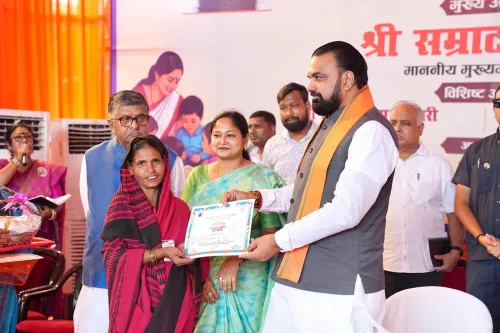
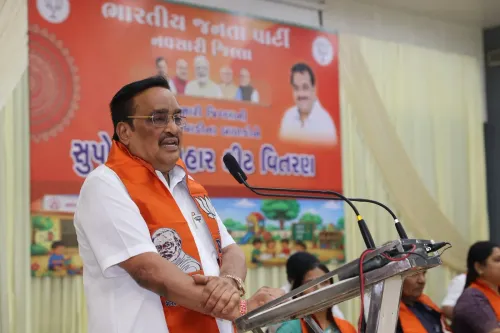
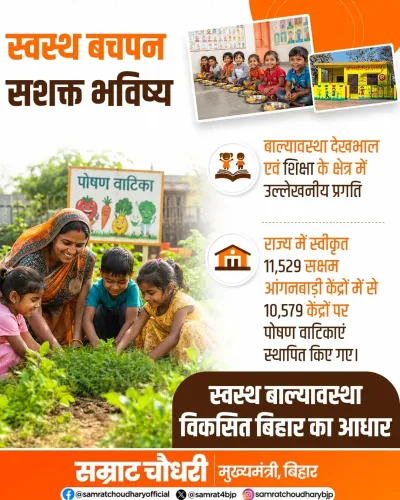
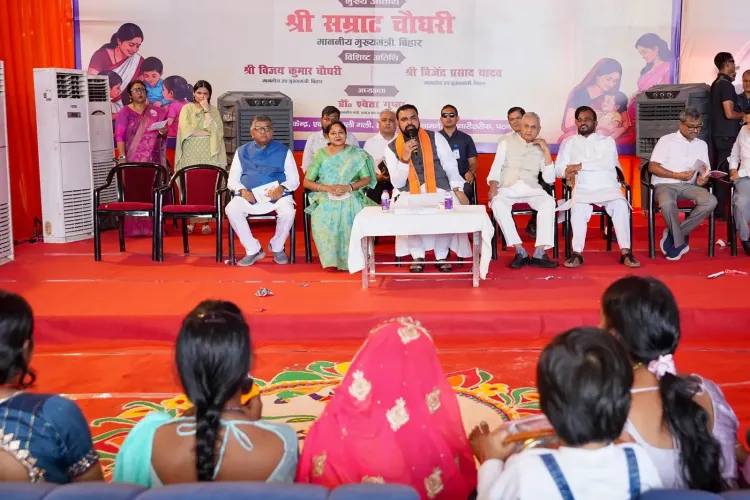
A booklet designed to put nutrition science directly into the hands of frontline workers landed at the centre of Bihar's child welfare push on Tuesday, September 29, 2026, as the Chief Minister's Office of Bihar announced that the Chief Minister released 'सुपोषित बचपन की रसोई' — 'The Kitchen of a Nourished Childhood' — a guide aimed at standardising nutritious meals, fruits and milk for children across every Anganwadi centre in the state.
'Suposhit Bachpan ki Rasoi' — what the booklet sets out to do
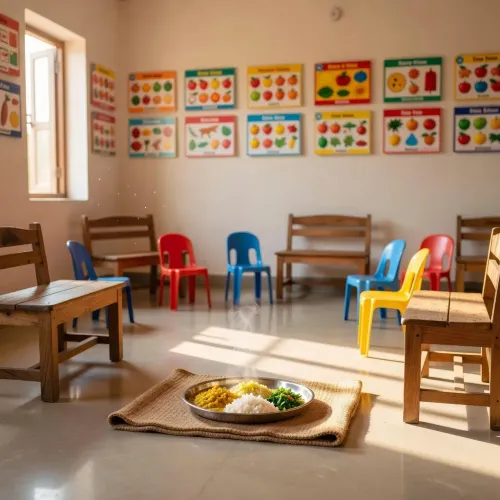
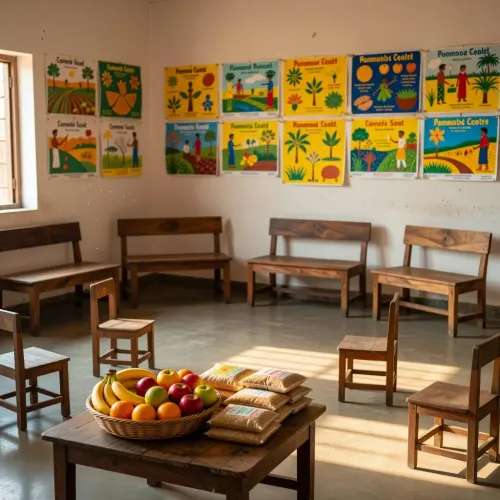
The Chief Minister's Office stated that 'special attention is being given to regularly providing nutritious food, fruits and milk to children at all Anganwadi centres.' The booklet formalises that intent into practical guidance for workers on the ground — turning a policy priority into a kitchen-ready reference.
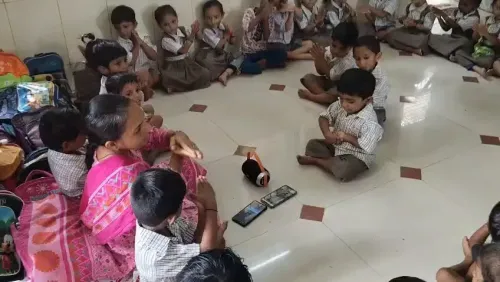
Anganwadi centres are the frontline delivery points of India's Integrated Child Development Services (ICDS) scheme, launched nationally in 1975, which remains the country's single largest programme for supplementary nutrition, early education and basic health services for young children and mothers. Bihar operates thousands of such centres, making the quality and consistency of meals served there a direct lever on the state's nutritional outcomes.
Bihar's fight against child malnutrition — the longer arc
Bihar has grappled with persistently high child malnutrition rates, and the state has progressively worked to strengthen supplementary nutrition delivery within the national ICDS framework. The booklet release fits into that ongoing effort to close the gap between policy intent and plate-level reality.
At the national level, the POSHAN Abhiyaan, launched in 2018, set targets to reduce stunting, wasting and underweight prevalence among children under five — a mission that Bihar, as one of India's most populous states, is critical to meeting. Standardising meals through tools like this booklet is precisely the kind of state-level execution that national nutrition targets depend on.
The focus on fruits and milk alongside cooked meals signals an effort to move beyond calorie sufficiency toward micronutrient adequacy — a distinction nutritionists have long flagged as the real frontier in combating 'hidden hunger' among young children.
Anganwadi workers at the centre of rollout
The practical success of the booklet will hinge on the more than one lakh Anganwadi workers and helpers who staff Bihar's centres daily. Whether the release is accompanied by structured training, monitoring protocols or supply-chain improvements for fresh produce and milk will determine whether 'रसोई' — the kitchen — actually changes what children eat. Those details are the ones to watch in the weeks ahead.
For now, the Chief Minister's personal role in the launch signals political ownership of the nutrition agenda — a statement that child health is not a background administrative matter but a front-of-stage commitment.
A booklet does not feed a child. But a booklet in the right hands, backed by the right systems, can change what every meal at every centre looks like — and that is precisely what Bihar is betting on.
Point of View
Centre-level tool. Bihar's high child malnutrition burden makes this more than ceremonial; the state's performance is statistically significant to India's overall POSHAN scoreboard. The Chief Minister's direct involvement in the release elevates the initiative from a departmental routine to a political priority, which typically accelerates compliance down the administrative chain. The real test, however, is whether the booklet is paired with the supply-chain investment — consistent fruit and milk procurement — needed to make its guidance meaningful in practice.
NationPress
29 Sept 2026
Frequently Asked Questions
What is the 'Suposhit Bachpan ki Rasoi' booklet released in Bihar?
'Suposhit Bachpan ki Rasoi' translates to 'The Kitchen of a Nourished Childhood' — a booklet released by Bihar's Chief Minister on September 29, 2026, to guide Anganwadi centre workers on providing regular nutritious food, fruits and milk to children.
What are Anganwadi centres and what role do they play in child nutrition?
Anganwadi centres are government-run frontline units under India's Integrated Child Development Services (ICDS) scheme, launched in 1975. They deliver supplementary nutrition, basic health services and pre-school education to young children and mothers across the country.
How does this Bihar initiative connect to the national POSHAN Abhiyaan?
POSHAN Abhiyaan, launched in 2018, is India's national mission to reduce child stunting, wasting and underweight prevalence. Bihar's booklet standardises Anganwadi meal quality at the state level, directly supporting the implementation targets set by POSHAN Abhiyaan.
Why is child malnutrition in Bihar a significant national concern?
Bihar is one of India's most populous states and has historically recorded high rates of child malnutrition. Improvements in Bihar's nutritional outcomes have an outsized effect on national averages, making state-level initiatives there critical to India's overall nutrition goals.
What should Bihar's Anganwadi workers expect after the booklet launch?
The booklet provides practical guidance on preparing and serving nutritious meals, fruits and milk at centres. Effective rollout would require accompanying training sessions and reliable supply chains for fresh produce and dairy — details that remain to be confirmed by the state government.