CM Dhami Orders Action Plan on Human-Wildlife Conflict
Synopsis
Chief Minister Pushkar Singh Dhami chaired Uttarakhand's 23rd State Wildlife Board and Tiger Steering Committee meetings on 24 July 2026, directing officials to curb human-wildlife conflict using AI and QRTs, promote wildlife tourism, and forward key infrastructure proposals to the National Board for Wildlife.
Key Takeaways
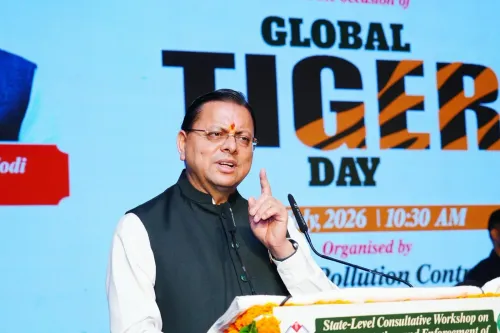
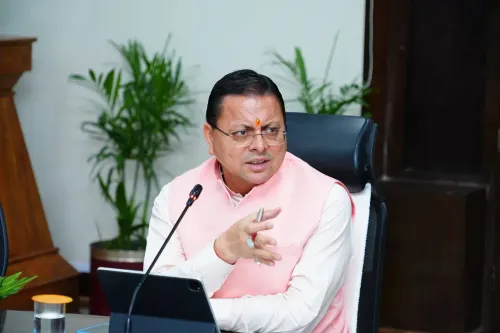
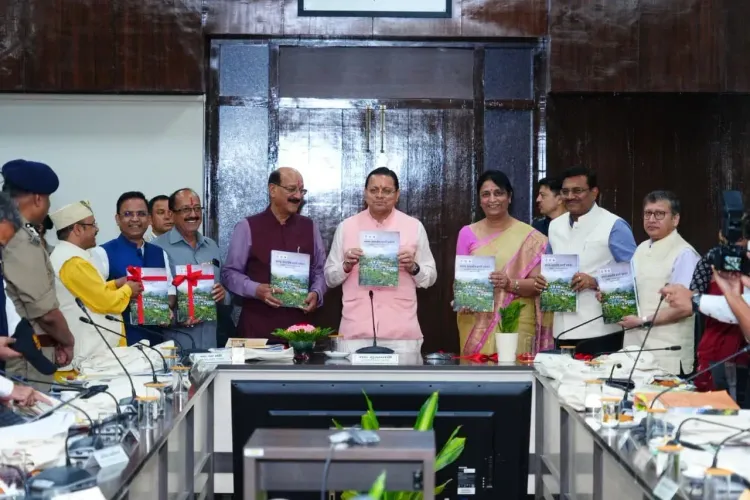
CM Pushkar Singh Dhami chaired the 23rd Uttarakhand State Wildlife Board meeting and the State-Level Tiger Steering Committee meeting on 24 July 2026 at Vishwakarma Bhawan, Dehradun.
Officials were directed to prepare a concrete action plan to minimise human-wildlife conflict using modern technology including AI-based surveillance , camera traps, drones, and Quick Response Teams (QRTs) .
Proposals for a gas pipeline in Rajaji National Park , road works, ITBP infrastructure, and optical fibre cable in other parks were cleared for forwarding to the National Board for Wildlife's Standing Committee .
A Tiger Protection Force is to be constituted for Corbett and Rajaji tiger reserves, and eco-friendly safari vehicles are to be promoted.
QRT teams will be deployed specifically to prevent human-wildlife conflict during the Haridwar Kumbh .
Timely compensation for families of wildlife attack victims and state-level awards for citizens who show courage during conflict situations were ordered.
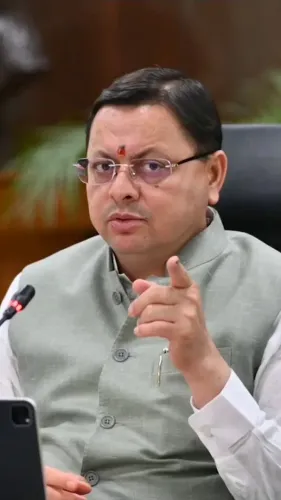
The Chief Minister's Office of Uttarakhand announced on Friday, 24 July 2026 that Chief Minister Pushkar Singh Dhami chaired the 23rd meeting of the Uttarakhand State Wildlife Board and the State-Level Tiger Steering Committee at Vishwakarma Bhawan, Secretariat, Dehradun, directing officials to prepare a concrete action plan to curb human-wildlife conflict and promote wildlife-based tourism across the state.
Context
Chairing the board meeting, CM Dhami said, 'vikas aur paryavaran sanrakshan ke beech santulan' ('a balance between development and environmental protection') must guide every project in the state. He directed that wildlife conservation remains among the state government's highest priorities and that modern technology, combined with greater public participation, must be deployed more effectively to reduce human-wildlife conflict. The CM also ordered that ordinary citizens who display courage in saving others during wildlife encounters be recognised and rewarded at the state level.
Dhami instructed that compensation for families of persons killed or injured in wildlife attacks be disbursed within fixed timelines and as per established norms. He further directed that all approved projects strictly comply with wildlife conservation conditions attached to their clearances.
Policy Backdrop
The Uttarakhand State Wildlife Board functions as a statutory advisory body under the Wildlife (Protection) Act, 1972, reviewing development proposals that affect protected areas and wildlife corridors. Proposals cleared at the state level must subsequently be forwarded to the National Board for Wildlife's Standing Committee for final sanction before work can begin inside or adjacent to protected zones.
At the meeting, proposals for a gas pipeline in the Rajaji National Park area, as well as road works, ITBP infrastructure, and optical fibre cable projects in other national parks, were approved for forwarding to the National Board for Wildlife's standing committee, subject to stipulated conditions. Project Tiger, launched in 1973, and the National Tiger Conservation Authority, constituted in 2005, together form the national framework within which Uttarakhand's tiger reserves — Corbett Tiger Reserve and Rajaji Tiger Reserve — operate.
Stakeholders and Impact
At the subsequent Tiger Steering Committee meeting, CM Dhami described Uttarakhand as the country's leading state in terms of biodiversity and wildlife wealth. He called for strengthening wildlife corridors, expanding camera trap networks, scaling up Artificial Intelligence (AI)-based surveillance, and advancing scientific management of natural habitats, water sources, and grazing lands.
The meeting discussed formation of a Tiger Protection Force for Corbett and Rajaji tiger reserves, promotion of eco-friendly safari vehicles, special incentives for field staff working in protected areas, and more effective investigation of wildlife crimes. Quick Response Teams (QRTs) — already equipped with camera traps, drones, snake rescue kits, and solar lights — are to be specifically deployed to prevent human-wildlife conflict during the Haridwar Kumbh.
Local communities living on forest fringes, tourism operators, and forest department field staff are the primary stakeholders. Wildlife-based tourism is being positioned as a livelihood complement to strict conservation, linking economic benefit with habitat protection.
What's Next
The forwarded proposals for Rajaji National Park and other reserves now await scrutiny by the National Board for Wildlife's Standing Committee, whose clearance is mandatory before ground-level work can proceed. Simultaneously, the state will watch for the rollout of AI-based monitoring systems and the deployment of QRT teams ahead of the Haridwar Kumbh. Officials present included Forest Minister Subodh Uniyal, MLA Diwan Singh Bisht, Chief Secretary Anand Bardhan, Principal Secretary R.K. Sudhanshu, Principal Chief Conservator of Forests (HoFF) Kapil Lal, ADG A.P. Anshuman, Secretary C. Ravishankara, and Principal Chief Conservator of Forests Neena Grewal, among other senior forest department officers.
Point of View
CM Dhami is attempting to build political capital in forest-fringe communities where human-wildlife conflict has historically eroded trust in the forest department. The decision to forward the Rajaji gas pipeline and ITBP road proposals to the National Board for Wildlife signals that the state views strategic infrastructure as non-negotiable, even inside sensitive corridors. The real test will be whether the National Board's standing committee imposes conditions that substantively alter project designs, or whether clearances become a formality.
NationPress
23 Oct 2026
Frequently Asked Questions
What decisions were taken at the Uttarakhand State Wildlife Board meeting on 24 July 2026?
CM Pushkar Singh Dhami directed officials to prepare an action plan on human-wildlife conflict, promote wildlife-based tourism, ensure timely compensation for conflict victims, and forward infrastructure proposals — including a gas pipeline in Rajaji National Park and road and optical fibre projects in other parks — to the National Board for Wildlife's Standing Committee.
What is the Uttarakhand State Wildlife Board?
The Uttarakhand State Wildlife Board is a statutory advisory body constituted under the Wildlife (Protection) Act, 1972. It reviews development proposals affecting protected areas and wildlife corridors within the state, and its recommendations are forwarded to the National Board for Wildlife for final clearance.
How is Uttarakhand planning to reduce human-wildlife conflict?
The state plans to deploy Quick Response Teams (QRTs) equipped with camera traps, drones, snake rescue kits, and solar lights. AI-based surveillance and scientific habitat management are also being expanded, and QRT teams will be specifically deployed during the Haridwar Kumbh to prevent conflict incidents.
What is the Tiger Protection Force for Corbett and Rajaji reserves?
The Tiger Steering Committee meeting discussed constituting a dedicated Tiger Protection Force for Corbett Tiger Reserve and Rajaji Tiger Reserve to strengthen anti-poaching and habitat protection operations in these two key tiger reserves in Uttarakhand.
Will families of wildlife attack victims receive compensation in Uttarakhand?
Yes. CM Dhami directed that compensation for persons killed or injured in wildlife attacks, and their families, be disbursed within fixed timelines and strictly as per established government norms.