CM Dhami Honours Women Achievers at Teelu Rauteli Jayanti
Synopsis
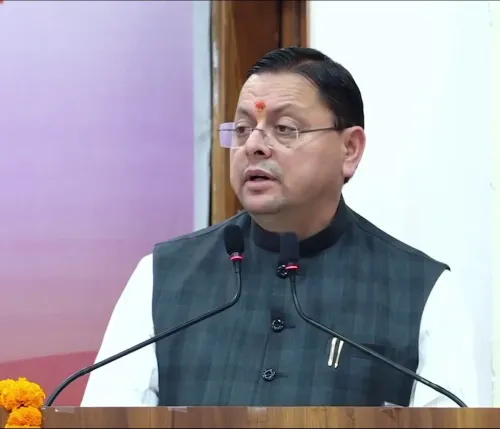
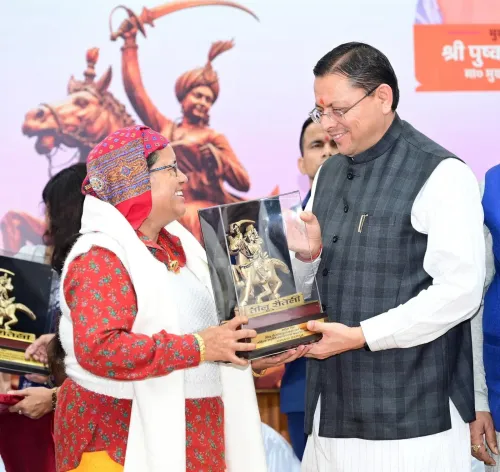
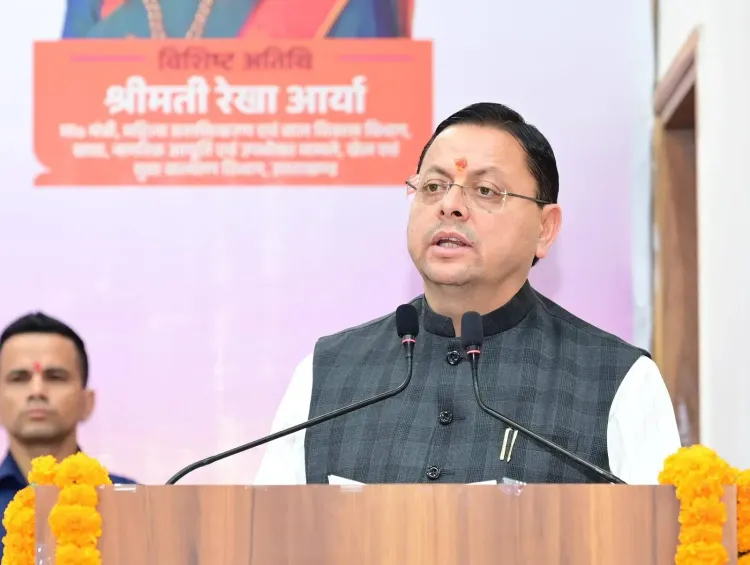
Uttarakhand CM Pushkar Singh Dhami conferred the Veerangana Teelu Rauteli Puraskar on distinguished women and the Anganwadi Karyakartri Puraskar on 35 frontline workers at Mukhyasevak Sadan on 8 August 2026, marking the folk heroine's Jayanti.
Key Takeaways
The ceremony was held at Mukhyasevak Sadan on 8 August 2026 , the Jayanti of Veerangana Teelu Rauteli.
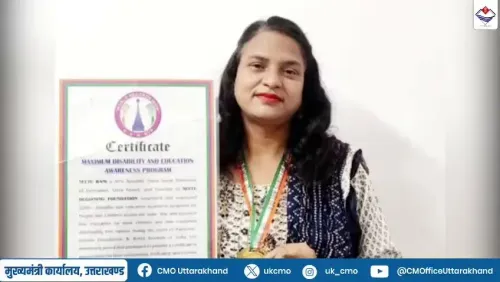
The Veerangana Teelu Rauteli Puraskar was awarded to women who have made outstanding contributions across various fields in Uttarakhand.
35 Anganwadi workers received the Anganwadi Karyakartri Puraskar , recognising frontline welfare service.
Anganwadi workers operate under the central Integrated Child Development Services (ICDS) programme, providing nutrition, health, and pre-school services at the grassroots.
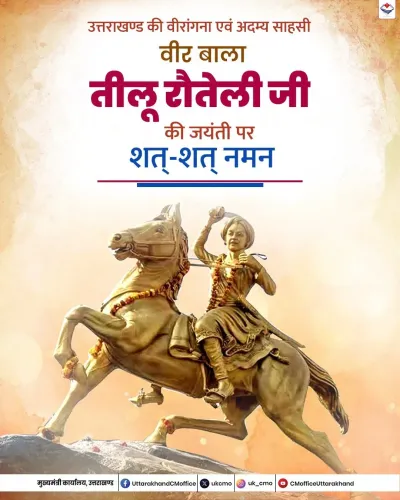
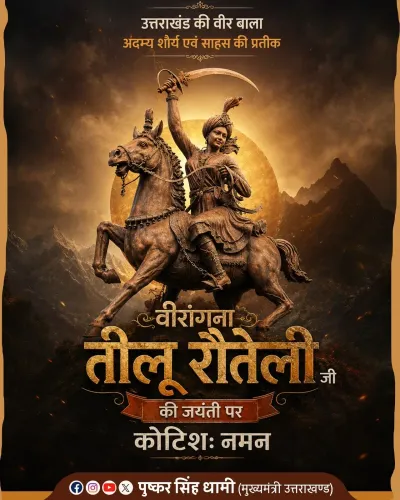
Teelu Rauteli is an 18th-century Garhwal folk heroine celebrated for resistance against invaders and widely invoked in Uttarakhand's women's empowerment discourse.
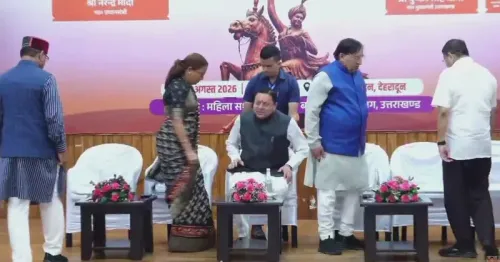
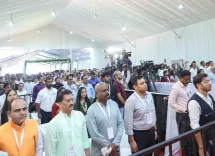
A warrior queen's birth anniversary became the stage for celebrating living heroes. On Saturday, 8 August 2026, Uttarakhand Chief Minister Pushkar Singh Dhami presided over a felicitation ceremony at Mukhyasevak Sadan, honouring women from across the state who have distinguished themselves in diverse fields — and extending that recognition to the frontline workers who quietly hold the welfare system together.
The occasion was the Jayanti — birth anniversary — of Veerangana Teelu Rauteli, the 18th-century folk heroine from Uttarakhand's Garhwal region, celebrated in local lore for her fierce resistance against invaders. The state's highest women's honour, the Veerangana Teelu Rauteli Puraskar, was conferred on women who have made outstanding contributions to society — carrying forward, in spirit, the legacy the award is named for.
Anganwadi Workers Step into the Spotlight
Alongside the state honour, 35 Anganwadi workers received the Anganwadi Karyakartri Puraskar, a recognition that placed frontline welfare staff at the centre of a state function usually reserved for public luminaries. Anganwadi workers are the backbone of the central government's Integrated Child Development Services (ICDS) programme, delivering nutrition, health checks, and pre-school education to children and mothers at the grassroots level — often in remote hill villages where no other welfare infrastructure reaches.
Honouring them alongside broader women achievers signals an intent to treat service, not just prominence, as a measure of contribution.
Teelu Rauteli — the Name Behind the Award
Veerangana Teelu Rauteli occupies a singular place in Uttarakhand's cultural memory. Celebrated as a symbol of courage and self-sacrifice, she has long been invoked in the region's women's empowerment discourse. Uttarakhand governments have periodically used her Jayanti to anchor state-level functions that combine cultural remembrance with the recognition of women contributors — making the ceremony both a tribute to the past and a statement about the present.
The annual repetition of this ceremony, and the widening circle of awardees it reaches, will be the measure of how seriously the state treats the intent behind the gesture.
Point of View
The Dhami government is weaving cultural identity into its women's empowerment messaging — a pattern common across BJP-governed states that seek to ground modern welfare optics in local historical symbolism. The inclusion of 35 Anganwadi workers alongside broader achievers is notable: it elevates a category of worker that is chronically underpaid and under-recognised, even if the gesture stops short of addressing structural demands like regularisation of their service. Whether the award scales in reach and prize value over successive years will determine whether this remains a ceremonial ritual or evolves into a substantive recognition framework.
NationPress
8 Aug 2026
Frequently Asked Questions
Who was Veerangana Teelu Rauteli?
Veerangana Teelu Rauteli was an 18th-century folk heroine from Uttarakhand's Garhwal region, celebrated in local tradition for her resistance against invaders. She is widely regarded as a symbol of courage and women's empowerment in the state.
What is the Veerangana Teelu Rauteli Puraskar?
The Veerangana Teelu Rauteli Puraskar is Uttarakhand's state-level honour for women who have made outstanding contributions across diverse fields. It is conferred annually on the occasion of Teelu Rauteli's Jayanti.
Why were Anganwadi workers given an award at the Teelu Rauteli Jayanti ceremony?
The Anganwadi Karyakartri Puraskar was presented to 35 Anganwadi workers to recognise their frontline service under the Integrated Child Development Services programme. Their inclusion alongside broader women achievers reflects the state's intent to honour grassroots welfare service.
What do Anganwadi workers do?
Anganwadi workers are frontline staff under the central government's Integrated Child Development Services programme. They deliver nutrition support, health check-ups, and pre-school education to children and mothers, particularly in rural and remote areas.
Where was the Teelu Rauteli Jayanti ceremony held in 2026?
The ceremony was held at Mukhyasevak Sadan, presided over by Uttarakhand Chief Minister Pushkar Singh Dhami on 8 August 2026.