CM Dhami: Jal Jeevan Mission reaches 14.20 lakh Uttarakhand homes
Synopsis
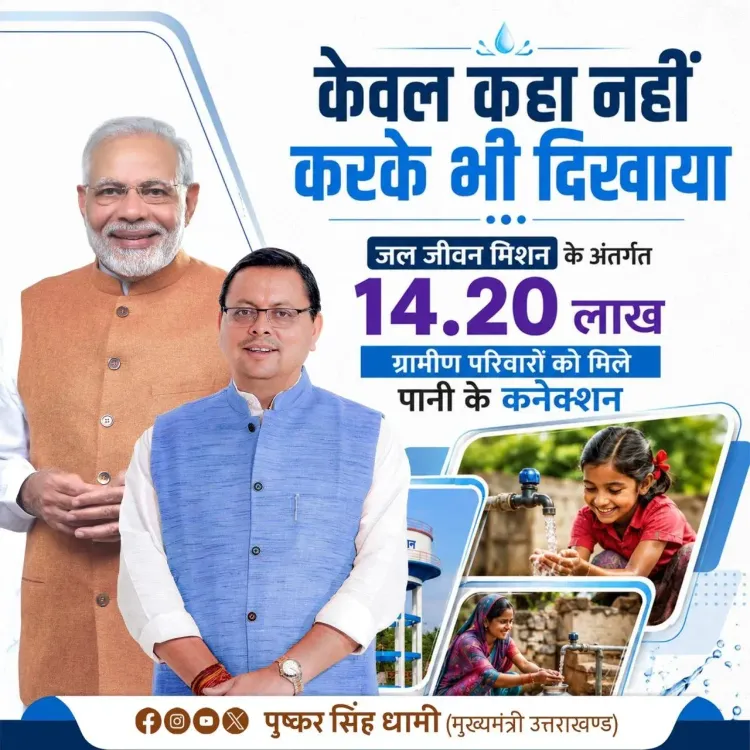
Uttarakhand CM Pushkar Singh Dhami has said the Jal Jeevan Mission is ensuring clean tap water for 14.20 lakh rural families in the state, crediting the BJP's 'double engine' government for accelerating last-mile delivery of the central scheme.
Key Takeaways
14.20 lakh rural families in Uttarakhand are being covered under the Jal Jeevan Mission for clean tap water access, according to CM Dhami.
The mission was launched by the Government of India on 15 August 2019 to provide functional household tap connections to all rural households.
CM Pushkar Singh Dhami credited the 'double engine' government — aligned BJP administrations at the Centre and state — for faster scheme delivery.
The post specifically highlighted benefits for rural women , citing savings in labour and time previously spent fetching water.
Uttarakhand's hilly terrain makes water access a historically acute challenge, making piped connectivity especially significant for remote communities.
Sustained operation and maintenance funding for new connections remains a key policy question for the state going forward.
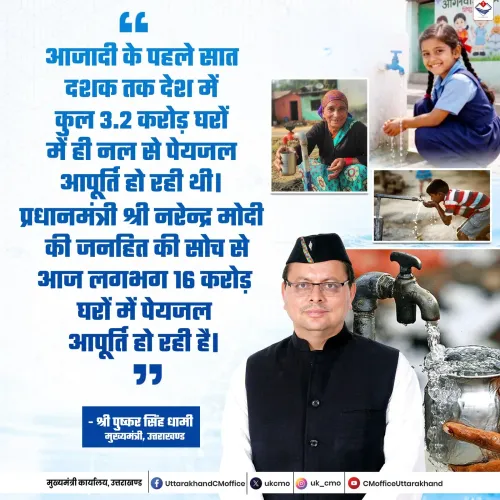
Uttarakhand Chief Minister Pushkar Singh Dhami on Thursday, 2 July 2026, highlighted the state's progress under the Jal Jeevan Mission, stating that clean tap water is being ensured for 14.20 lakh rural families across Uttarakhand through the centrally sponsored scheme.
Posting in Hindi on X, CM Dhami said the 'double engine' government — referring to aligned BJP administrations at the Centre and in the state — is 'committed to delivering the benefits of development to the last person standing at the furthest end.' He specifically credited the Jal Jeevan Mission for driving this outreach, noting improvements in rural quality of life, savings in labour and time for women, and access to safe, quality drinking water.
Context
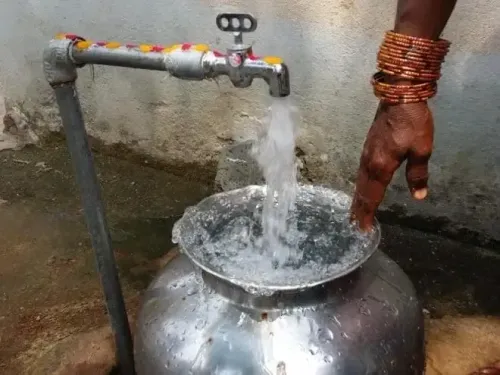
The Jal Jeevan Mission was launched by the Government of India on 15 August 2019 with the goal of providing a functional household tap connection (har ghar nal se jal — 'tap water to every home') to every rural household in the country. Uttarakhand, a Himalayan state with a predominantly rural population historically dependent on natural springs and distant water sources, was identified as a priority geography given the physical difficulty of water access in hilly terrain.
The scheme is a centrally sponsored programme, meaning both the Union government and state governments share funding responsibilities, with states responsible for on-ground implementation, operations, and maintenance.
Policy Backdrop
The BJP's 'double engine' framing — used when the party controls both the central and a state government — has been a consistent political and administrative argument for faster scheme delivery. CM Dhami has repeatedly invoked this framework since assuming office in 2021 to position Uttarakhand as a model of coordinated federal governance.
The Jal Jeevan Mission sits alongside the Swachh Bharat Mission and rural road connectivity programmes as part of a broader rural infrastructure agenda. Progress is tracked through a national dashboard that monitors state-level coverage figures on a rolling basis.
Stakeholders and Impact
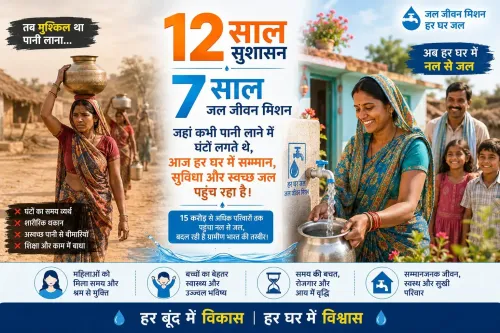
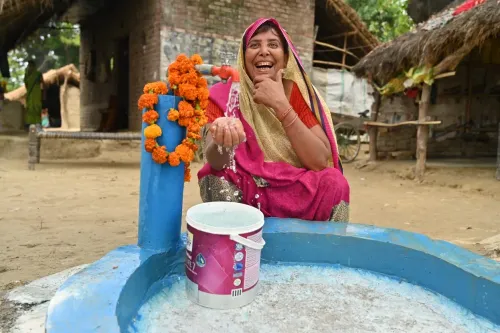
The primary beneficiaries of the mission's expansion in Uttarakhand are rural women, who have traditionally borne the burden of fetching water — often walking considerable distances in hilly terrain. CM Dhami explicitly acknowledged this dimension, stating the scheme is saving 'maataon-bahnon ke shram va samay' ('the labour and time of mothers and sisters').
Access to clean piped water also carries public health implications, reducing exposure to waterborne diseases linked to untreated or contaminated sources. For 14.20 lakh rural families, reliable tap access represents a structural change in daily household management.
What's Next
Attention will now turn to the next quarterly Jal Jeevan Mission dashboard release, which will update Uttarakhand's coverage figures and indicate how close the state is to full rural saturation. A key policy question going forward is the state's budgetary provision for the operation and maintenance of the new connections — a challenge that has emerged in several states where infrastructure has been laid but sustained service delivery remains uneven.
Point of View
In this case Dehradun and New Delhi. By foregrounding the figure of 14.20 lakh families and the specific benefit to women, the statement blends infrastructure reportage with electoral messaging ahead of any future state cycle. The Jal Jeevan Mission has become one of the BJP's most politically durable rural welfare planks, and Dhami's emphasis on it signals that Uttarakhand intends to position itself as a high-performing state on the national dashboard. The harder test, however, will be whether the state can demonstrate not just connection installation but sustained, quality water supply — an operational challenge that has complicated the mission's narrative in other states.
NationPress
2 Jul 2026
Frequently Asked Questions
What is the Jal Jeevan Mission and when was it launched?
The Jal Jeevan Mission is a Government of India scheme launched on 15 August 2019 to provide functional household tap connections for clean drinking water to every rural household in the country.
How many families in Uttarakhand are covered under Jal Jeevan Mission?
According to CM Pushkar Singh Dhami, 14.20 lakh rural families in Uttarakhand are being provided clean tap water through the Jal Jeevan Mission.
What does 'double engine government' mean in Indian politics?
'Double engine government' is a BJP phrase used when the party governs both at the Centre and in a state, arguing that political alignment speeds up delivery of central schemes at the state level.
How does Jal Jeevan Mission benefit women in rural Uttarakhand?
The scheme reduces the burden on rural women who traditionally walk long distances to fetch water, saving them time and physical labour — a point CM Dhami specifically highlighted in his post.
What is the current status of Jal Jeevan Mission in Uttarakhand?
CM Dhami stated on 2 July 2026 that the mission is actively ensuring tap water access for 14.20 lakh rural families in Uttarakhand; updated coverage figures are tracked on the national Jal Jeevan Mission dashboard.