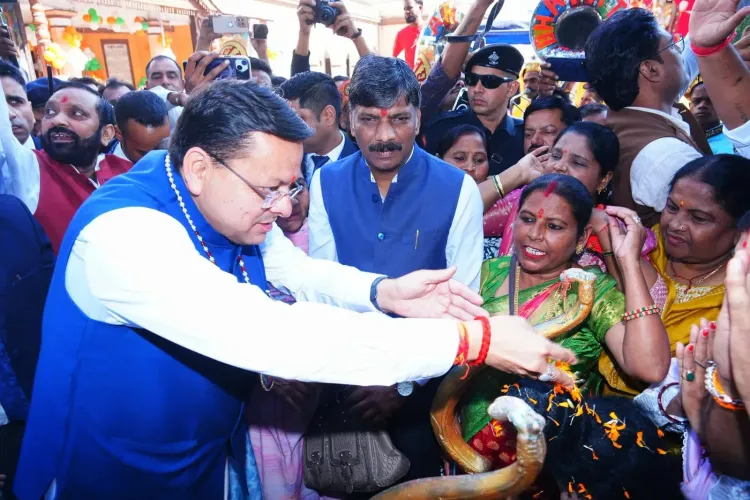
CM Dhami joins Valmiki Prakatotsav procession in Dehradun
Synopsis
Uttarakhand CM Pushkar Singh Dhami participated in the Valmiki Prakatotsav shobha yatra in Dehradun, honouring the Ramayana's author and pledging his government's commitment to equality and the upliftment of every section of society.
Key Takeaways
Pushkar Singh Dhami participated in the Valmiki Prakatotsav shobha yatra in Dehradun on October 26, 2026 .
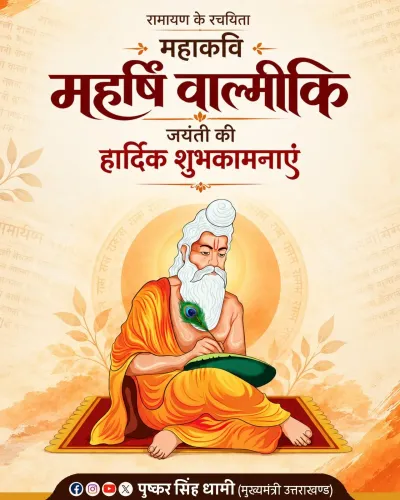
He paid tribute to Maharshi Valmiki , revered as Adikavi and composer of the Ramayana.
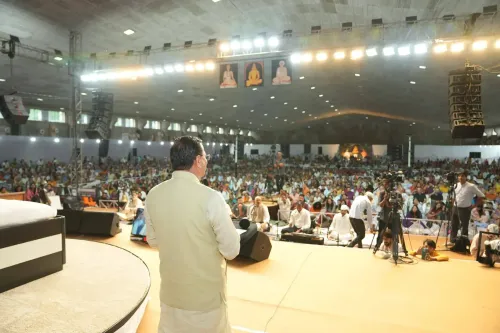
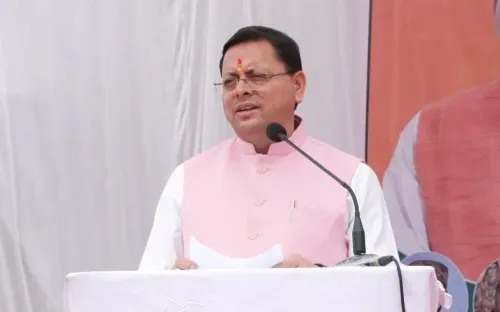
Dhami addressed the gathered public, invoking Valmiki's teachings of equality, compassion and social harmony.
He linked these ancient ideals directly to his government's stated commitment to the welfare of every section of society.
Valmiki Prakatotsav holds deep significance for Scheduled Caste communities, giving the event cultural and social weight beyond routine ceremony.
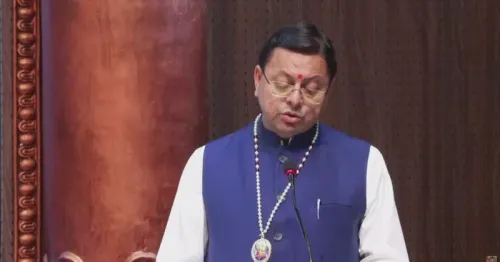
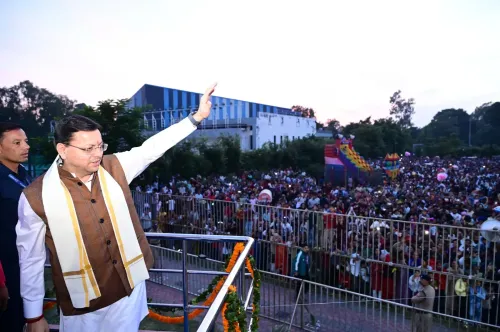
On the occasion of Valmiki Prakatotsav, Uttarakhand Chief Minister Pushkar Singh Dhami joined the grand shobha yatra (ceremonial procession) held in Dehradun on Monday, October 26, paying tribute to the ancient sage who gave the world its first epic poem — the Ramayana.
Dhami offered his respects to Maharshi Valmiki — revered as Adikavi, the first poet — and addressed the assembled gathering, describing it as 'devtulya janta' (god-like people). He invoked Valmiki's teachings as a living guide for governance: 'His life and teachings give us the message of equality, social harmony, compassion and humanity,' the Chief Minister said.
Valmiki's ideals and the government's welfare pledge
Dhami drew a direct line between the sage's ancient philosophy and his administration's present commitments. He stated that his government, inspired by Valmiki's ideals, is working 'with full commitment for the respect, welfare and upliftment of every section of society.' The framing positions cultural reverence not as ceremony alone, but as a declared policy orientation.
Maharshi Valmiki is one of Hinduism's most venerated figures — a transformed sage credited with composing the Ramayana, the foundational epic that has shaped Indian civilisation across millennia. The Prakatotsav, marking his appearance, is observed with processions, devotional programmes and community gatherings across North India, drawing particularly wide participation from communities that regard him as a patron saint.
A pattern of cultural politics in BJP-governed states
Chief ministers across BJP-governed states have increasingly joined such processions as a signal of social inclusion — Valmiki is deeply revered among Scheduled Caste communities, and his celebration carries both spiritual and political resonance. Participating in the shobha yatra allows leaders to affirm a message of samajik samarasata (social harmony) that the party has positioned as central to its governance philosophy.
For Dhami, the Dehradun event reinforces a familiar pattern: anchoring welfare commitments to cultural touchstones that carry broad popular legitimacy across caste lines.
Whether this year's Prakatotsav produces any follow-up policy announcements — welfare schemes, cultural grants, or community programmes — targeting marginalised sections will be the measure of how far the stated commitment travels beyond the procession.
Point of View
Particularly towards communities that revere the sage. The explicit link between Valmiki's philosophy and government welfare commitments is a rhetorical move that attempts to embed policy messaging inside devotional sentiment. It also underscores how cultural events have become a primary arena for political outreach in contemporary Uttarakhand. The real test of this alignment will be whether tangible welfare measures for marginalised groups follow the symbolism.
NationPress
26 Oct 2026
Frequently Asked Questions
What is Valmiki Prakatotsav?
Valmiki Prakatotsav is a festival marking the appearance of Maharshi Valmiki, the ancient sage credited with composing the Ramayana. It is observed with processions, devotional gatherings and community celebrations, particularly in North India.
Why did CM Dhami attend the Valmiki Prakatotsav event in Dehradun?
Uttarakhand Chief Minister Pushkar Singh Dhami joined the shobha yatra to honour Maharshi Valmiki and to reaffirm his government's commitment to equality, social harmony and the welfare of all sections of society, drawing inspiration from Valmiki's teachings.
Who was Maharshi Valmiki?
Maharshi Valmiki is one of Hinduism's most revered sages, known as the Adikavi or 'first poet', and is credited with composing the Ramayana, one of India's foundational epics.
Where was the Valmiki Prakatotsav shobha yatra held in 2026?
The shobha yatra was held in Dehradun, the capital of Uttarakhand, on October 26, 2026.
What did CM Dhami say about Maharshi Valmiki's teachings?
CM Dhami said that Maharshi Valmiki's life and teachings convey the message of equality, social harmony, compassion and humanity, and that his government is working with commitment for the respect, welfare and upliftment of every section of society, inspired by those ideals.