CM Dhami credits Modi's Ujjwala Yojana for empowering Uttarakhand women
Synopsis
Uttarakhand CM Pushkar Singh Dhami credited PM Narendra Modi's Ujjwala Yojana with liberating rural women from cooking smoke and bringing welfare benefits directly to their bank accounts, bypassing middlemen.
Key Takeaways
CM Pushkar Singh Dhami praised PM Narendra Modi for the Pradhan Mantri Ujjwala Yojana , calling it a landmark act of women's empowerment on 17 November 2026 .
The Ujjwala Yojana , launched in May 2016 , provides free LPG connections to below-poverty-line households, with women as the primary registered beneficiaries.
Dhami highlighted Direct Benefit Transfers (DBT) as a key mechanism ensuring welfare payments reach women's bank accounts without intermediaries.
The scheme's integration with Jan Dhan Yojana and Aadhaar-linked banking brought millions of rural women into the formal financial system.
The statement reinforces the BJP-led Uttarakhand government's alignment with central welfare delivery as a core political and governance priority.
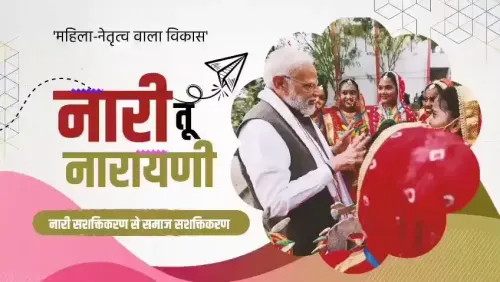
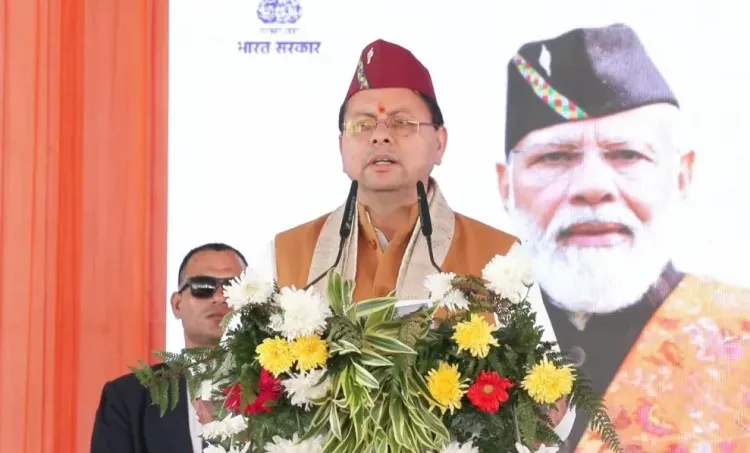
Smoke-free kitchens and direct bank transfers — Uttarakhand Chief Minister Pushkar Singh Dhami on Tuesday, 17 November 2026 credited Prime Minister Narendra Modi with delivering both to rural women through the Pradhan Mantri Ujjwala Yojana, calling it a defining act of women's empowerment by the central government.
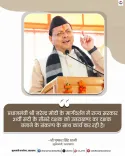
Quoted by the Chief Minister's Office of Uttarakhand on X, CM Dhami said: 'Respected Prime Minister Shri Narendra Modi Ji freed matrishakti [the power of mothers] from the smoke of the hearth through the Ujjwala Yojana, and took important steps to economically empower them by connecting them to the banking system. Today, the benefits of public welfare schemes are reaching their bank accounts directly, without any middleman.'
From chulha smoke to clean LPG — what Ujjwala changed
Launched in May 2016, the Pradhan Mantri Ujjwala Yojana was designed to give free LPG connections to households below the poverty line, with a specific focus on women as the primary beneficiaries. Before the scheme, millions of rural women across India spent hours each day cooking over wood-fired chulhas, inhaling smoke that the World Health Organization has long linked to serious respiratory illness.
The scheme addressed a stubborn ground reality: access to clean cooking fuel was not merely a convenience, but a health and dignity issue for women in lower-income households. By registering the LPG connection in the woman's name, the policy also gave her a formal identity within the banking and welfare infrastructure.
Direct benefit transfers and the war on middlemen
CM Dhami's remarks pointedly highlighted the Direct Benefit Transfer (DBT) architecture that underpins Ujjwala and dozens of other central schemes. Under DBT, subsidies and welfare payments are routed directly to the beneficiary's Aadhaar-linked bank account, bypassing the chain of intermediaries that had historically siphoned off a share of welfare funds before they reached the intended recipient.
The push to bring rural women into formal banking — through Jan Dhan Yojana accounts, Aadhaar seeding, and mobile-linked banking — created the infrastructure that made DBT viable at scale. Women who had never held a bank account became direct recipients of government transfers, a structural shift that financial-inclusion advocates have called among the most consequential policy moves of the last decade.
Dhami's framing and Uttarakhand's political context
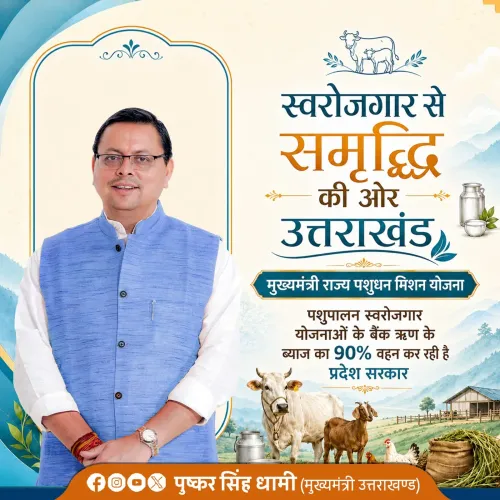
Uttarakhand, governed by the BJP under Dhami since 2021, has been an active implementer of central welfare schemes in a state where a significant share of the population lives in remote hill villages with historically poor access to infrastructure. The CM's statement aligns with the BJP's broader political narrative of 'last-mile delivery' — positioning the party as the force that finally made welfare reach the doorstep rather than dissolve en route.
The emphasis on matrishakti — a term that frames rural women as a force to be respected and served rather than merely a beneficiary category — is consistent with the register both Dhami and Modi have used at public events to frame welfare as an act of social justice rather than political patronage.
With state-level coverage data for Ujjwala connections in Uttarakhand yet to be independently detailed, the numbers that would fully anchor the CM's claim remain the story to watch — but the political intention behind the statement is unmistakable: credit flows upward to Modi, and Dhami positions Uttarakhand as a model of faithful implementation.
Point of View
Particularly ahead of election cycles. The emphasis on eliminating middlemen also serves a governance narrative: that the party structurally reformed a corrupt system, not merely administered it. Watched from a policy lens, the real test is granular — how many Uttarakhand women have active, refilling connections, and how many remain dormant after the initial subsidy.
NationPress
17 Nov 2026
Frequently Asked Questions
What is the Pradhan Mantri Ujjwala Yojana?
The Pradhan Mantri Ujjwala Yojana is a central government scheme launched in May 2016 that provides free LPG cooking gas connections to below-poverty-line households in India, with women registered as the primary beneficiaries to promote clean cooking fuel and reduce indoor air pollution.
What did Uttarakhand CM Dhami say about PM Modi and Ujjwala Yojana?
On 17 November 2026 , CM Pushkar Singh Dhami stated that PM Modi freed rural women from cooking smoke through the Ujjwala Yojana and connected them to the banking system, ensuring welfare benefits now reach their accounts directly without middlemen.
How does Direct Benefit Transfer help women under Ujjwala Yojana?
Under the Direct Benefit Transfer system, LPG subsidies and other welfare payments are deposited directly into the beneficiary's Aadhaar-linked bank account , eliminating intermediaries who previously diverted funds before they reached the intended recipient.
Who is Pushkar Singh Dhami?
Pushkar Singh Dhami is the Chief Minister of Uttarakhand , serving since 2021 under the BJP government in the northern Indian state.
What is matrishakti in the context of Indian welfare schemes?
Matrishakti literally means 'the power of mothers' and is used by Indian political leaders, including PM Modi and CM Dhami, to describe rural and low-income women as central beneficiaries and stakeholders in welfare programmes like Ujjwala Yojana.