CM Dhami Announces Dedicated Cell for Agniveer Welfare in Uttarakhand
Synopsis
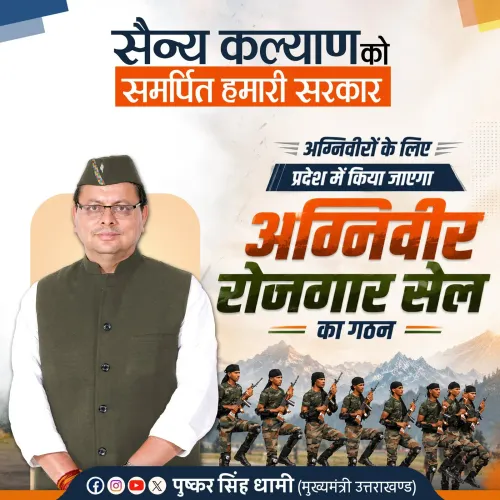
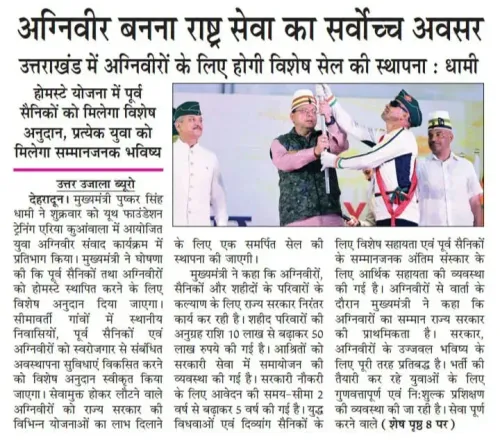
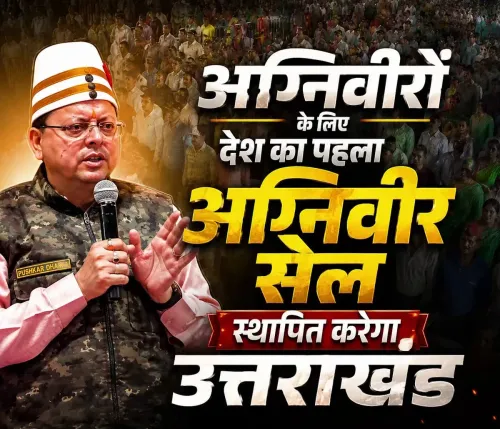
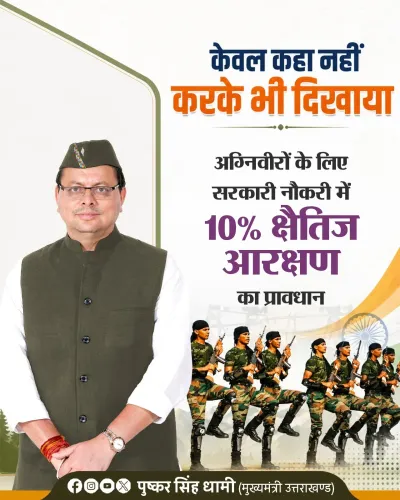
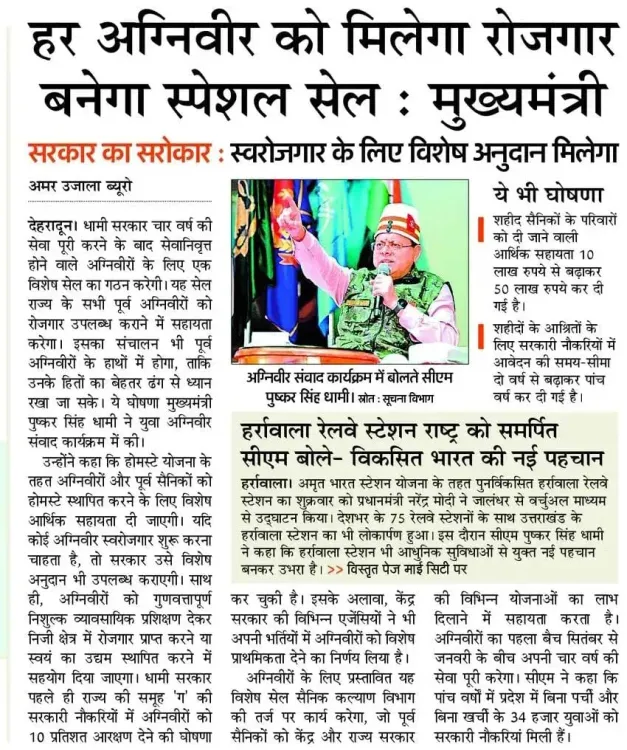
Uttarakhand Chief Minister Pushkar Singh Dhami announced a dedicated cell to help Agniveers returning after their four-year military tenure find employment and skill development opportunities, while directing officials to ensure last-mile delivery of all government welfare schemes.
Key Takeaways
CM Pushkar Singh Dhami announced a dedicated Agniveer cell in Uttarakhand on 18 July 2026 .
The cell will connect Agniveers completing their four-year service with employment, skill development, and other welfare facilities .
The announcement is anchored in the Agnipath scheme , launched by the Government of India in June 2022 .
Uttarakhand has one of the highest per-capita contributions to the armed forces in India, making soldier welfare a key state priority.
Officials have been directed to work at the ground level to ensure all government welfare schemes reach the last beneficiary.
Multiple states have created similar mechanisms, and Uttarakhand's move continues this national pattern of state-level Agnipath supplementation.
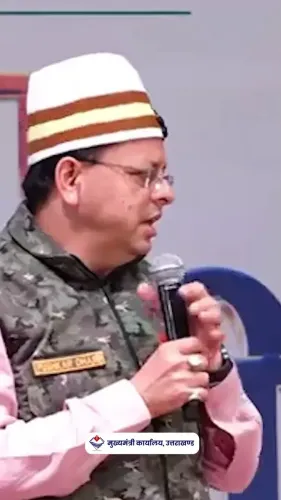
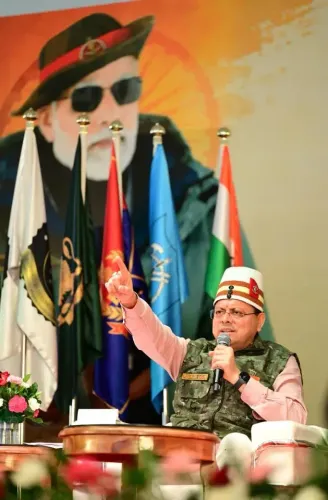
Uttarakhand Chief Minister Pushkar Singh Dhami on Saturday, 18 July 2026, announced the creation of a dedicated cell to support Agniveers — personnel completing their four-year tenure under the central Agnipath scheme — connecting them to employment, skill development, and other welfare opportunities upon their return to civilian life.
Context
Posting on X, CM Dhami stated, 'सैनिकों का कल्याण हमारी सर्वोच्च प्राथमिकताओं में से एक है' ('The welfare of soldiers is one of our highest priorities'). He announced that a dedicated cell would be established specifically for Agniveers, describing it as a mechanism to link returning personnel with jobs, skill-building programmes, and other available opportunities and facilities. He also directed officials to work at the ground level to ensure that all government welfare schemes reach the last person in the chain.
The announcement comes amid broader national attention on the post-service futures of Agniveers, who serve a fixed four-year term under the Agnipath scheme launched by the Government of India in June 2022. Only a fraction of Agniveers are retained in permanent service after the tenure, making state-level rehabilitation mechanisms increasingly critical.
Policy Backdrop
The Agnipath scheme was introduced as a major armed forces recruitment reform, offering short-term military engagement with an emphasis on youth skilling and eventual civilian reintegration. Uttarakhand is among the Indian states with the highest per-capita contribution to the armed forces, making the welfare of ex-servicemen and Agniveers a particularly salient political and administrative concern in the state.
Several states across India have moved to create dedicated institutional mechanisms — cells, boards, or nodal offices — to rehabilitate Agniveers after their four-year engagement, addressing the employment and skill gaps that the central scheme's exit provisions do not fully cover. Uttarakhand's announcement follows this emerging pattern of state-level supplementation to the Agnipath model.
The emphasis on last-mile delivery of welfare schemes, with officials directed to work at 'ग्राउंड जीरो' ('ground zero'), is consistent with the administrative priorities articulated by the Dhami government since 2022.
Stakeholders and Impact
Agniveers from Uttarakhand who complete their four-year military service stand to be the primary beneficiaries of the proposed cell. The cell is envisioned to serve as a single-window or coordinating body linking returning personnel to state and central employment agencies, vocational training programmes, and other welfare provisions.
The broader ex-servicemen community in the state — already a significant demographic — is also expected to benefit from the renewed administrative push to ensure welfare schemes reach intended recipients at the ground level. Officials have been given explicit instructions to move beyond desk-level functioning and engage directly with beneficiaries.
What's Next
The operationalisation of the Agniveer cell will be closely watched, particularly whether the Uttarakhand government formalises linkages with central skill-development ministries or state employment agencies through memoranda of understanding or formal orders. The pace of implementation and the specific services offered by the cell will determine its practical impact on the thousands of Agniveers expected to complete their tenures in the coming years.
Point of View
Where military service is deeply woven into social identity and livelihoods, this move carries both administrative and electoral weight. The directive to officials to work at 'ground zero' signals an attempt to shift the welfare delivery model from paper to practice, a recurrent challenge in hill-state governance. Taken together, the announcement positions the Dhami government as an active partner in the Centre's defence reform agenda while addressing local anxieties about Agniveer employment.
NationPress
16 Oct 2026
Frequently Asked Questions
What is the Agniveer welfare cell announced by CM Dhami?
It is a dedicated government cell announced by Uttarakhand Chief Minister Pushkar Singh Dhami on 18 July 2026 to help Agniveers — personnel who complete their four-year tenure under the Agnipath scheme — access employment, skill development, and other welfare opportunities after returning to civilian life.
What is the Agnipath scheme and who are Agniveers?
The Agnipath scheme is a central government armed forces recruitment reform launched in June 2022 . It offers a four-year short-term military tenure to youth, after which only a fraction are retained; the rest, called Agniveers , return to civilian life with skill credentials and a financial corpus.
Why is Uttarakhand particularly focused on Agniveer welfare?
Uttarakhand has one of the highest per-capita contributions to the Indian armed forces in the country, meaning a significant number of state residents enlist — and will complete — Agnipath tenures, making their post-service welfare a major local concern.
What did CM Dhami say about government scheme delivery?
CM Dhami stated that officials have been given clear instructions to work at the ground level — 'ग्राउंड जीरो' — to ensure that all government-run public welfare schemes reach the last intended beneficiary.
Have other states also created Agniveer welfare mechanisms?
Yes, multiple states across India have set up dedicated mechanisms to rehabilitate Agniveers after their four-year engagement, addressing employment and skill gaps. Uttarakhand's announcement is consistent with this broader national pattern of state-level support to the central Agnipath model.