CM Dhami launches 'Mountain Melodies' book, honours Tai Tugung at Negi fest
Synopsis
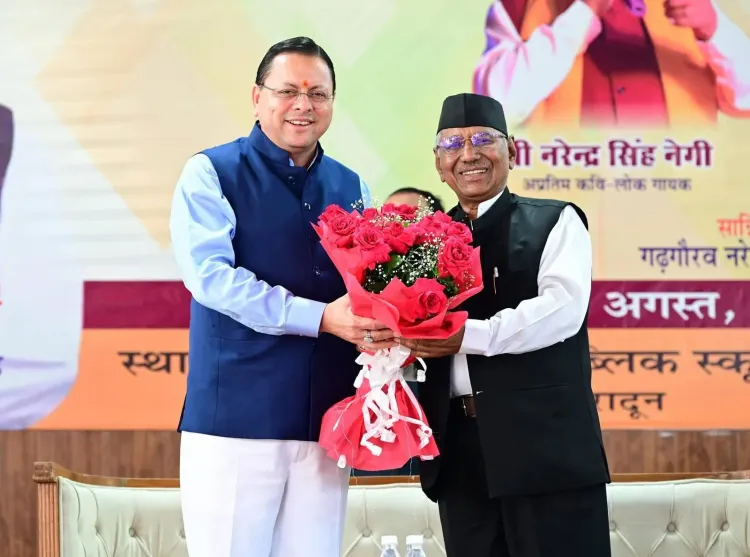
Uttarakhand CM Pushkar Singh Dhami attended folk legend Narendra Singh Negi's birthday celebration in Dehradun, releasing an English translation of his songs and honouring Arunachal Pradesh theatre artist Tai Tugung with the Narendra Singh Negi Sanskriti Samman-2026.
Key Takeaways
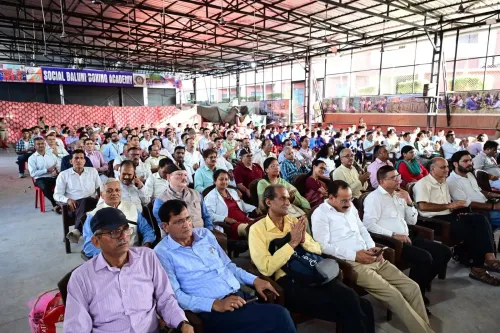
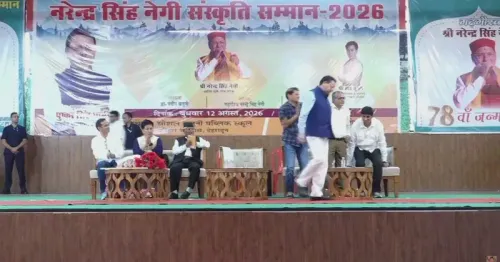
CM Pushkar Singh Dhami attended the Narendra Singh Negi Sanskriti Samman Samaroh in Dehradun on 12 August 2026 .
He released 'Mountain Melodies of Narendra Singh Negi' , a book of English translations of the folk singer's songs.
Tai Tugung , actor, theatre artist and playwright from Arunachal Pradesh , received the Narendra Singh Negi Sanskriti Samman-2026 .
The award links Uttarakhand's folk heritage with northeastern India's performing arts tradition.
The event is part of broader state-level efforts to document and translate regional folk works for wider audiences.
A folk legend turned 75 in Dehradun on Wednesday, 12 August 2026, and Uttarakhand Chief Minister Pushkar Singh Dhami marked the occasion by releasing a book that carries Garhwali music to an English-speaking world — and by honouring a theatre artist from the far northeast who embodies the same spirit of mountain storytelling.
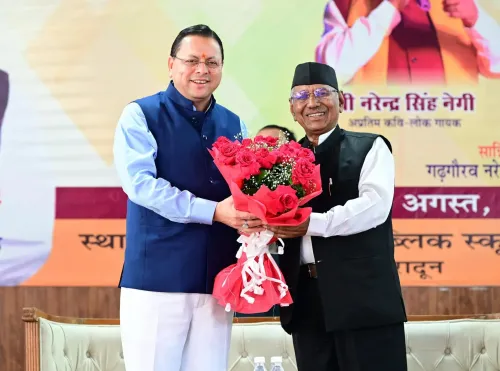
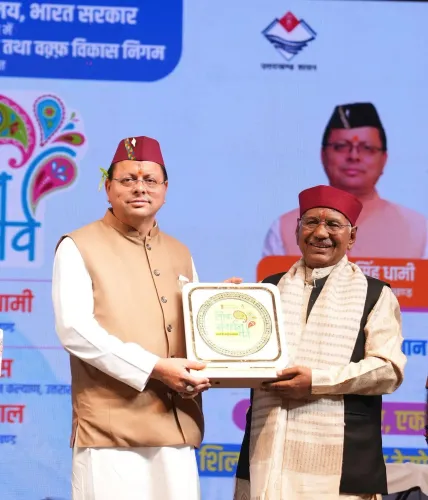
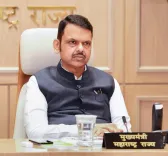
At the Narendra Singh Negi Sanskriti Samman Samaroh (Narendra Singh Negi Culture Honour Ceremony) in Dehradun, CM Dhami released 'Mountain Melodies of Narendra Singh Negi', a book of English translations of the celebrated folk singer's songs. He also extended birthday wishes to Narendra Singh Negi, praying for his good health and long life.
Negi's songs find an English voice
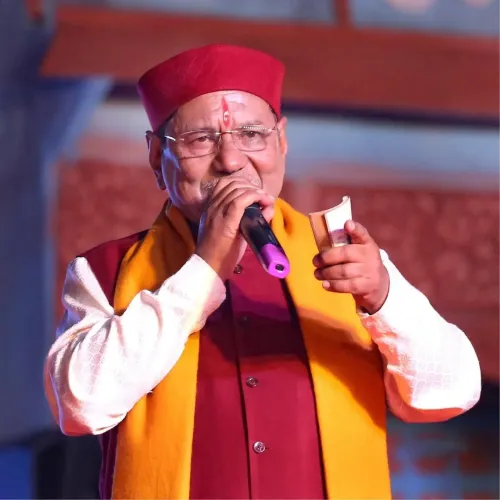
Narendra Singh Negi is widely regarded as the defining voice of Garhwali folk music — a singer-songwriter whose compositions have captured the landscape, longing, and life of the Uttarakhand hills for decades. The release of 'Mountain Melodies of Narendra Singh Negi' represents a deliberate push to move those songs beyond the mountains and into a broader literary and cultural conversation. Translating folk poetry is never a simple act; it demands that idiom, metre, and emotion survive the crossing from one language to another.
Tai Tugung receives the Sanskriti Samman-2026
The evening's second landmark was the conferral of the Narendra Singh Negi Sanskriti Samman-2026 on Tai Tugung, a distinguished actor, theatre practitioner, and playwright from Arunachal Pradesh. The choice is quietly significant: an award named after an Uttarakhand folk icon going to an artist from India's northeast draws a cultural line connecting two Himalayan traditions that rarely share a stage. CM Dhami personally presented the honour.
Why state-backed cultural events matter
Across India's hill states, governments have increasingly used curated cultural awards and translation projects to document regional art forms before they thin out under the pressure of urbanisation and shifting tastes. Uttarakhand's investment in the Negi Samman — and the decision to translate his work into English — fits that pattern precisely. It signals that the state sees folk heritage not as a museum exhibit but as living material worth amplifying to new audiences.
The next edition of the Sanskriti Samman and any further translated volumes of Negi's catalogue will be the real test of whether this becomes a sustained programme or a one-time celebration. For now, a birthday in Dehradun sent a Garhwali melody across a language barrier — and gave Arunachal Pradesh's theatre a moment in the spotlight it rarely gets.
Point of View
Whose government has leaned into cultural identity as a governing theme, attending and headlining such events reinforces a brand of politics where heritage and governance are presented as inseparable. The real measure of commitment will be whether the book reaches schools and libraries or quietly disappears after the launch.
NationPress
13 Aug 2026
Frequently Asked Questions
Who is Narendra Singh Negi?
Narendra Singh Negi is a celebrated Garhwali folk singer and songwriter from Uttarakhand, widely regarded as the defining voice of the region's folk music tradition.
What is the book 'Mountain Melodies of Narendra Singh Negi' about?
'Mountain Melodies of Narendra Singh Negi' is a book of English translations of the folk singer's songs, released by CM Pushkar Singh Dhami at the Sanskriti Samman Samaroh in Dehradun on 12 August 2026.
Who won the Narendra Singh Negi Sanskriti Samman 2026?
Tai Tugung, a renowned actor, theatre practitioner, and playwright from Arunachal Pradesh, received the Narendra Singh Negi Sanskriti Samman-2026.
Where was the Narendra Singh Negi Sanskriti Samman Samaroh held?
The ceremony was held in Dehradun, the capital city of Uttarakhand, on 12 August 2026.
Why did CM Dhami attend Narendra Singh Negi's birthday event?
CM Pushkar Singh Dhami participated in the cultural ceremony to wish Negi on his birthday, release an English translation of his songs, and present the annual Sanskriti Samman award.