CM Dhami Performs Shraddh, Remembers Father on Pitru Paksha
Synopsis
Uttarakhand CM Pushkar Singh Dhami performed shraddh and tarpan on Pitru Paksha 2026, sharing a Sanskrit prayer and a personal tribute to his late father, saying his father's principles of truth and duty continue to guide his life.
Key Takeaways
CM Pushkar Singh Dhami publicly observed Pitru Paksha on September 30, 2026 by performing shraddh and tarpan rituals.
He shared three photographs of the ritual on X alongside a Sanskrit ancestral prayer.
Dhami described his father's 'thoughts and principles' as his guiding light in matters of truth and duty.
Pitru Paksha is a 16-day Hindu period dedicated to honouring and making offerings to deceased ancestors.
The post reflects a broader pattern of Indian political leaders publicly affirming cultural and religious traditions during major Hindu observances.
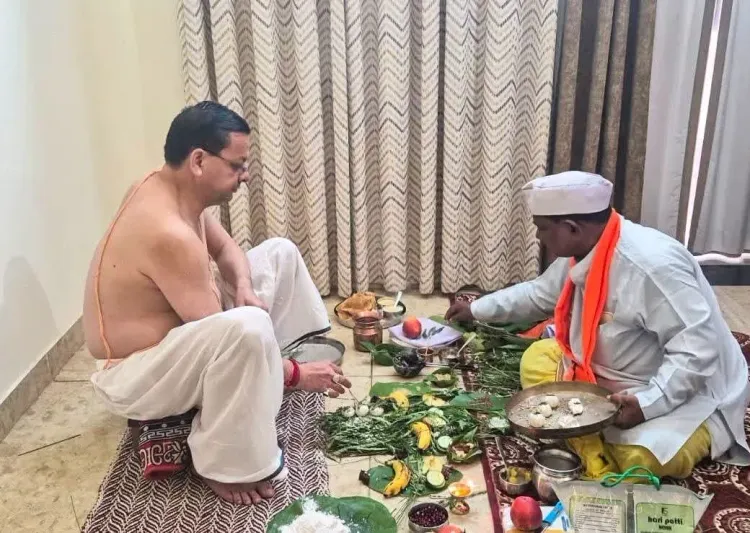
On the sacred occasion of Pitru Paksha, Uttarakhand Chief Minister Pushkar Singh Dhami paused from public duties on Wednesday, September 30, 2026, to perform shraddh and tarpan — ancient Hindu rituals of ancestral remembrance — in honour of his late father and forebears.
Sharing the moment on X alongside three photographs of the ritual, CM Dhami opened with a Sanskrit invocation: 'Om Pitruganaya Vidmahe, Jagat Dharini Dhimahi, Tanno Pitruḥ Prachodayat' — a prayer seeking the blessings and guidance of one's ancestors. He wrote that his father's 'thoughts and principles remain my life's guiding light, inspiring me to walk the path of truth and duty in every circumstance.'
What Pitru Paksha means — and why leaders observe it publicly
Pitru Paksha is a 16-day lunar period in the Hindu calendar dedicated to honouring deceased ancestors through rituals of shraddh (offerings of food and water) and tarpan (libations). Observed across India, it is considered a time when the living can repay their debt to those who came before — a concept rooted in the idea of pitru rin, or ancestral obligation.
For Indian political leaders, public observance of such rituals has become a familiar form of cultural affirmation — a way of signalling continuity with tradition while reaching constituents who share the same practices. CM Dhami, who frequently reflects on personal faith and cultural heritage in his public communication, framed the post in deeply personal terms rather than as a ceremonial announcement.
A son's tribute, in the language of duty
The language Dhami chose is telling. He did not speak of his father in abstract terms — he anchored the tribute in the words satya (truth) and kartavya (duty), the same vocabulary that defines much of his public political identity. The closing line — a prayer that his father's 'grace and blessings remain always' — carries the register of personal grief held quietly in public view.
Restrained, sincere, and rooted in one of Hinduism's most widely observed commemorative traditions, the post is a reminder that even the most public offices carry private remembrances — and that Pitru Paksha is, at its core, a season for exactly that.
Point of View
It reinforces the CM's consistent positioning as a leader grounded in traditional values. The choice to frame ancestral tribute through the language of duty rather than sentiment alone is a subtle but deliberate rhetorical choice.
NationPress
30 Sept 2026
Frequently Asked Questions
What is Pitru Paksha and when is it observed?
Pitru Paksha is a 16-day Hindu period dedicated to honouring deceased ancestors through rituals like shraddh and tarpan. It falls in the lunar month of Bhadrapada, typically in September, and is observed widely across India.
What did CM Pushkar Singh Dhami post on Pitru Paksha 2026?
CM Dhami shared a Sanskrit ancestral prayer and personal tribute to his late father on X, along with three photographs of his shraddh and tarpan rituals performed on September 30, 2026.
What is shraddh and tarpan in Hinduism?
Shraddh involves ritual offerings of food and water to deceased ancestors, while tarpan refers to libations — usually of water and sesame — offered to honour the departed. Both are central practices during Pitru Paksha.
Why do Indian politicians observe Pitru Paksha publicly?
Public observance of Pitru Paksha allows political leaders to affirm cultural and religious traditions, connecting with constituents who share the same practices. It is a form of cultural engagement common among leaders across parties.
What did CM Dhami say about his father?
CM Dhami wrote that his father's thoughts and principles remain his life's guiding light, inspiring him to walk the path of truth and duty in every circumstance, and prayed that his father's blessings remain with him always.