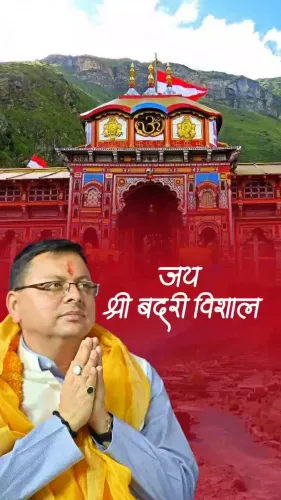
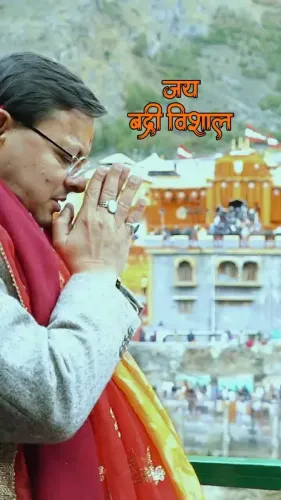
CM Dhami extends greetings as Amarnath Yatra 2026 begins
Synopsis
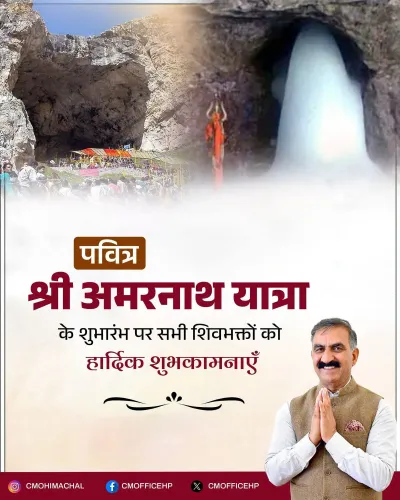
Uttarakhand Chief Minister Pushkar Singh Dhami extended greetings to Shiva devotees on 3 July 2026 as the Amarnath Yatra began, invoking Lord Shiva's blessings for the safe and auspicious completion of every pilgrim's journey to the high-altitude cave shrine in Jammu and Kashmir.
Key Takeaways
Uttarakhand CM Pushkar Singh Dhami posted greetings on 3 July 2026 marking the commencement of the Amarnath Yatra 2026 .
He prayed for every pilgrim's journey to be 'safe, auspicious, and successful' and invoked blessings of happiness, prosperity, and spiritual energy.
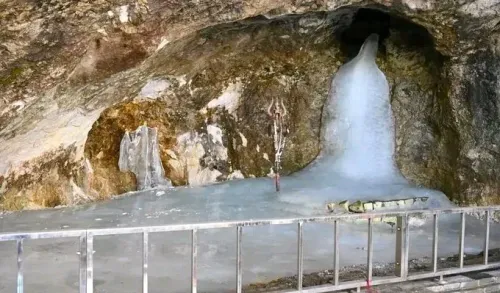
The Amarnath Cave shrine in Anantnag district, Jammu and Kashmir houses a naturally formed ice Shiva lingam venerated by Shaivite Hindus.
The Shri Amarnath Shrine Board , established in 2000 , manages logistics, infrastructure, and safety for the annual pilgrimage.
BJP leaders from across India routinely issue public greetings at the yatra's start, signalling solidarity with major Hindu pilgrimage traditions.
Post- 2019 administrative changes in J&K have placed renewed emphasis on pilgrim facilitation and security along the Baltal and Pahalgam routes.
Uttarakhand Chief Minister Pushkar Singh Dhami on Friday, 3 July 2026, extended greetings to devotees across the country as the annual Amarnath Yatra commenced, invoking the blessings of Lord Shiva for the safe and successful journey of every pilgrim.
Context
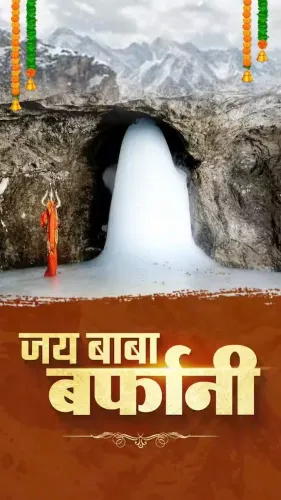
Dhami took to social media to mark the beginning of the sacred pilgrimage, writing 'जय बाबा बर्फानी!' ('Victory to Baba Barfani!') and offering 'हार्दिक शुभकामनाएँ एवं मंगलकामनाएँ' — heartfelt good wishes — to all Shiva devotees. He prayed that Devadideva Mahadeva (the supreme god among gods) ensure every pilgrim's journey is 'safe, auspicious, and successful,' and that devotees be blessed with happiness, prosperity, good health, spiritual energy, and a spirit of public welfare.
The post concluded with the invocation 'हर-हर महादेव!' — a traditional Shaivite salutation — underscoring the deeply devotional tone of the message.
Policy Backdrop
The Amarnath Yatra is one of India's most significant Hindu pilgrimages, drawing hundreds of thousands of devotees each year to the Amarnath Cave shrine in Anantnag district, Jammu and Kashmir. Situated at a high altitude in the Himalayas, the cave houses a naturally formed ice Shiva lingam venerated as a manifestation of Lord Shiva.
The Shri Amarnath Shrine Board (SASB), constituted under a Jammu and Kashmir legislative act in 2000, oversees the pilgrimage's logistics, infrastructure, and safety arrangements. Following the administrative reorganisation of Jammu and Kashmir in 2019, there has been a sustained emphasis on improving pilgrim facilities and security cover along the yatra routes.
Stakeholders and Impact
The yatra draws pilgrims from virtually every Indian state, making it a pan-national religious event. Security forces, the J&K administration, and the Shrine Board collectively manage route safety, medical facilities, and crowd management across the two principal trekking routes — Baltal and Pahalgam.
BJP leaders from states outside Jammu and Kashmir, including Chief Ministers, routinely issue public greetings at the yatra's outset, a practice that signals solidarity with major Shaivite pilgrimage traditions and resonates with a large section of the party's support base. Dhami's message, rooted in the language of sanatan sanskriti (eternal culture), reflects this broader pattern of political engagement with religious observance.
What's Next
With the 2026 yatra now under way, attention will turn to official pilgrim registration figures, daily darshan quotas, and any infrastructure or security announcements from the J&K administration and the Shrine Board. The pilgrimage traditionally concludes on Raksha Bandhan, with the exact closing date tied to the lunar calendar each year.
As pilgrims begin their ascent to the Amarnath Cave, the convergence of faith, administration, and security will once again test the state's capacity to facilitate one of the subcontinent's most demanding mass religious events safely.
Point of View
Faith-aligned messaging that simultaneously signals cultural solidarity and reinforces the party's identity as a custodian of sanatan values. The invocation of safety and 'public welfare' (lokkallyan) subtly links religious observance to the governance narrative. As a Chief Minister whose own state hosts several significant pilgrimage circuits — including the Char Dham Yatra — Dhami's voice carries added resonance in this space. The post reflects a broader pattern in which religious milestones double as soft-power moments for state-level leaders seeking national visibility.
NationPress
1 Oct 2026
Frequently Asked Questions
When did the Amarnath Yatra 2026 start?
The Amarnath Yatra 2026 commenced on 3 July 2026 , as indicated by greetings issued by leaders including Uttarakhand CM Pushkar Singh Dhami on that date.
What is the Amarnath Yatra?
The Amarnath Yatra is an annual Hindu pilgrimage to the Amarnath Cave shrine in Anantnag district, Jammu and Kashmir , where a naturally formed ice Shiva lingam is venerated by hundreds of thousands of devotees each year.
Who manages the Amarnath Yatra?
The Shri Amarnath Shrine Board (SASB) , constituted under a Jammu and Kashmir legislative act in 2000 , is the statutory body responsible for managing the pilgrimage's logistics, infrastructure, and safety.
Why did Pushkar Singh Dhami post about the Amarnath Yatra?
Pushkar Singh Dhami , as Uttarakhand Chief Minister and a senior BJP leader, extended greetings to mark the start of the Amarnath Yatra 2026 and prayed for the safety and success of every pilgrim — a practice common among BJP leaders at the outset of major Hindu pilgrimages.
What are the two routes for the Amarnath Yatra?
Pilgrims travel to the Amarnath Cave via two principal trekking routes: the Baltal route and the Pahalgam route , both managed under the supervision of the Shri Amarnath Shrine Board and security forces.