Gujarat to give free sanitary napkins to 10 lakh girl students in govt schools
Synopsis
Gujarat has committed ₹46.68 crore to supply free sanitary napkins to over 10 lakh schoolgirls in Classes 6 to 12 — a significant scale-up from its 2016 Re 1 token-price scheme. With a designated nodal teacher in every school and oxo-biodegradable napkins tied to waste disposal rules, the state is treating menstrual hygiene as an attendance and retention issue, not just a health one.
Key Takeaways
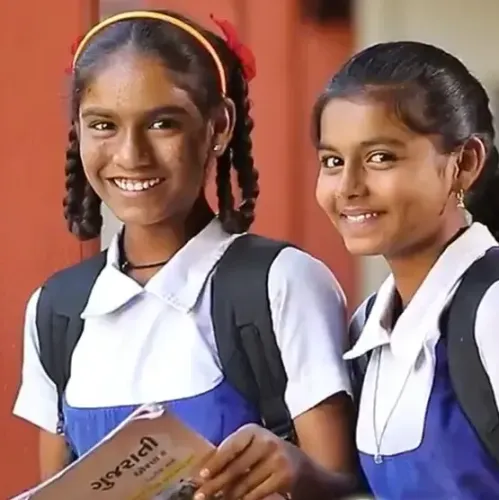
The Gujarat government will provide free sanitary napkins to over 10 lakh girl students in Classes 6 to 12 in government schools.
The Education Department has approved a budget of ₹46.68 crore ; each girl receives support worth ₹360 annually .
Oxo-biodegradable napkins will be distributed through schools under the Solid Waste Management Rules, 2016 .
A designated Nodal Teacher (woman) in each school will supervise distribution and address menstrual health queries.
The scheme builds on the earlier Taruni Suvidha Programme launched in 2016 , which provided napkins at Re 1 per pack.
The initiative is linked to the 'Beti Bachao, Beti Padhao' framework and targets girls in rural and remote areas .
The Gujarat government has announced a scheme to provide free sanitary napkins every month to more than 10 lakh girl students enrolled in Classes 6 to 12 in state-run schools, with the stated aim of improving menstrual hygiene and reducing absenteeism among adolescent girls. The Education Department has approved a budget of ₹46.68 crore for the programme, under which each eligible girl will receive support worth ₹360 annually.
What the Scheme Covers
Under the initiative, oxo-biodegradable sanitary napkins will be distributed free of cost through schools. The choice of oxo-biodegradable material is intended to support safer disposal and reduce environmental impact, in line with the Solid Waste Management Rules, 2016.
Schools have been directed to ensure napkins are handed over to the local waste collection system after being wrapped in paper and kept separate from wet and dry waste. Institutions equipped with sanitary pad disposal machines or incinerators have been instructed to keep such equipment functional and periodically serviced.
How Distribution Will Work
The Education Department has issued instructions requiring that distribution be carried out in a 'comfortable and dignified manner'. A woman teacher in each school will be designated as a 'Nodal Teacher' to oversee distribution and provide students with information on menstruation and personal hygiene. The nodal teacher will also be available to address concerns and correct misconceptions related to menstruation among girl students.
Why It Matters
Officials said access to sanitary products could help girls who otherwise miss classes during menstruation to attend school regularly. The department linked the initiative to the objectives of 'Beti Bachao, Beti Padhao' and women's empowerment, while also highlighting the need to prevent health risks associated with unhygienic menstrual practices. The programme is particularly aimed at students in rural and remote areas, where access to sanitary products has historically been limited.
Historical Context
This is not Gujarat's first attempt at addressing menstrual hygiene among adolescent girls. The state had previously launched the Taruni Suvidha Programme in 2016, under which packs of six sanitary napkins were made available at a token price of Re 1. The latest scheme goes further by making the products entirely free and routing distribution through the school system. This comes amid wider national efforts, including the Union government's Menstrual Hygiene Scheme, which focuses on access, awareness, and environmentally safe disposal, particularly in rural India.
What Comes Next
With the budget allocation approved and school-level instructions issued, implementation is expected to roll out across government schools in Gujarat. The success of the programme will likely depend on consistent supply chains, functional disposal infrastructure, and the effectiveness of nodal teachers in normalising conversations around menstrual health.
Point of View
But the real measure will be execution — specifically whether supply chains reach remote schools consistently and whether nodal teachers are trained adequately to hold sensitive conversations with adolescent girls. India's menstrual hygiene gap is well-documented: NFHS data consistently shows low pad usage among rural adolescents, and token-price schemes like the 2016 Taruni Suvidha Programme have had uneven reach. Routing distribution through schools rather than health centres is a structural improvement, but it also means the programme's success is tied to school attendance itself — a circular dependency that planners will need to monitor. The ₹360-per-girl annual allocation is modest; any supply disruption or price increase in raw materials could strain the budget before the programme matures.
NationPress
1 Oct 2026
Frequently Asked Questions
What is the Gujarat government's free sanitary napkin scheme for girl students?
It is a state-funded programme under which over 10 lakh girl students in Classes 6 to 12 in Gujarat government schools will receive free oxo-biodegradable sanitary napkins every month. The Education Department has approved ₹46.68 crore for the initiative, providing ₹360 worth of support per girl annually.
Who is eligible for the free sanitary napkins in Gujarat schools?
Girls enrolled in Classes 6 to 12 in government-run schools across Gujarat are eligible. The programme specifically targets students in rural and remote areas where access to sanitary products has been limited.
How will the sanitary napkins be distributed in Gujarat schools?
Distribution will be managed through a designated woman teacher in each school, called the 'Nodal Teacher', who will oversee the process and ensure it is carried out in a dignified manner. The nodal teacher will also provide information on menstrual hygiene and address student concerns.
How does this scheme differ from Gujarat's earlier Taruni Suvidha Programme?
The earlier Taruni Suvidha Programme, launched in 2016, made packs of six sanitary napkins available at a token price of Re 1. The new scheme provides napkins entirely free of cost and routes distribution directly through schools, representing a significant scale-up in both coverage and subsidy.
What are the disposal guidelines under the new Gujarat scheme?
Schools must follow the Solid Waste Management Rules, 2016 — used napkins are to be wrapped in paper, kept separate from wet and dry waste, and handed to the local waste collection system. Schools with disposal machines or incinerators must keep the equipment functional and serviced periodically.