CM Dhami Reaffirms 'Double Engine' Govt's Pledge to Uttarakhand
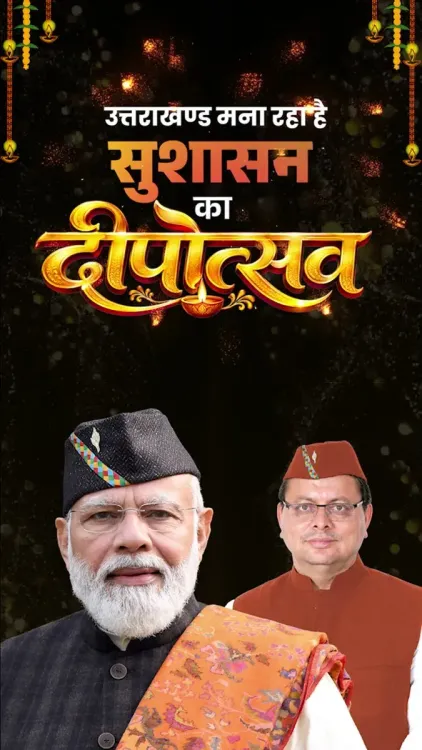
Synopsis
Uttarakhand CM Pushkar Singh Dhami reaffirmed his government's commitment to preserving the state's cultural identity and driving development, crediting PM Modi's leadership and the BJP's 'double engine' central-state alignment.
Key Takeaways
CM Pushkar Singh Dhami posted on November 8, 2026 , pledging continued work on Uttarakhand's cultural identity and development.
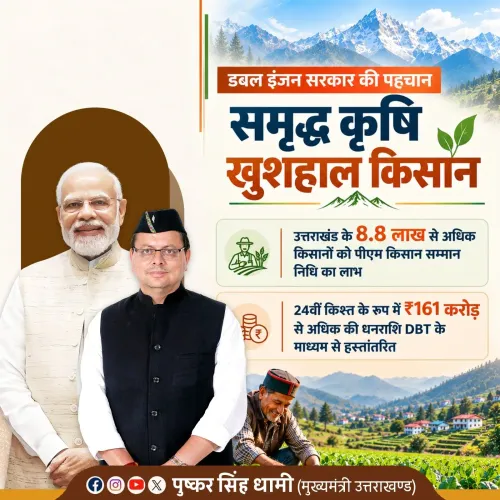
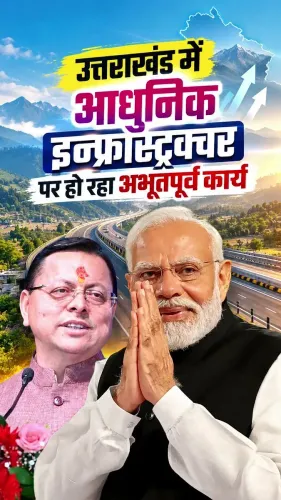
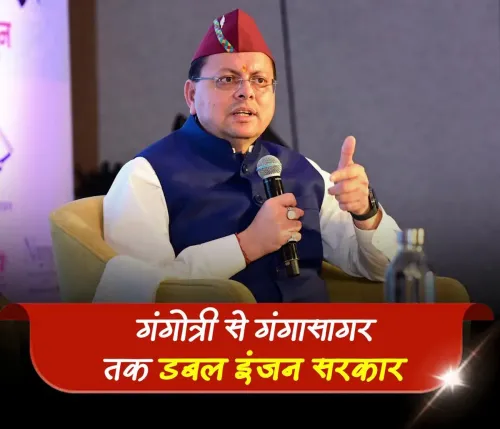
The post invokes the BJP's 'double engine government' framing — aligned central and state administrations under PM Narendra Modi .
Dhami referenced 'historical decisions' for the state's asmita (identity) and sanskritik pahchan (cultural identity), without naming specific schemes or legislation.
Uttarakhand , formed in 2000 , is known as Devbhoomi and is a major Hindu pilgrimage destination — giving cultural-identity messaging particular resonance here.
The statement aligns with the broader national 'Viksit Bharat' narrative, adapted locally as 'Viksit Uttarakhand.'
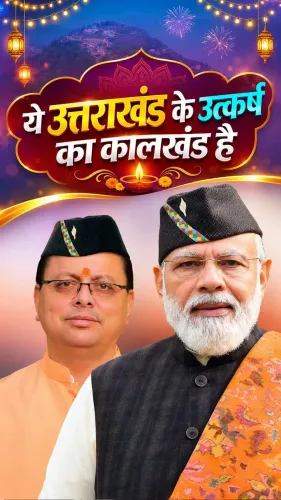
Uttarakhand Chief Minister Pushkar Singh Dhami on Sunday, November 8, 2026, invoked the state's spiritual identity and cultural heritage as he reaffirmed his government's commitment to what he called 'historical decisions' taken under Prime Minister Narendra Modi's leadership — framing the BJP's dual grip on Dehradun and Delhi as the engine of Uttarakhand's transformation.
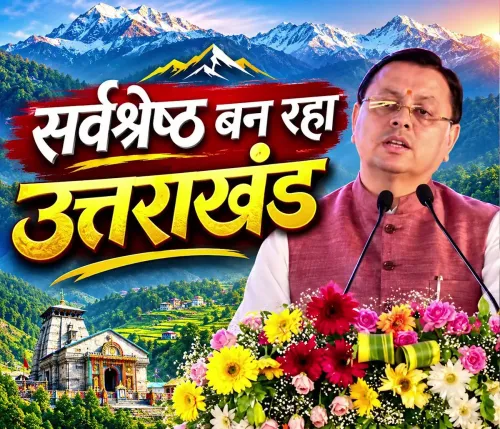
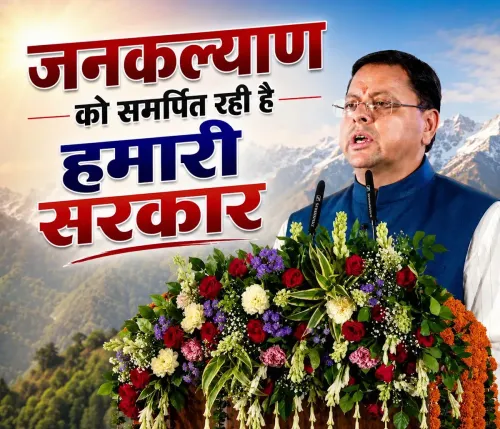
Posting on X, Dhami wrote: 'Devbhoomi ki gauravshali virasat ke sanrakshan aur viksit Uttarakhand ke nirman ke liye sarkar poorn pratibaddhata ke saath nirantar kary karti rahegi' — ('The government will continue to work with full commitment for the preservation of Devbhoomi's glorious heritage and the building of a developed Uttarakhand.')
The 'Double Engine' Frame — What It Means for Uttarakhand
The phrase 'double engine government' is a signature BJP formulation, signalling that an aligned central and state administration can unlock faster infrastructure spending, faster clearances, and a unified political vision. For Uttarakhand, a Himalayan state carved out of Uttar Pradesh in 2000 specifically to address demands for better governance and cultural representation, the framing carries particular weight.
The state is officially recognised as Devbhoomi — 'Land of the Gods' — home to major Hindu pilgrimage circuits including the Char Dham. Any assertion of 'cultural identity preservation' in this context resonates deeply with both residents and the millions of pilgrims who pass through every year.
Dhami's Governance Pitch: Identity Meets Development
Dhami's post threads together two distinct but politically potent ideas: cultural identity (the state's spiritual and heritage character) and Viksit Uttarakhand — a developed Uttarakhand — echoing the broader national 'Viksit Bharat' (Developed India) messaging championed by the Modi government ahead of its long-term policy horizon.
The post references 'historical decisions' for the state's asmita (identity) and sanskritik pahchan (cultural identity) without specifying which decisions or dates — a broad, forward-looking statement of intent rather than a policy announcement. No specific legislation, scheme, or administrative reform was named.
Still, for Uttarakhand's politically active base, the signal is clear: the state government sees its mandate as inseparable from cultural stewardship — a message that consolidates both the development voter and the heritage voter in a single narrative.
The question now is whether a follow-up announcement — on heritage conservation, administrative reform, or infrastructure — will give that commitment a concrete address.
Point of View
The statement remains political signalling ahead of what could be a testing administrative calendar for the hill state.
NationPress
8 Nov 2026
Frequently Asked Questions
What is the 'double engine government' in the context of Uttarakhand?
The 'double engine government' is a BJP phrase describing the advantage of having the same party — BJP — in power both at the Centre (under PM Modi) and in the state (under CM Dhami), enabling faster policy alignment, funding, and implementation.
Why is Uttarakhand called Devbhoomi?
Uttarakhand is called Devbhoomi, meaning 'Land of the Gods,' because it is home to major Hindu pilgrimage sites including the Char Dham circuit — Badrinath, Kedarnath, Gangotri, and Yamunotri — and numerous ancient temples.
When was Uttarakhand formed as a separate state?
Uttarakhand was carved out of Uttar Pradesh and granted statehood on November 9, 2000, to address regional demands for better governance and representation of its distinct cultural and geographic identity.
What is 'Viksit Uttarakhand' that CM Dhami referred to?
'Viksit Uttarakhand' — Developed Uttarakhand — is the state-level adaptation of PM Modi's national 'Viksit Bharat' (Developed India) vision, used by the Dhami government as an overarching framework for infrastructure and governance goals.
What specific decisions did CM Dhami announce in this post?
CM Dhami did not announce specific new decisions in this post. He reaffirmed the government's commitment to cultural identity and development, referencing past 'historical decisions' without naming them, making this a statement of intent rather than a policy announcement.