CM Dhami Reviews 97th SLBC Meet, Flags Low CDR in 6 Districts
Synopsis
Chief Minister Pushkar Singh Dhami chaired Uttarakhand's 97th SLBC meeting on 9 July 2026, directing banks to raise credit-deposit ratios in six lagging hill districts, prioritise self-employment scheme lending, expand digital banking to villages, and integrate major banks into the 1930 cyber-fraud helpline.
Key Takeaways
CM Pushkar Singh Dhami chaired the 97th SLBC meeting at the Uttarakhand secretariat on 9 July 2026 .
Six districts — Bageshwar, Pauri, Almora, Rudraprayag, Pithoragarh, and Tehri — were flagged for persistently low credit-deposit ratios; regular district camps were ordered.
The state recorded approximately 96 per cent achievement of its annual credit plan and 111 per cent in the MSME sector for FY 2025-26 .
Banks were directed to prioritise lending under Mukhya Mantri Swarozgar Yojana-2.0 , PM Mudra Yojana , Kisan Credit Card , and other self-employment schemes.
Chief Secretary Anand Bardhan called for integrating SBI, PNB, ICICI Bank, and HDFC Bank into the cyber-fraud helpline 1930 for faster fraud response.
The CM stressed expanding digital banking and digital payments to every village and strengthening PM Jan Dhan Yojana outreach.
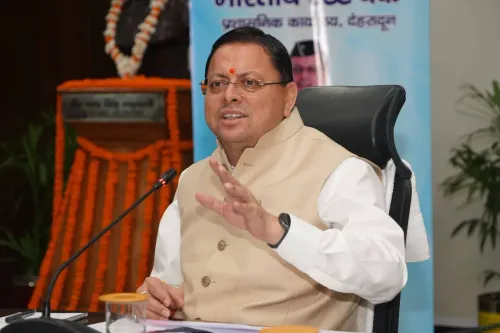
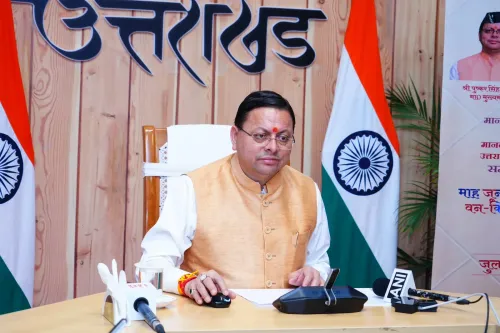
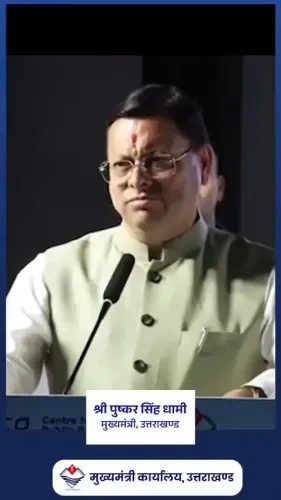
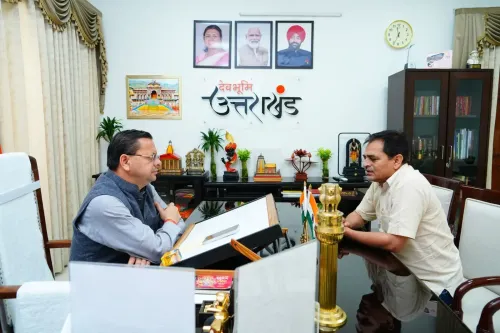
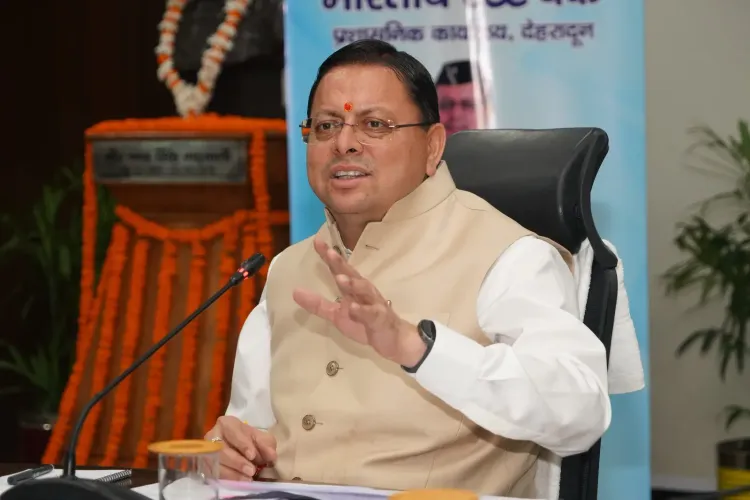
Chief Minister Pushkar Singh Dhami chaired the 97th meeting of the State Level Bankers' Committee (SLBC) at the state secretariat in Dehradun on Thursday, 9 July 2026, reviewing banking services, credit disbursement, financial inclusion, and the progress of multiple self-employment schemes across Uttarakhand.
Context
Addressing the gathering, CM Dhami underscored the banking sector's central role in the state's economic growth, directing banks to make credit more accessible to common citizens, farmers, youth, women, and entrepreneurs. He stated, 'Rajya ke aarthik vikas mein banking kshetra ki mahatvapurna bhumika hai' ('The banking sector plays a vital role in the economic development of the state').
The Chief Minister expressed particular concern over the persistently low credit-deposit (CD) ratio in six hill districts — Bageshwar, Pauri, Almora, Rudraprayag, Pithoragarh, and Tehri — and directed that regular camps be organised in these districts. He asked district administrations, lead banks, and relevant departments to jointly identify eligible beneficiaries and ensure timely loan disbursal.
Policy Backdrop
Uttarakhand's hill districts have historically recorded CD ratios below the national average, a structural challenge attributed to difficult terrain and sparse banking infrastructure. The SLBC platform has long been used by successive state governments to direct credit flows toward priority sectors, and this meeting continued that tradition with a sharper district-level focus.
CM Dhami directed banks to prioritise lending under schemes including Mukhya Mantri Swarozgar Yojana-2.0, Veer Chandra Singh Garhwali Swarozgar Yojana, Home-Stay Yojana, Pradhan Mantri Vishwakarma Yojana, Pradhan Mantri Mudra Yojana, and the Kisan Credit Card scheme. He also called for expanded banking support for agriculture, horticulture, animal husbandry, fisheries, tourism, and enterprises based on local products.
The meeting noted that the state achieved approximately 96 per cent of its annual credit plan target under the financial year 2025-26, while the MSME sector recorded 111 per cent achievement — figures the Chief Minister described as indicators of positive economic momentum. He cautioned, however, that the overall CD ratio still needs to be raised to the national average.
Stakeholders and Impact
The directives directly affect hill farmers, youth entrepreneurs, women borrowers, MSME units, and tourism operators — segments that have historically faced friction in accessing formal credit. CM Dhami also instructed banks not to reject applications on purely technical grounds; instead, officials should guide applicants to rectify deficiencies and ensure no eligible person is denied the benefit of government welfare schemes.
Chief Secretary Anand Bardhan raised a separate but critical issue at the meeting: the integration of representatives from State Bank of India (SBI), Punjab National Bank (PNB), ICICI Bank, and HDFC Bank into the cyber-crime helpline number 1930, to enable faster response to cyber-fraud cases. The Chief Minister also stressed expanding digital banking and digital payments to every village in the state, and strengthening the reach of Pradhan Mantri Jan Dhan Yojana.
What's Next
The immediate test will be whether the six low-CDR districts — Bageshwar, Pauri, Almora, Rudraprayag, Pithoragarh, and Tehri — see measurable improvement through the mandated district-level camps. The next quarterly SLBC data will be a key indicator of whether credit flows are moving toward the national average.
CM Dhami concluded by saying that government and banks working together would give new momentum to employment, self-employment, and entrepreneurship, accelerating the overall development of a 'Viksit Uttarakhand' (Developed Uttarakhand). The proposed integration of major banks into the 1930 cyber helpline is also expected to be operationalised in the near term.
Point of View
A politically significant move ahead of any future electoral cycle in a state where rural credit access is a persistent grievance. By naming six specific hill districts publicly and mandating camps, the administration is creating a paper trail that can be used both as a governance benchmark and as political messaging to underserved communities. The MSME sector's 111 per cent credit-plan achievement is a headline number the government will likely amplify, but the real test lies in whether the low-CDR districts show measurable improvement in the next quarterly SLBC report. The push to integrate major banks into the 1930 cyber helpline reflects a broader national pattern of state governments trying to close the loop between digital financial inclusion and digital fraud protection.
NationPress
9 Jul 2026
Frequently Asked Questions
What is the SLBC meeting and why does it matter for Uttarakhand?
The State Level Bankers' Committee (SLBC) is a state-level forum chaired by the Chief Minister that reviews banking performance, credit flow, and financial inclusion across Uttarakhand. It is the primary platform where the state government directs banks on priority lending and scheme implementation.
Which districts in Uttarakhand have the lowest credit-deposit ratio?
CM Dhami flagged six districts — Bageshwar, Pauri, Almora, Rudraprayag, Pithoragarh, and Tehri — for persistently low credit-deposit ratios at the 97th SLBC meeting on 9 July 2026. He directed that regular camps be held in these districts to identify eligible borrowers and ensure timely loan disbursal.
What is the Mukhya Mantri Swarozgar Yojana-2.0 in Uttarakhand?
Mukhya Mantri Swarozgar Yojana-2.0 is Uttarakhand's flagship self-employment scheme that provides subsidised loans to youth and entrepreneurs. CM Dhami directed banks to prioritise eligible applicants under this scheme at the 97th SLBC meeting.
What did CM Dhami say about cyber fraud and the 1930 helpline?
Chief Secretary Anand Bardhan, at CM Dhami's SLBC meeting, called for integrating representatives of SBI, PNB, ICICI Bank, and HDFC Bank into the national cyber-crime helpline 1930 so that cyber-fraud cases can be acted upon more quickly.
How did Uttarakhand perform on its annual credit plan in FY 2025-26?
According to figures presented at the 97th SLBC meeting, Uttarakhand achieved approximately 96 per cent of its annual credit plan target and 111 per cent achievement in the MSME sector for the financial year 2025-26, which CM Dhami described as a positive indicator of economic progress.