CM Dhami Reviews 12 Key Projects Worth Rs 6,940 Cr in Uttarakhand
Synopsis
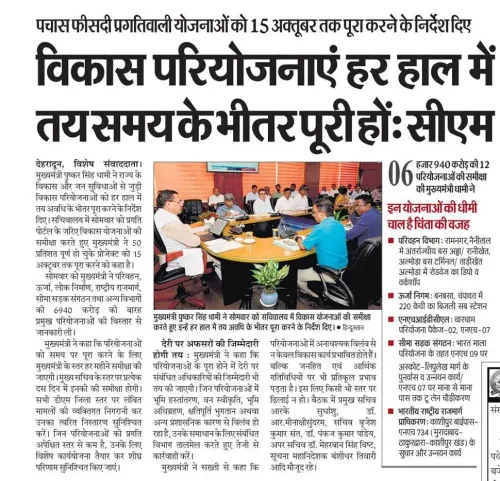
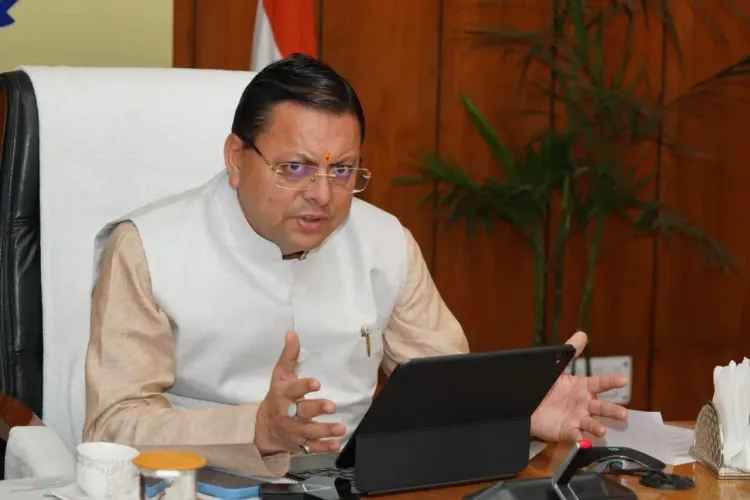
Uttarakhand CM Pushkar Singh Dhami reviewed 12 major infrastructure projects worth Rs 6,940 crore at a secretariat meeting on 8 June 2026, using the Pragati Portal. He directed officials to resolve land and forest clearance delays and set 15 October 2026 as the completion deadline for projects already 50 per cent done.
Key Takeaways
12 projects worth approximately Rs 6,940 crore were reviewed by CM Dhami at the state secretariat on 8 June 2026 .
Departments covered include transport, energy, public works, national highways, and the Border Roads Organisation .
Officials were directed to fast-track resolution of delays caused by land acquisition, forest clearances, and compensation payments.
Projects with 50 per cent or more completion must be finished by 15 October 2026 under dedicated action plans.
The Pragati Portal will be used for regular monitoring with fixed departmental accountability.
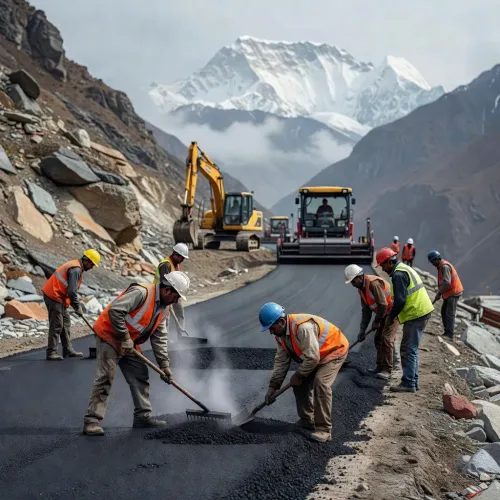
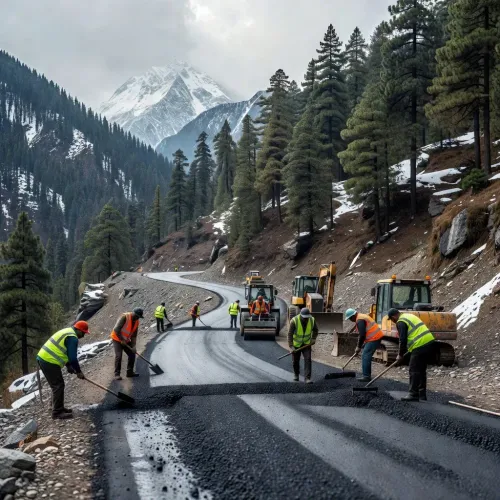
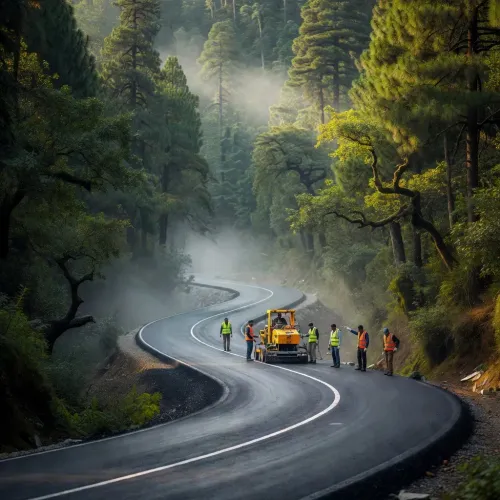
Special emphasis was placed on Char Dham road projects and strategically important border-area roads near the Line of Actual Control.
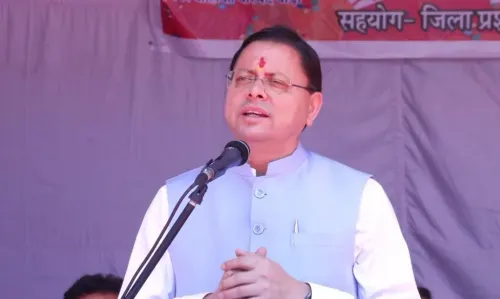
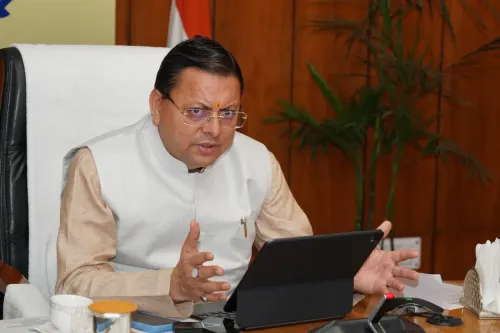
Uttarakhand Chief Minister Pushkar Singh Dhami chaired a high-level review meeting at the state secretariat on Monday, 8 June 2026, using the Pragati Portal to assess the progress of major infrastructure and development projects across the state. The meeting examined 12 key projects with a combined estimated cost of approximately Rs 6,940 crore, spanning departments including transport, energy, public works, national highways, and the Border Roads Organisation (BRO).
Context
In the post, CM Dhami stated that the secretariat review covered detailed progress updates on projects linked to parivahan, urja, lok nirman, rashtriya rajmarg evam seema sadak sangathan (transport, energy, public works, national highways, and the Border Roads Organisation). He directed officials to resolve delays caused by land acquisition, forest clearances, land transfers, compensation payments, or other administrative bottlenecks on a priority basis. Projects where 50 per cent or more work has been completed were specifically instructed to be finished by 15 October 2026 through dedicated action plans.
The Chief Minister also emphasised regular monitoring through the Pragati Portal, time-bound disposal of pending cases, and fixing accountability for timely project completion. Special attention was directed at Char Dham road projects, strategically important roads in border areas, power infrastructure, and transport connectivity schemes.
Policy Backdrop
The Pragati Portal was launched in 2016 as a national digital platform for real-time tracking of central and state infrastructure projects, designed to cut through the chronic delays that affect capital works in ecologically and administratively complex regions. Uttarakhand, a Himalayan state bordering both China and Nepal, has long faced project delays rooted in forest clearance requirements, fragile terrain, and multi-agency coordination challenges.
The Char Dham Pariyojana, formally approved by the Union Cabinet in 2016 at an initial outlay of over Rs 12,000 crore, aims to provide all-weather road connectivity to the four pilgrimage shrines of Yamunotri, Gangotri, Kedarnath, and Badrinath. The BRO received an expanded mandate for border road construction following the 2020 Galwan clashes, making strategic road-building in Uttarakhand a national security priority alongside its economic and religious significance.
Stakeholders and Impact
The review directly affects a broad set of stakeholders: road contractors and construction agencies responsible for execution, residents of remote border districts who depend on all-weather connectivity, and the millions of pilgrims who travel the Char Dham circuit annually. Improved power infrastructure under review will also benefit rural and semi-urban communities across the state.
For border communities, the timely completion of BRO-linked roads carries strategic importance beyond convenience, as dual-use infrastructure near the Line of Actual Control supports both civilian access and defence logistics. The October 2026 deadline for half-complete projects signals a push to convert long-pending works into tangible outcomes ahead of the next pilgrimage and tourist season.
What's Next
Officials have been tasked with preparing specific action plans for projects that have crossed the 50 per cent completion mark, with the 15 October 2026 date as a firm target. The Pragati Portal will serve as the monitoring backbone, with accountability fixed at the departmental level for each pending case.
The key test will be whether land acquisition and forest clearance hurdles — historically the most persistent causes of delay in Himalayan infrastructure — can be resolved at the pace the Chief Minister has demanded. Progress on Char Dham and BRO road packages in particular will be closely watched as indicators of the state's ability to deliver on its infrastructure commitments.
Point of View
Tourism revenue, and national security imperatives that define Uttarakhand's infrastructure politics. Whether administrative accountability mechanisms are strong enough to overcome the state's structural delays remains the central question.
NationPress
23 Oct 2026
Frequently Asked Questions
What is the Pragati Portal used for in Uttarakhand?
The Pragati Portal is a national digital platform for real-time monitoring of central and state infrastructure projects. CM Dhami used it at the 8 June 2026 secretariat meeting to review the progress of 12 key projects worth Rs 6,940 crore across departments including transport, energy, and public works.
What is the deadline set by CM Dhami for infrastructure projects in Uttarakhand?
CM Dhami directed that projects where 50 per cent or more work has already been completed must be finished by 15 October 2026, with officials required to prepare dedicated action plans for each such project.
Which projects were covered in CM Dhami's June 2026 review meeting?
The review covered 12 major projects worth approximately Rs 6,940 crore, including Char Dham road projects, Border Roads Organisation schemes in border areas, power infrastructure, national highways, and transport connectivity plans.
What is the Char Dham road project?
The Char Dham Pariyojana is a road widening and all-weather connectivity initiative linking the four pilgrimage shrines of Yamunotri, Gangotri, Kedarnath, and Badrinath in Uttarakhand. It was approved by the Union Cabinet in 2016 at an initial cost of over Rs 12,000 crore.
Why are infrastructure projects in Uttarakhand often delayed?
Projects in Uttarakhand face delays primarily due to land acquisition challenges, forest clearance requirements, compensation payment disputes, and the logistical complexity of building in ecologically fragile Himalayan terrain involving multiple central and state agencies.