CM Dhami stops roadside in Udham Singh Nagar for corn, citizen feedback
Synopsis
Chief Minister Pushkar Singh Dhami halted his official convoy in Udham Singh Nagar on 25 September 2026, buying roasted corn from roadside vendor Smt. Shridevi and soliciting her feedback on state government schemes — a signature piece of field-level outreach from the Uttarakhand CM.
Key Takeaways
CM Pushkar Singh Dhami was on an official tour of Udham Singh Nagar district on 25 September 2026 .
He stopped his vehicle roadside, purchased and tasted bhutte (roasted corn) from a street vendor.
Shridevi , was directly asked for her feedback on government schemes and administration.
Udham Singh Nagar is a key agricultural and industrial district bordering Uttar Pradesh with a large migrant population.
The interaction is part of a broader pattern of informal public-contact stops during CM Dhami's district governance tours.
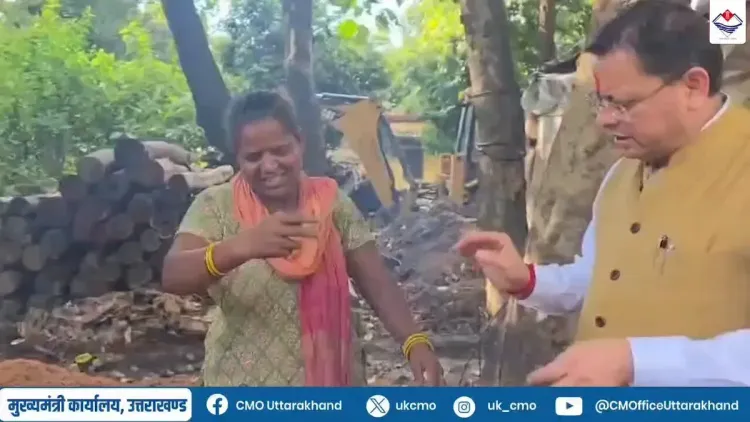
On a district tour of Udham Singh Nagar on Friday, 25 September 2026, Chief Minister Pushkar Singh Dhami did something that no briefing note could replicate — he pulled his vehicle over, bought a roasted corn cob from a roadside vendor, and sat down for a conversation about how the government is actually working on the ground.
The vendor was Smt. Shridevi, selling bhutte (roasted corn) by the roadside. CM Dhami sampled her wares and, in the same breath, asked her directly for feedback on government schemes and administration — a brief exchange that the Chief Minister's Office of Uttarakhand shared on X as evidence of grassroots outreach.
Why Udham Singh Nagar, and why this matters
Udham Singh Nagar is no ordinary district for Uttarakhand. It shares a border with Uttar Pradesh, hosts some of the state's most active agricultural land and industrial clusters, and carries a large migrant-worker population — making it a bellwether for how state policies translate into everyday livelihoods. A CM's visit here is never purely symbolic.
Indian chief ministers routinely conduct district tours that mix formal reviews with informal public contact. The informal stop — at a vendor's cart rather than a collector's office — is a deliberate signal: that feedback pipelines should run street-level, not just through bureaucratic channels. Whether those signals feed back into policy is the question that always follows.
Dhami's 'field-first' style on display
Pushkar Singh Dhami has served as Uttarakhand's Chief Minister since March 2021 and has built a visible preference for district-level interaction during governance tours. The corn-stall stop fits a pattern of low-formality, high-visibility outreach that his office has used repeatedly to project accessibility — particularly ahead of any policy rollout in rural and semi-urban constituencies.
For Smt. Shridevi and the tens of thousands of street vendors across Uttarakhand's districts, such encounters are rare windows into official attention. Whether a brief roadside chat translates into durable policy action — on vendor licensing, market access, or welfare schemes — is the metric that ultimately counts.
The real test of these field visits is not the photograph — it is what gets written down in the district collector's follow-up report the next morning.
Point of View
Such images serve a double purpose: they signal a people-first ethos and generate relatable content in a media environment saturated with formal press conferences. The harder question is whether these informal feedback loops are institutionalised — does a field note from Smt. Shridevi reach the relevant scheme officer, or does it evaporate after the video is posted? District-level outreach, however genuine in intent, earns its governance credentials only when it feeds traceable follow-up action.
NationPress
25 Sept 2026
Frequently Asked Questions
Why did CM Dhami stop at a roadside corn stall in Udham Singh Nagar?
During an official district tour on 25 September 2026, CM Pushkar Singh Dhami stopped to buy and eat roasted corn from vendor Smt. Shridevi and simultaneously collected her feedback on government schemes — combining informal public outreach with his governance visit.
Who is Pushkar Singh Dhami?
Pushkar Singh Dhami is the Chief Minister of Uttarakhand, serving since March 2021 and representing the BJP. He is known for frequent district tours and grassroots public-contact events.
What is Udham Singh Nagar known for?
Udham Singh Nagar is a district in Uttarakhand bordering Uttar Pradesh, significant for its agriculture, industrial activity, and large migrant-worker population — making it an important bellwether for state governance.
What feedback did CM Dhami collect from the vendor?
CM Dhami spoke with roadside corn vendor Smt. Shridevi during his Udham Singh Nagar tour and asked her about the performance of government schemes and administration, though specific details of their conversation have not been officially disclosed.
Is it common for Indian chief ministers to interact with street vendors during tours?
Yes, informal stops at local vendors or citizens during district tours are a common form of grassroots outreach for Indian state chief ministers, used to gather direct public feedback outside formal administrative channels.