CM Dhami: Uttarakhand local products gaining global recognition
Synopsis
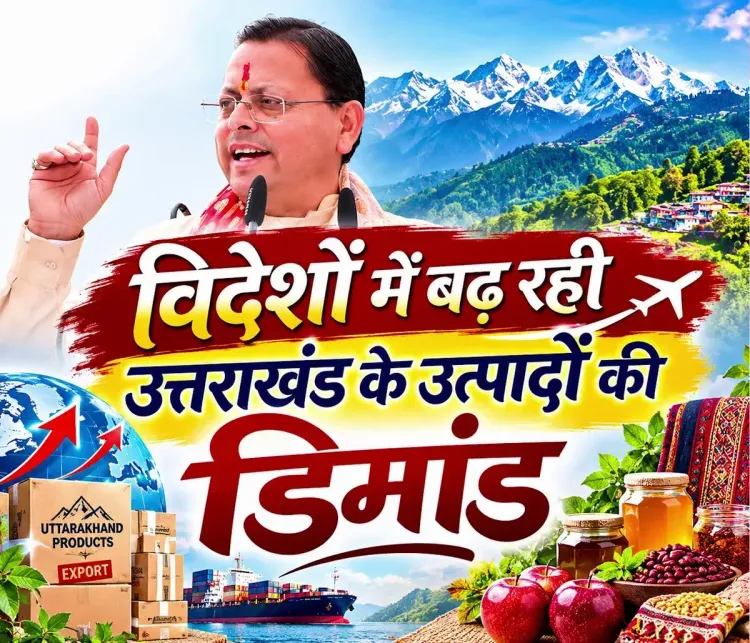
Uttarakhand CM Pushkar Singh Dhami on 12 November 2026 celebrated historic growth in the state's local product exports, pointing to rising global demand for GI-tagged specialty items like mandua, jhangora, and organic honey as evidence of a strengthening hill-state economy.
Key Takeaways
CM Pushkar Singh Dhami on 12 November 2026 declared Uttarakhand's local products are achieving global recognition with historically high export growth.
Key export products include mandua, jhangora, organic honey, medicinal herbs and single-estate teas, many carrying GI tags introduced since 2019.
The state's export strategy targets premium, health-conscious international markets where Himalayan-origin specialty produce commands higher prices.
Primary beneficiaries are local farmers, artisans, and MSME exporters in Uttarakhand's rural economy.
The push aligns with India's Atmanirbhar Bharat framework and aims to diversify the state economy beyond its dependence on tourism revenue.
Specific export figures are awaited from the Uttarakhand commerce department to substantiate the 'historic growth' claim.
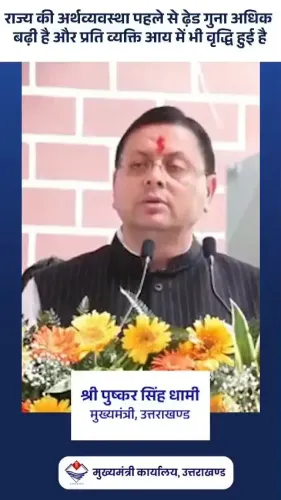
Uttarakhand's niche exports — from organic honey and herbs to ancient millets — are carving out a place on the world stage, and Chief Minister Pushkar Singh Dhami wants that story heard. On Thursday, 12 November 2026, Dhami posted on X to celebrate what he called a historic rise in exports of the state's local products, calling it proof of both growing global demand and a strengthening local economy.
Posting in Hindi, Dhami wrote: 'Uttarakhand ke sthaniya utpad aaj vaishvik pehchan bana rahe hain' — 'Uttarakhand's local products are building global recognition today. The historic growth in their exports is proof of the increasing demand for the state's products and the strengthening of the local economy.'
From Himalayan hillsides to international shelves
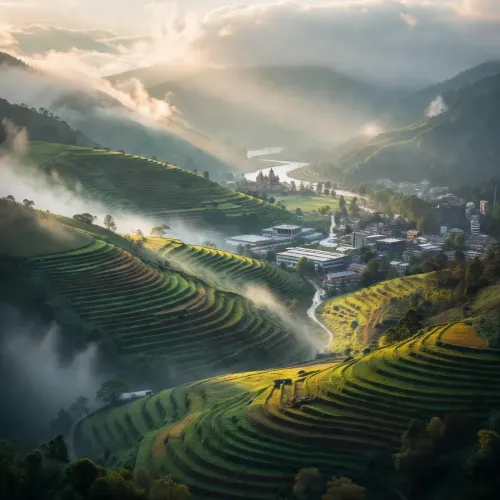
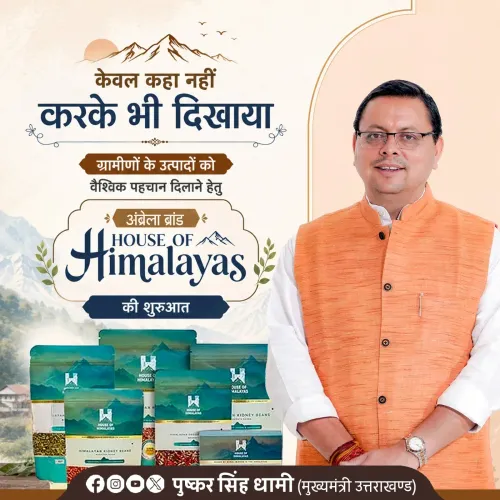
Uttarakhand occupies a distinctive niche in India's export landscape. Its rugged Himalayan geography limits large-scale conventional farming but produces specialty crops — mandua (finger millet), jhangora (barnyard millet), organic honey, medicinal herbs, and single-estate teas — that command premium prices in health-conscious markets abroad. The state government has pursued Geographical Indication (GI) tagging for many of these products since 2019, a move designed to protect their identity and unlock higher margins for local farmers and artisans.
The push fits squarely within the broader national architecture of Atmanirbhar Bharat and production-linked incentive frameworks, which encourage state governments to build export pipelines around unique local strengths. For a hill state that cannot easily compete on agricultural volume, quality and authenticity are the competitive edge.
MSME exporters and farmers at the centre
The principal beneficiaries of any export surge are local farmers, artisans, and MSME exporters who form the backbone of Uttarakhand's non-tourism rural economy. GI tagging and export promotion directly translate into better farmgate prices and more stable demand — a meaningful shift for communities in remote valleys where alternative livelihoods are scarce. Dhami's government has positioned this as an economic counterweight to the state's heavy dependence on tourism revenue, which is itself vulnerable to seasonal and climatic disruption.
What to watch next
The specific export figures underpinning Dhami's claim of 'historic' growth are expected to be formalised in a release by the Uttarakhand commerce department. Any new trade-promotion memoranda signed with overseas buyers will be the clearest indicator of whether this momentum is being institutionalised. For now, the Chief Minister's statement signals that the state intends to keep this narrative — and its policy energy — firmly in the spotlight.
Uttarakhand's bet is simple: the world is hungry for clean, traceable, Himalayan-origin produce. The question is whether the supply chain, logistics, and branding infrastructure can scale fast enough to meet it.
Point of View
Diversifying away from tourism-dependent revenue is a structural imperative, not just optics. Whether the export infrastructure — cold chains, logistics, overseas buyer networks — can sustain a genuine step-change remains the harder, unanswered question.
NationPress
12 Nov 2026
Frequently Asked Questions
Which products from Uttarakhand are being exported globally?
Uttarakhand exports specialty crops such as mandua (finger millet), jhangora (barnyard millet), organic honey, medicinal herbs, and single-estate teas. Many of these carry Geographical Indication (GI) tags that authenticate their Himalayan origin and help them fetch premium prices in international markets.
What did CM Dhami say about Uttarakhand exports?
On 12 November 2026, CM Pushkar Singh Dhami posted on X that Uttarakhand's local products are building global recognition and that the historic growth in their exports is proof of rising global demand and a strengthening local economy.
What is GI tagging and why does it matter for Uttarakhand?
A Geographical Indication (GI) tag is a certification that a product originates from a specific region and possesses qualities attributable to that origin. For Uttarakhand, GI tags on products like mandua and organic honey protect them from imitation and allow exporters to charge higher prices in global specialty markets.
How does Uttarakhand's export growth relate to Atmanirbhar Bharat?
India's Atmanirbhar Bharat framework encourages states to build export pipelines around their unique local strengths. Uttarakhand's focus on GI-tagged organic and specialty produce fits directly within this national policy architecture, with the state using it to grow non-tourism rural income.
Who benefits from Uttarakhand's rising exports?
The primary beneficiaries are local farmers, artisans, and small and medium enterprise (MSME) exporters in Uttarakhand's rural communities, particularly those in remote valleys where alternative income sources are limited.