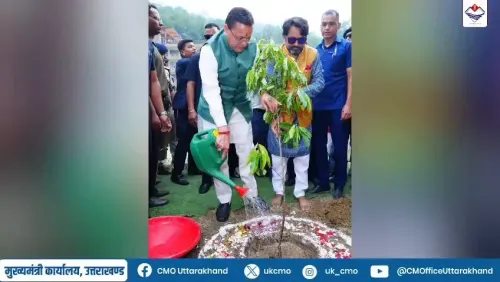
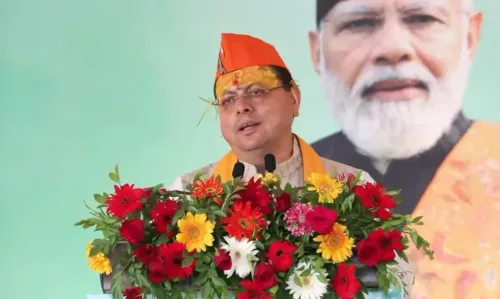
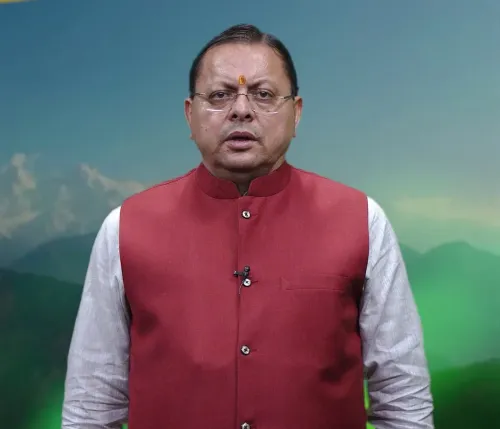
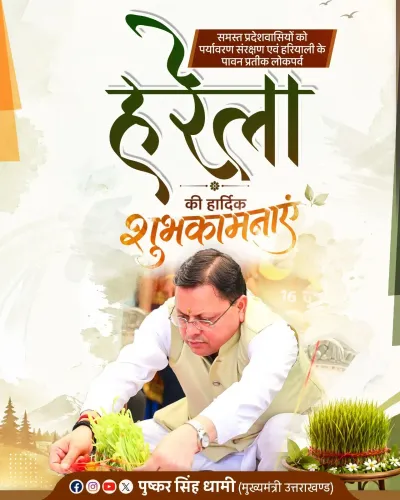
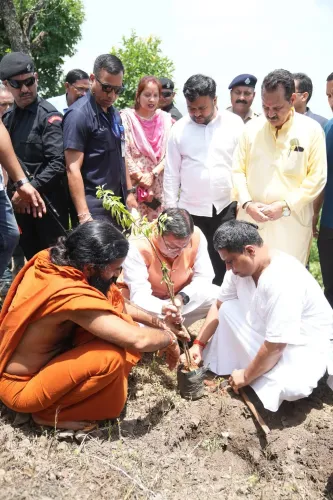
CM Dhami turns Harela into Uttarakhand's green movement
Synopsis
Chief Minister Pushkar Singh Dhami has repositioned Uttarakhand's traditional Kumaoni festival Harela as a statewide environmental conservation and public participation campaign, with Udham Singh Nagar among the highlighted districts in the 16 July 2026 announcement.
Key Takeaways
The Chief Minister's Office of Uttarakhand declared on 16 July 2026 that Harela has become a wide-ranging environmental campaign under CM Pushkar Singh Dhami .
Harela is a traditional Kumaoni monsoon festival observed in mid-July, historically tied to seed-sowing and tree planting.
Udham Singh Nagar district in southern Uttarakhand is specifically highlighted as part of this year's campaign outreach.
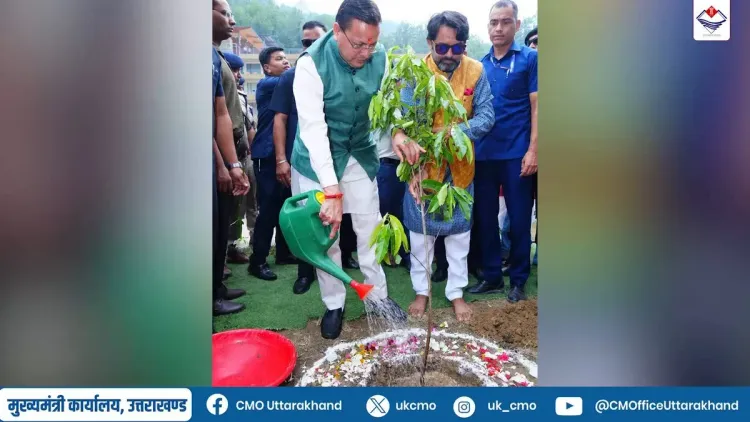
Uttarakhand has organised mass tree-plantation drives aligned with Harela for several years, using cultural mobilisation to advance afforestation goals.
Village panchayats and local communities are the primary organisational units for the campaign.
Statewide plantation targets and district-level guidelines for the 2026 Harela cycle are expected to be announced in the coming days.
The Chief Minister's Office of Uttarakhand announced on Thursday, 16 July 2026 that Harela, the traditional Kumaoni folk festival, has evolved under Chief Minister Pushkar Singh Dhami's leadership into a broad-based campaign for environmental conservation and public participation, with Udham Singh Nagar district among the highlighted regions.
Context
The official post states: 'मुख्यमंत्री श्री पुष्कर सिंह धामी के नेतृत्व में उत्तराखण्ड का लोकपर्व हरेला अब केवल एक पारंपरिक उत्सव नहीं, बल्कि पर्यावरण संरक्षण और जनभागीदारी का व्यापक अभियान बन चुका है' — ('Under the leadership of Chief Minister Pushkar Singh Dhami, Uttarakhand's folk festival Harela is no longer merely a traditional celebration, but has become a wide-ranging campaign for environmental conservation and public participation.')
Harela is a Kumaoni harvest and monsoon festival rooted in the agrarian calendar of the central Himalayas. It is traditionally observed in mid-July, coinciding with the onset of the monsoon, when communities sow seeds and plant saplings as a ritual of renewal and prosperity.
Policy Backdrop
Uttarakhand administrations have, for several years, aligned mass tree-plantation drives with the Harela festival, using the occasion to mobilise communities around afforestation goals. The approach reflects a broader national push to increase India's green cover through culturally embedded, grassroots participation rather than top-down mandates alone.
Chief Minister Dhami, who has led the state since March 2021, has consistently framed conservation as a civic duty intertwined with Uttarakhand's Himalayan identity. By institutionalising Harela as a platform for environmental action, the state government aims to extend the festival's reach beyond its traditional Kumaoni heartland to districts such as Udham Singh Nagar in the Terai belt.
Stakeholders and Impact
The primary beneficiaries and participants are local communities, village panchayats, and district administrations across Uttarakhand's diverse ecological zones — from the high-altitude Garhwal and Kumaon hills to the plains of the Terai. Embedding plantation targets within a beloved cultural festival lowers the barrier to participation and lends the drive social legitimacy.
For Udham Singh Nagar, one of the state's most populous and agriculturally active districts, a community-driven green campaign carries added significance given ongoing pressures on land use and forest cover in the Terai region. Village-level panchayats are expected to serve as the primary organisational units for mobilising volunteers and tracking saplings planted.
What's Next
Attention will now turn to statewide plantation targets announced for the 2026 Harela cycle and any district-level guidelines issued by the Uttarakhand Forest Department or the Chief Minister's Office in the coming days. The scale of community turnout and the number of saplings planted across districts will serve as the key metrics by which this year's campaign is assessed.
If the state government formalises district-wise targets and monitoring mechanisms, Harela's transformation from a cultural observance into a measurable conservation programme could offer a replicable model for other Himalayan states seeking to blend indigenous traditions with environmental policy.
Point of View
The Dhami government is pursuing a well-tested strategy of attaching policy goals to cultural legitimacy — a move that can significantly boost grassroots participation in ways that administrative directives alone cannot. The emphasis on Udham Singh Nagar, a Terai district with distinct land-use pressures, signals that the campaign is being designed to transcend its Kumaoni origins and achieve statewide relevance. This approach mirrors broader trends across Indian states where festivals are increasingly co-opted as vehicles for public-health, sanitation, and conservation drives. The real test will be whether measurable plantation targets and post-monsoon survival audits follow the mobilisation rhetoric.
NationPress
16 Jul 2026
Frequently Asked Questions
What is Harela festival in Uttarakhand?
Harela is a traditional Kumaoni folk festival observed in mid-July to mark the onset of the monsoon season. Communities ritually sow seeds and plant saplings, making it a natural fit for state-led afforestation campaigns.
How has CM Pushkar Singh Dhami transformed Harela?
Under Chief Minister Pushkar Singh Dhami, Harela has been repositioned from a purely cultural observance into a statewide campaign for environmental conservation and community participation, with district-level tree-plantation drives organised around the festival.
Which district is highlighted in the 2026 Harela campaign?
Udham Singh Nagar, a district in southern Uttarakhand's Terai belt, is specifically mentioned in the Chief Minister's Office announcement of 16 July 2026.
When is Harela celebrated in 2026?
Harela falls in mid-July each year, coinciding with the onset of the monsoon. The Chief Minister's Office post was published on 16 July 2026, indicating the festival period is currently under way.
What is the role of panchayats in Uttarakhand's Harela plantation drive?
Village panchayats serve as the primary organisational units for mobilising community volunteers and coordinating tree-plantation activities during the Harela campaign across Uttarakhand's districts.