CM Dhami Calls Uttarakhand to Lead World in Education, Values
Synopsis
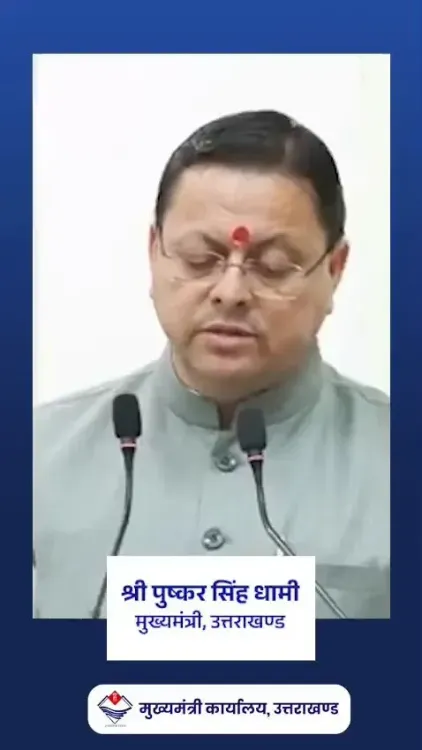
Chief Minister Pushkar Singh Dhami on 3 July 2026 called on all residents of Uttarakhand to make the state a global benchmark in education and cultural values, invoking the state's Devbhoomi identity as the foundation for this civilisational responsibility.
Key Takeaways
CM Pushkar Singh Dhami on 3 July 2026 called Uttarakhand's residents to establish the state as a world model in education and sanskar .
The statement was shared by the Chief Minister's Office of Uttarakhand on X, framing the goal as a collective civic responsibility.
Uttarakhand , officially promoted as Devbhoomi , has a longstanding policy of linking educational goals to its cultural and spiritual identity.
The vision aligns with the National Education Policy 2020 , which calls for integrating traditional values with modern curricula.
Key stakeholders include students, educators, and all residents of the state, who are directly addressed in the Chief Minister's statement.
Next education budget and curriculum updates will be watched for concrete policy steps flowing from this vision.
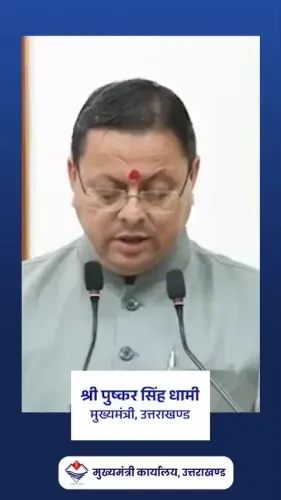
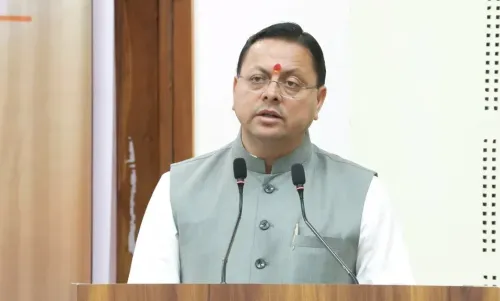
Chief Minister Pushkar Singh Dhami on Friday, 3 July 2026, called upon the people of Uttarakhand to shoulder a vital responsibility — establishing the state as a global benchmark in education and cultural values, not just for India but for the entire world. The Chief Minister's Office of Uttarakhand shared the statement on X, underscoring the government's intent to position Devbhoomi (the Land of Gods) as a model of value-based learning.
Context
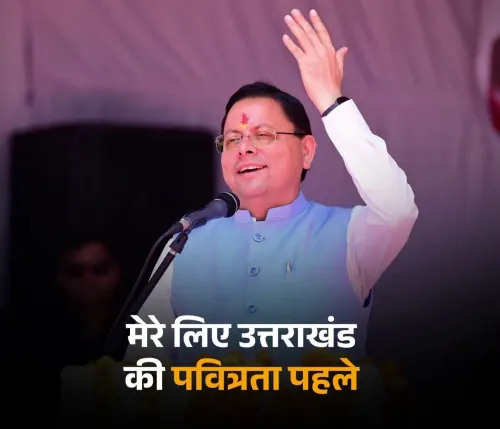
In the post, CM Dhami stated: 'It is the important responsibility of all residents of Devbhoomi that Uttarakhand establishes an ideal not just for India but for the entire world in the matters of education and sanskar (cultural values).' The statement frames education reform not merely as a policy goal but as a civilisational duty tied to the state's sacred identity.
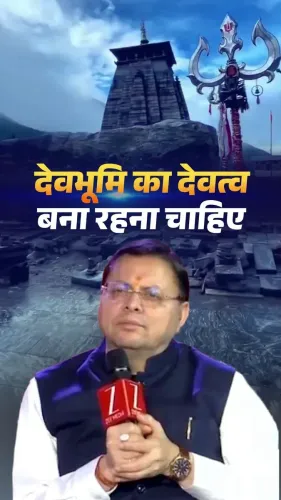
The invocation of Devbhoomi — the official cultural designation of Uttarakhand — signals that the government views the state's spiritual heritage as inseparable from its educational ambitions. This framing has been a recurring thread in CM Dhami's public communication since he assumed office in 2021.
Policy Backdrop
The statement arrives against the backdrop of the National Education Policy (NEP) 2020, which explicitly called for integrating India's traditional knowledge systems and values with contemporary curricula across all states. Uttarakhand has been among the states actively aligning its education framework with NEP goals, including value education and mother-tongue-based instruction.
Uttarakhand was carved out as a separate state in 2000 with a mandate to preserve its distinct Himalayan cultural identity alongside developmental progress. Successive governments in Dehradun have consistently linked educational policy to the concept of Devbhoomi, positioning the state as a custodian of Indian civilisational values.
Stakeholders and Impact
The primary stakeholders are Uttarakhand's students, teachers, and the broader resident population — collectively addressed by CM Dhami as Devbhoomivasiyon (residents of Devbhoomi). By framing this as a shared civic responsibility, the statement extends ownership beyond the government to every family and institution in the state.
Educators and curriculum designers stand at the centre of any practical follow-through. If the state moves to embed sanskar-based modules more formally into school and higher education programmes, it would affect thousands of institutions and millions of students across the hill state. The statement also carries a soft-power dimension, projecting Uttarakhand as an aspirational model for other states and, as CM Dhami explicitly said, for the world.
What's Next
Observers will watch the state's next education budget and any forthcoming curriculum revision announcements for concrete steps that translate this vision into policy. Proposals around value education, Devbhoomi-linked pedagogy, or partnerships with cultural institutions could follow.
The broader pattern suggests that Uttarakhand is positioning itself as a laboratory for NEP implementation with a distinctly cultural accent — a model that, if successful, could influence how other states with strong heritage identities approach the intersection of education and tradition.
Point of View
The Chief Minister elevates a state-level education agenda to a civilisational narrative, which is consistent with the broader BJP-governed states' approach of weaving cultural heritage into governance messaging. The real test will come when rhetoric meets budget lines and curriculum revisions. Until then, the statement functions primarily as a signal to the state's electorate and to national audiences about Uttarakhand's self-image as a values-first state.
NationPress
2 Oct 2026
Frequently Asked Questions
What did CM Pushkar Singh Dhami say about Uttarakhand education?
CM Pushkar Singh Dhami said it is the important responsibility of all residents of Devbhoomi Uttarakhand to establish the state as a global ideal in education and cultural values, not just for India but for the entire world.
What is Devbhoomi and why is it linked to Uttarakhand's education policy?
Devbhoomi, meaning 'Land of Gods,' is the cultural designation of Uttarakhand, a Himalayan state formed in 2000. Successive state governments have linked educational goals to this identity, promoting value-based and culturally rooted learning.
How does CM Dhami's statement connect to the National Education Policy 2020?
The National Education Policy 2020 called for integrating India's traditional knowledge systems and cultural values into modern curricula. CM Dhami's emphasis on 'sanskar' alongside education aligns directly with this national framework.
Who are the stakeholders affected by Uttarakhand's education vision?
The primary stakeholders are students, teachers, and all residents of Uttarakhand. If the vision translates into formal policy, it would affect thousands of schools and higher education institutions across the state.
What should we watch for next in Uttarakhand's education policy?
The next state education budget and any curriculum revision announcements will be key indicators of whether CM Dhami's vision leads to concrete policy changes, particularly around value education and Devbhoomi-linked pedagogy.