CM Dhami Vows Last-Mile Development for Uttarakhand
Synopsis
Uttarakhand Chief Minister Pushkar Singh Dhami has pledged to deliver development benefits to the most remote corners of the state, reaffirming the BJP's Antyodaya-style commitment to last-mile welfare outreach across the Himalayan state's border and high-altitude communities.
Key Takeaways
CM Pushkar Singh Dhami on 4 July 2026 publicly reaffirmed his government's resolve to extend development to Uttarakhand's most remote citizens.
The pledge directly addresses Uttarakhand 's long-standing governance challenge of delivering services across high-altitude, terrain-constrained districts.
The statement aligns with the BJP 's national Antyodaya framework, which prioritises the poorest and most marginalised households.
Uttarakhand was formed in 2000 specifically to address governance gaps in hilly regions previously administered from distant plains-based centres.
Border and high-altitude village communities remain the primary intended beneficiaries of this last-mile development commitment.
Upcoming state budget allocations and infrastructure tenders for remote districts will indicate whether the pledge is backed by concrete policy action.
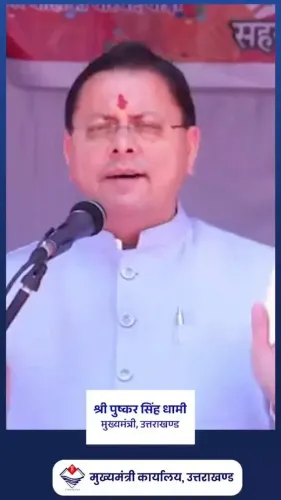
Uttarakhand Chief Minister Pushkar Singh Dhami on Saturday, 4 July 2026, reaffirmed his government's commitment to delivering development benefits to the most remote corners of the state, pledging that no citizen — however far from the state's administrative centre — would be left behind.
Context
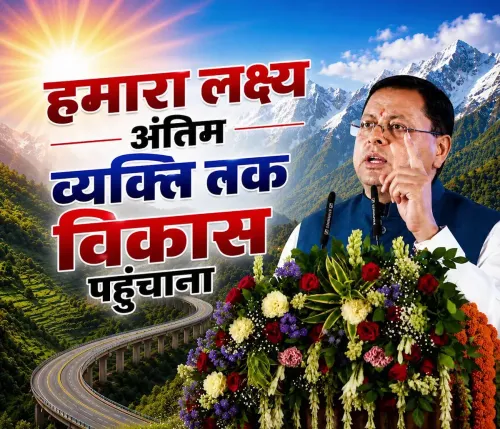
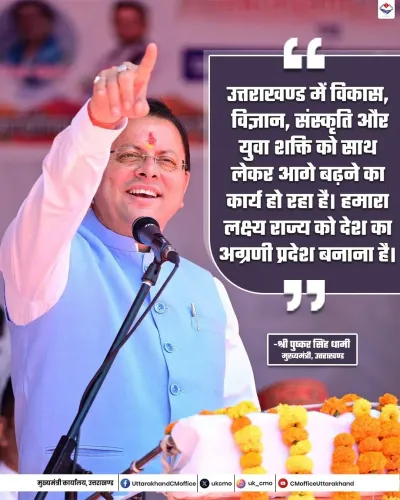
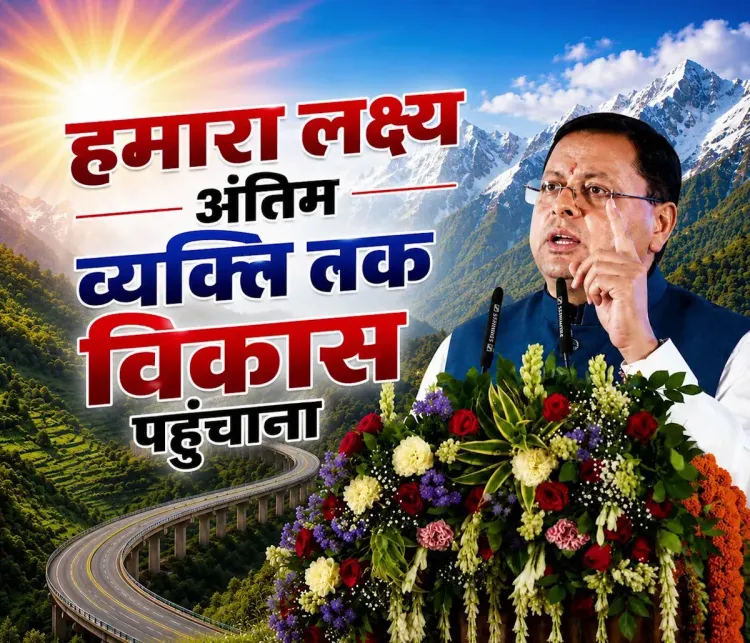
Posting on X, CM Dhami wrote in Hindi: 'उत्तराखण्ड के अंतिम छोर पर खड़े अंतिम व्यक्ति तक विकास की धारा पहुंचाना हमारा संकल्प है' ['It is our resolve to bring the stream of development to the last person standing at the farthest edge of Uttarakhand']. He added that his government remains 'committed to taking the benefits of development to every section of society' and is 'continuously moving in the right direction' toward that goal.
The statement carries particular resonance in Uttarakhand, a Himalayan state where high-altitude terrain, sparse road connectivity, and dispersed border villages have historically made equitable service delivery one of the central governance challenges since the state's formation in 2000.
Policy Backdrop
The framing echoes the Antyodaya philosophy — prioritising the poorest and most marginalised — that has been a recurring motif in Bharatiya Janata Party policy documents at both the national and state levels since 2014. Uttarakhand was itself carved out of Uttar Pradesh precisely to address governance deficits in its hilly districts, and successive state governments have cited last-mile connectivity as a benchmark of administrative success.
The BJP has governed Uttarakhand since 2017, and CM Dhami, who has held the chief ministership since 2021, has consistently anchored his public communication around inclusive growth and infrastructure outreach to remote and border communities.
Stakeholders and Impact
The communities most directly addressed by this pledge are the residents of Uttarakhand's high-altitude villages, many of which sit along the Indo-China and Indo-Nepal border belts. These settlements face seasonal road closures, limited digital connectivity, and constrained access to welfare schemes administered from district headquarters.
Broader beneficiaries include marginalised groups across the state — including Scheduled Caste and Scheduled Tribe households, women-headed families, and small farmers in the upper Himalayan belt — who form the core constituency of last-mile welfare delivery programmes.
What's Next
Uttarakhand's upcoming state budget cycle and infrastructure project tenders for remote districts will be the clearest test of whether this stated resolve translates into specific allocations. Observers will watch for new road, digital, and welfare-delivery announcements targeting the state's most inaccessible panchayats as a measure of follow-through on CM Dhami's commitment.
Point of View
A concern that predates the state's own formation. What distinguishes such statements from routine political messaging is whether they are followed by budgetary specificity; with the state's fiscal cycle approaching, this pledge sets a visible benchmark. The broader pattern suggests this is as much about consolidating support in remote border constituencies as it is about governance delivery.
NationPress
4 Jul 2026
Frequently Asked Questions
What did Uttarakhand CM Dhami say about development on 4 July 2026?
CM Pushkar Singh Dhami pledged that his government's resolve is to bring the stream of development to the last person at the farthest edge of Uttarakhand, committing to reach every section of society with development benefits.
What is the Antyodaya approach and how does it relate to Uttarakhand?
Antyodaya is a welfare philosophy focused on uplifting the poorest and most marginalised citizens first. The BJP has incorporated it into policy since 2014, and it is especially relevant to Uttarakhand, where remote Himalayan villages often receive services last due to terrain challenges.
Why is last-mile development a challenge in Uttarakhand?
Uttarakhand's high-altitude terrain, seasonal road closures, and dispersed border settlements make it difficult to deliver infrastructure and welfare schemes uniformly, a problem that was central to the argument for creating a separate hill state in 2000.
When did Pushkar Singh Dhami become Chief Minister of Uttarakhand?
Pushkar Singh Dhami has served as Chief Minister of Uttarakhand since 2021 under the BJP government, which has held power in the state since 2017.
Which communities in Uttarakhand benefit most from last-mile development schemes?
Residents of high-altitude and border villages along the Indo-China and Indo-Nepal belts, along with Scheduled Caste and Scheduled Tribe households, women-headed families, and small farmers in the upper Himalayan belt, are the primary intended beneficiaries.