CM Dhami Vows to Honour Uttarakhand Statehood Activists' Vision
Synopsis
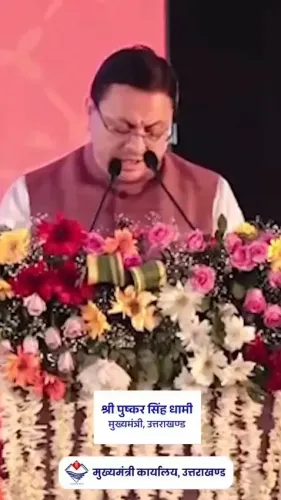
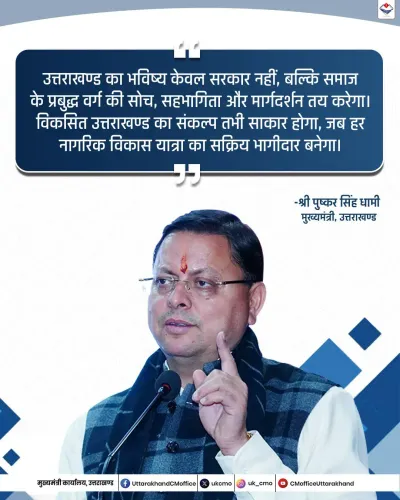
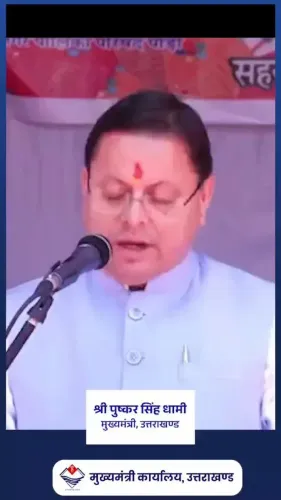
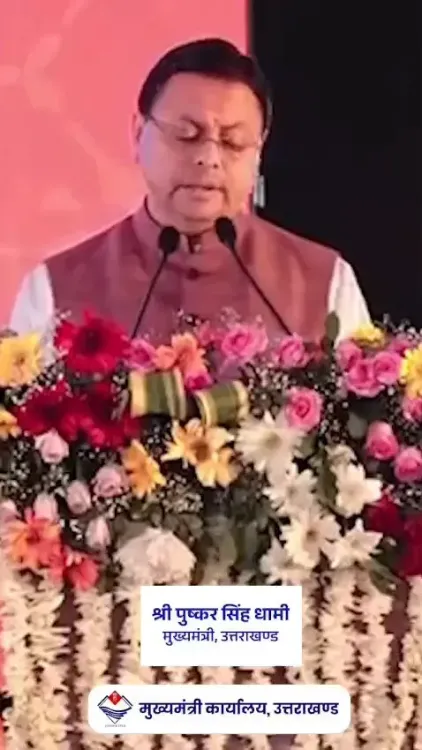
Chief Minister Pushkar Singh Dhami declared on 6 November 2026 that his government is continuously working to develop and prosper Uttarakhand in line with the aspirations of the state's statehood movement activists, reinforcing a long-standing political frame ahead of the state's Foundation Day month.
Key Takeaways
CM Pushkar Singh Dhami reaffirmed on 6 November 2026 that the Uttarakhand government is working to fulfil the aspirations of statehood movement activists.
Uttarakhand was formed on 9 November 2000 following the Uttarakhand Andolan, a decade-long agitation against neglect under Uttar Pradesh.
The statement was posted by the official Chief Minister's Office account from Dehradun , the state capital.
Dhami, a BJP Chief Minister first elected in 2021 and re-elected in 2022, has consistently linked governance to the founding movement's legacy.
No specific new scheme or statistic was announced; the post affirmed the government's overarching development philosophy.
Invoking the andolan is a recurring rhetorical strategy in Uttarakhand that simultaneously claims credit and sets a public accountability standard.
Twenty-six years after a people's movement carved Uttarakhand out of Uttar Pradesh, the state's Chief Minister is keeping that founding struggle front and centre of his government's self-definition. On Friday, 6 November 2026, the Chief Minister's Office of Uttarakhand posted a pointed declaration on X from Chief Minister Pushkar Singh Dhami — a reaffirmation that the government's development drive is inseparable from the aspirations of those who fought for statehood.
Dhami's words, in Hindi, were direct: 'Hamari sarkar Uttarakhand ko rajya andolankariyon ki aakankkshaon ke anurup viksit evam samridh banane ke liye nirantar karya kar rahi hai' — 'Our government is continuously working to develop and prosper Uttarakhand in line with the aspirations of the state movement activists.'
The Andolan that Built a State
The Uttarakhand Andolan — the decade-long agitation through the 1990s — was fuelled by the hill region's distinct geography, language, culture, and a deep sense of administrative neglect under Uttar Pradesh. The movement's most searing moment came on 2 October 1994 in Muzaffarnagar, where protesters were killed, galvanising national sympathy. Uttarakhand was finally formed on 9 November 2000, making November a month charged with symbolic weight for the state.
Invoking the andolan is not incidental rhetoric. It is a deliberate political grammar in Uttarakhand — one all state governments, regardless of party, have used to anchor spending decisions, infrastructure pushes, and welfare schemes in the moral authority of the statehood struggle.
Dhami's BJP and the Aspiration Mandate
Pushkar Singh Dhami, who first became Chief Minister in 2021 and was re-elected after the BJP's 2022 assembly victory, has consistently styled his administration as the fulfilment of what the andolan generation envisioned: a prosperous, distinctly Pahadi state rather than a neglected appendage of a plains-dominated UP. His government has focused messaging around reversing the state's chronic out-migration problem, expanding hill-district connectivity, and positioning Uttarakhand as an investment and spiritual-tourism destination.
The November 6 statement carries no announcement of a specific new scheme or figure — it is a statement of governing philosophy, not a budget line. But it lands in the month that includes the state's own Foundation Day, amplifying its resonance.
A Recurring Frame, A Permanent Pressure
Successive administrations have discovered that invoking the andolan is also a form of accountability. The activists and their families are a watchful constituency, and the gap between the movement's aspirations — meaningful self-governance, prosperity for hill communities, reversal of migration — and the daily reality of Uttarakhand's underdeveloped hill districts remains a live political fault line. Each time a Chief Minister uses this language, he is simultaneously claiming credit and accepting a measuring stick.
Dhami's government will likely face that measuring stick again as the state approaches its next electoral cycle. For now, the message from Dehradun is unambiguous: the andolan is not history — it is the brief.
Point of View
The andolan is not a distant memory but a living moral claim on the state's rulers. By placing development work explicitly in the frame of activist aspirations, the BJP administration is signalling continuity with a cross-party popular cause, insulating itself from opposition charges of neglecting hill communities. The statement's timing in November — the state's foundation month — amplifies its symbolic weight without requiring any new policy commitment. The real test, as always, is whether the frame is backed by measurable progress on out-migration reversal and hill-district prosperity.
NationPress
7 Nov 2026
Frequently Asked Questions
What did CM Pushkar Singh Dhami say about Uttarakhand's development on 6 November 2026?
CM Dhami stated that his government is continuously working to develop and prosper Uttarakhand in line with the aspirations of the state movement activists who fought for separate statehood.
What was the Uttarakhand Andolan?
The Uttarakhand Andolan was a decade-long popular agitation through the 1990s demanding a separate hill state distinct from Uttar Pradesh, culminating in the formation of Uttarakhand on 9 November 2000.
When was Uttarakhand formed as a separate state?
Uttarakhand was carved out of Uttar Pradesh on 9 November 2000 , following sustained public agitation. November is therefore a symbolically significant month for the state.
Who is Pushkar Singh Dhami and how long has he been Chief Minister?
Pushkar Singh Dhami is the BJP Chief Minister of Uttarakhand. He first became Chief Minister in 2021 and was re-elected after the BJP's victory in the 2022 state assembly elections.
Why do Uttarakhand leaders frequently reference the statehood movement?
The statehood movement is a foundational political reference point in Uttarakhand — invoking it allows governments to frame development spending and policy as the fulfilment of a moral promise made to those who sacrificed for the state's creation.