CM Dhami's Uttarakhand Pilgrimage Push Breaks Records
Synopsis
Uttarakhand's Chief Minister's Office reports sweeping pilgrim records across the state in 2026 — Char Dham at 45.84 lakh in 105 days, Adi Kailash at 52,441 in two months, and multiple shrines doubling or tripling footfall as CM Dhami pursues a 'world spiritual capital' agenda.
Key Takeaways
45,84,375 pilgrims completed the Char Dham yatra in 105 days in 2026 — a new seasonal record.
Yamunotri Dham logged 6,54,958 pilgrims by August 2 , the highest count in its recorded history.
Jageshwar Dham and Triyuginarayan each saw pilgrim numbers rise 2.5 times in the first half of 2026 versus the same period last year.
Adi Kailash in Pithoragarh drew 52,441 pilgrims in just two months, up from fewer than 2,000 before 2022.
Badrinath drew 3,11,613 more pilgrims in its first 100 days compared to the equivalent period last year.
The state is developing Kumaon temples under the Manaskhand Mandir Mala Mission , modelled on the Kedarkhand circuit, to sustain the growth.
The numbers are staggering — and they are not slowing down. In the first half of 2026, pilgrim footfall at shrines across Uttarakhand has surged so sharply that the state's own tourism department is running out of superlatives. The Chief Minister's Office of Uttarakhand announced on Monday, August 3 that the state is racing toward its declared goal: becoming the world's spiritual capital.
A season of records at Char Dham and beyond
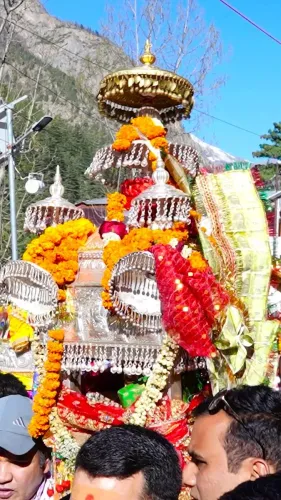
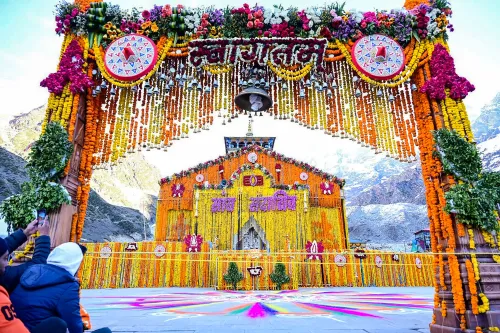
The headline figure is 45,84,375 pilgrims completing the Char Dham yatra in just 105 days — a new record for the sacred circuit covering Yamunotri, Gangotri, Kedarnath and Badrinath. Badrinath alone drew 15,52,021 devotees in its first 100 days, up by 3,11,613 compared to the same window last year. The climb is relentless.
Yamunotri Dham in Uttarkashi has gone further still. By August 2, 6,54,958 pilgrims had offered prayers at the shrine — the highest single-season count in the dham's recorded history, surpassing last year's 6,44,637 and the 5,15,067 who visited in 2024. For a trek considered among the more demanding in the hills, the footfall is a statement.
Jageshwar and Triyuginarayan: the 2.5x surge
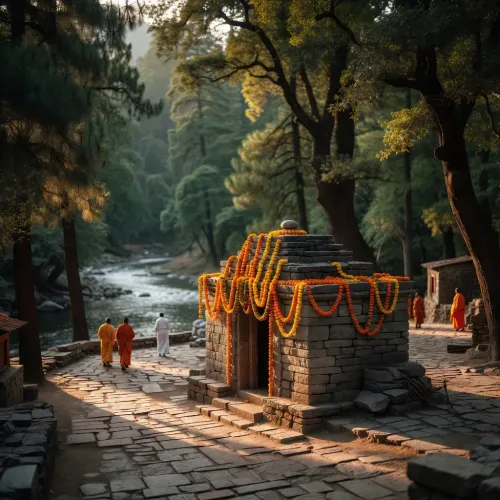
Jageshwar Dham in Almora — an ancient Shaivite complex of over 100 stone temples — recorded 1,74,119 visitors between January 26 and June 26, against just 67,875 in the same period last year. That is a 2.5-times jump in six months. Triyuginarayan in Rudraprayag — the mythological site of Lord Shiva's wedding — mirrored that leap exactly, climbing from 1,36,120 to 3,40,385 in the first half of the year.
Purnagiri Dham in Champawat drew 20,91,788 pilgrims by June, up from 14,35,290 last year — roughly a 1.5-times increase. Dhari Devi in Srinagar nearly doubled its count, rising from 2,83,275 to 5,42,626.
Adi Kailash: from 2,000 to 52,000 in three years
Perhaps no single data point captures the transformation more vividly than Adi Kailash in Pithoragarh. Before 2022, fewer than 2,000 pilgrims a year made the journey. Then Prime Minister Narendra Modi visited in 2023 — and the curve went near-vertical. Arrivals hit 10,025 in 2023, 29,352 in 2024, and 36,526 in 2025. This season, yatra opened on May 1 and within just two months — before a mandatory monsoon pause from July 1 — 52,441 devotees had already bowed at the shrine. One prime ministerial visit rewrote the pilgrimage map of the Himalayas.
The Manaskhand Mandir Mala Mission and the infrastructure push
Chief Minister Pushkar Singh Dhami has framed this surge not as coincidence but as consequence. The state is developing ancient Kumaon temples under the Manaskhand Mandir Mala Mission — a programme modelled on the Kedarkhand temple development circuit — while simultaneously expanding road connectivity, transport services, and pilgrim amenities at major shrines. Tourist clusters such as Munikeereti, Tapovan and Shivpuri near Rishikesh in Tehri district attracted 15,97,439 visitors between January and June, up from 13,62,600 last year.
The CM's office states the effort is explicitly aligned with 'PM Modi ke vision ke anurup' (in line with PM Modi's vision) — positioning Uttarakhand not merely as a domestic pilgrimage destination but as the spiritual capital of the world. The infrastructure investment and the pilgrim numbers are now feeding each other in a reinforcing loop.
The next quarterly data release from Uttarakhand Tourism will show whether the monsoon pause at high-altitude shrines bends the curve — or whether the season's second half simply picks up where the first left off.
Point of View
Economic development in fragile hill economies, and alignment with the central government's heritage-promotion agenda. The Adi Kailash trajectory — from near-obscurity to a 52,000-pilgrim season in three years — illustrates how a single high-profile political visit can permanently alter a site's economic geography. The Manaskhand Mandir Mala Mission extends this playbook to Kumaon, suggesting the state intends to replicate the Kedarkhand model systematically rather than rely on organic growth alone.
NationPress
3 Aug 2026
Frequently Asked Questions
How many pilgrims visited Char Dham in 2026?
45,84,375 pilgrims completed the Char Dham yatra in the first 105 days of the 2026 season, according to the Uttarakhand Chief Minister's Office.
What is the Manaskhand Mandir Mala Mission?
The Manaskhand Mandir Mala Mission is a Uttarakhand government scheme to develop ancient and mythologically significant temples in the Kumaon region, modelled on the earlier Kedarkhand temple development circuit in Garhwal.
Why has Adi Kailash become so popular recently?
Adi Kailash in Pithoragarh saw multi-fold growth after Prime Minister Narendra Modi visited the site in 2023 , triggering a surge from fewer than 2,000 annual visitors before 2022 to 52,441 in just two months of the 2026 season.
Which Uttarakhand shrine set an all-time pilgrim record in 2026?
Yamunotri Dham in Uttarkashi set an all-time record with 6,54,958 pilgrims by August 2, 2026 — the highest single-season count in the dham's history.
What is Uttarakhand's plan to become the world's spiritual capital?
CM Pushkar Singh Dhami has committed to developing major ancient temples, expanding pilgrim infrastructure and road connectivity, linking key sites through tourism circuits, and advancing the Manaskhand Mandir Mala Mission — all framed as aligned with PM Modi's vision for India's heritage.