CM Fadnavis Ensures Safe, Orderly Darshan at Ashadhi Wari 2026
Synopsis
Maharashtra CM Devendra Fadnavis on 25 July 2026 stated that smooth, safe and well-organised darshan facilities have been provided for Warkari pilgrims at Pandharpur's Ashadhi Wari despite a record turnout, and honoured the Warkari couple designated as lead worshippers of the Mahapuja.
Key Takeaways
CM Devendra Fadnavis posted on 25 July 2026 about arrangements for the Ashadhi Wari pilgrimage at Pandharpur .
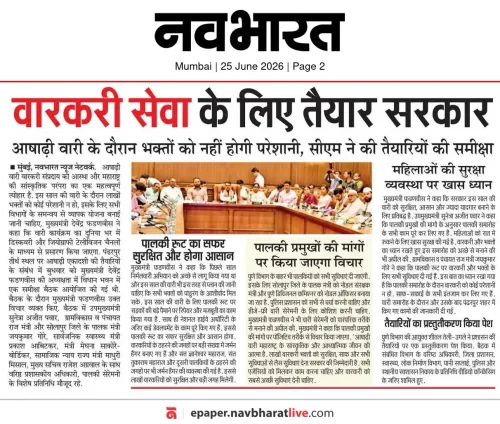
The post, in Marathi and Hindi, stated that despite a record crowd, smooth, safe and easy darshan facilities have been ensured for Warkari devotees.
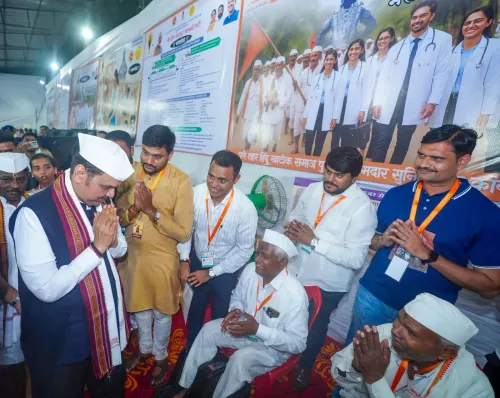
A Warkari couple designated as 'Mahapujecha Mankari' — lead worshippers of the principal ritual — was honoured at Pandharpur on 25 July 2026 .
The Ashadhi Wari is one of Maharashtra's largest annual religious gatherings, converging on the Vitthal-Rukmini temple in Solapur district on Ashadhi Ekadashi .
Maharashtra governments across successive administrations have coordinated security, sanitation and crowd-management protocols for the pilgrimage.
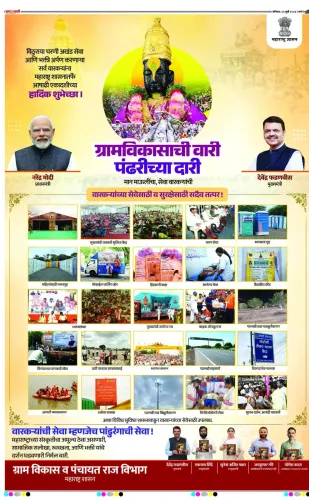
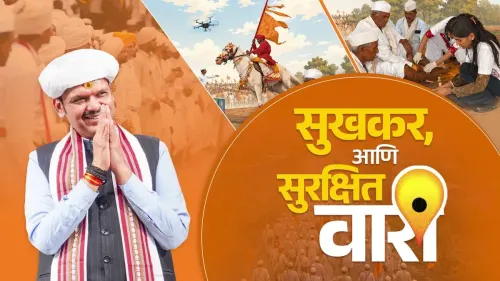
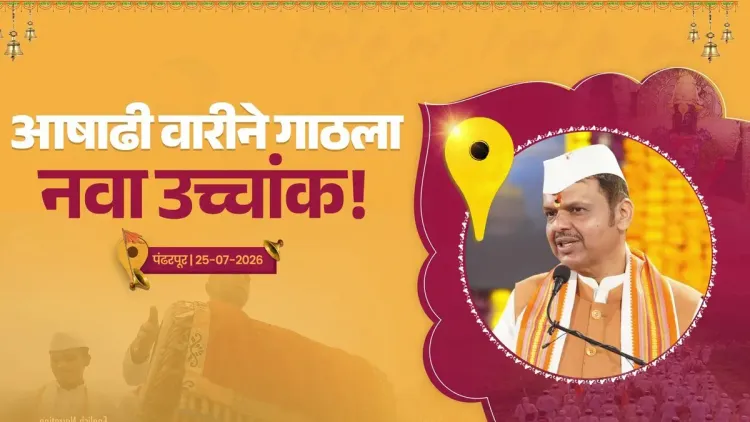
Maharashtra Chief Minister Devendra Fadnavis on Saturday, 25 July 2026, highlighted the state government's arrangements for the Ashadhi Wari pilgrimage at Pandharpur, stating that smooth, safe and well-organised darshan facilities have been put in place for Warkari devotees despite a record turnout this year.
Context
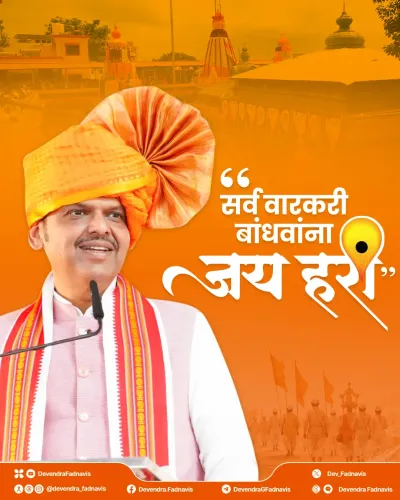
Posting in Marathi and Hindi, Fadnavis wrote: 'यंदाच्या आषाढी वारीत विक्रमी गर्दी असूनही वारकऱ्यांसाठी सुलभ, सुरक्षित आणि सुरळीत दर्शन व्यवस्था करण्यात आली आहे' — 'Despite a record crowd at this year's Ashadhi Wari, easy, safe and smooth darshan arrangements have been made for Warkari devotees.' He added that the same is true in Hindi: effective arrangements for convenient, secure and well-ordered darshan have been ensured. The post was tagged with the occasion 'Mahapujecha Mankari asalelya Warkari Dampat'yacha Sanman' — an honour for the Warkari couple designated as the lead worshippers of the Mahapuja — held at Pandharpur on 25 July 2026.
Policy Backdrop
The Ashadhi Wari is among Maharashtra's largest annual religious gatherings, drawing lakhs of Warkari pilgrims who walk from various corners of the state to the Vitthal-Rukmini temple in Pandharpur, Solapur district, coinciding with Ashadhi Ekadashi. State governments across successive administrations have coordinated security, sanitation and crowd-management protocols for the pilgrimage, treating it as a significant public-safety exercise.
The current administration's emphasis on 'suvidha, suraksha aur suvyavastha' — convenience, security and order — reflects a continued institutional approach to large religious mass gatherings. Coordinated logistics involving police, health services and local civic bodies are standard features of Wari management.
Stakeholders and Impact
The primary beneficiaries of these arrangements are the Warkari pilgrims — devotees following the centuries-old Varkari tradition centred on devotion to Lord Vitthal. Residents and local businesses in Pandharpur are also directly affected by the scale of the annual influx. The state administration, district officials and police machinery are the key implementing agencies.
The honouring of the Warkari couple designated as 'Mahapujecha Mankari' — the lead worshippers of the principal ritual — underscores the government's engagement with the cultural and spiritual dimensions of the pilgrimage, beyond purely logistical concerns.
What's Next
Post-event assessments of pilgrim footfall figures and any new infrastructure or safety guidelines are expected to inform planning for the next annual Wari cycle. The government's public communication around the event signals an intent to position the administration as a facilitator of Maharashtra's living cultural traditions. Official reports on crowd management and any new measures introduced this year will be closely watched by both pilgrims and civic planners.
Point of View
And it reinforces the ruling dispensation's identification with the Warkari tradition — a constituency with deep roots across rural Maharashtra. The honouring of the 'Mahapujecha Mankari' couple adds a ceremonial dimension that goes beyond logistics. This pattern of CM-level visibility at major pilgrimages is consistent with a broader political calculus in which cultural and religious events are treated as governance showcases. The emphasis on 'record crowds managed successfully' positions the administration favourably ahead of any post-event scrutiny.
NationPress
24 Oct 2026
Frequently Asked Questions
What is Ashadhi Wari and why is it significant?
Ashadhi Wari is an annual pilgrimage in which lakhs of Warkari devotees walk from various parts of Maharashtra to the Vitthal-Rukmini temple in Pandharpur, coinciding with Ashadhi Ekadashi. It is one of the largest religious gatherings in Maharashtra and a central event in the Varkari devotional tradition.
What arrangements did the Maharashtra government make for Ashadhi Wari 2026?
CM Devendra Fadnavis stated that smooth, safe and well-organised darshan facilities were put in place for Warkari pilgrims at Pandharpur, despite a record number of devotees attending the 2026 Ashadhi Wari.
Who are the 'Mahapujecha Mankari' at Pandharpur Wari?
'Mahapujecha Mankari' refers to the Warkari couple designated as the lead worshippers for the principal ritual (Mahapuja) at the Pandharpur temple during the Wari. CM Fadnavis honoured such a couple at Pandharpur on 25 July 2026.
Where is Pandharpur and which temple is the focus of the Wari?
Pandharpur is a town in Solapur district, Maharashtra, and is home to the Vitthal-Rukmini temple, the spiritual destination of the annual Ashadhi Wari pilgrimage.
How does the Maharashtra government manage crowd control at the Wari?
Successive Maharashtra governments have coordinated security, sanitation and crowd-management protocols for the Pandharpur Wari, involving police, health services and local civic bodies to ensure safe and orderly darshan for pilgrims.