CM Fadnavis Calls Fake News an Insult to Maharashtra
Synopsis
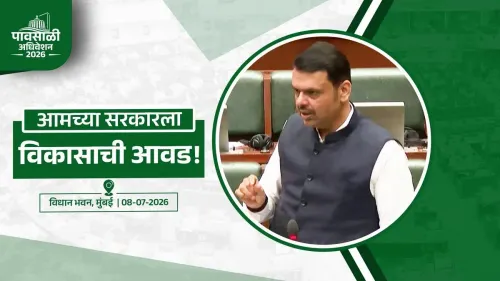
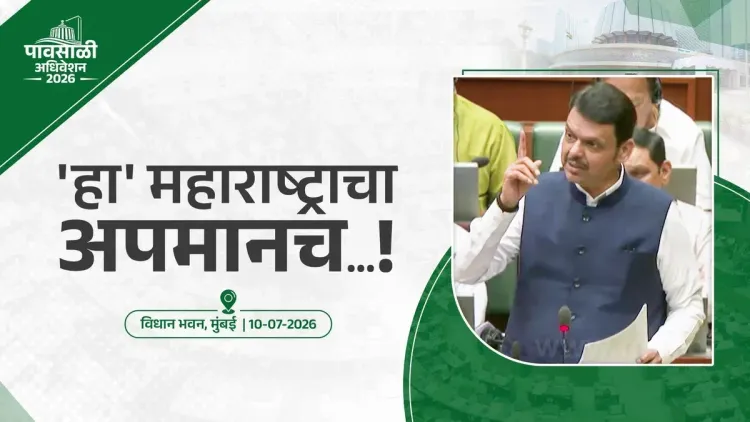
Maharashtra Chief Minister Devendra Fadnavis, speaking at the Vidhan Sabha in Mumbai on 10 July 2026, declared that spreading fake news and rumours is an insult to Maharashtra. The remarks during the Monsoon Session 2026 reflect a wider BJP-led push against digital misinformation and could signal forthcoming state-level policy action.
Key Takeaways
Devendra Fadnavis made the statement on 10 July 2026 from the floor of the Maharashtra Legislative Assembly in Mumbai .
He described spreading fake news and rumours as an insult to Maharashtra , using both English and Marathi to address a broad audience.
The remarks were made during the Monsoon Session 2026 , a session historically marked by sharp exchanges on governance and public perception.
The statement aligns with a wider pattern of BJP -led administrations emphasising factual reporting and state image as governance priorities.
No specific legislative measure was announced at the time; subsequent session proceedings will indicate whether policy action follows.
Opposition parties, digital-rights advocates, and journalists are expected to scrutinise the remarks for any potential impact on press freedom or online speech.
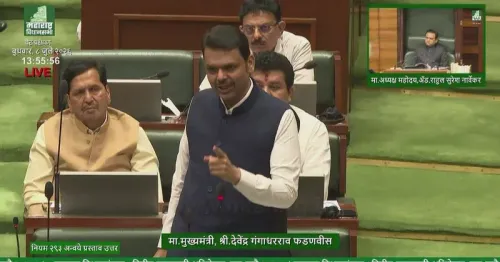
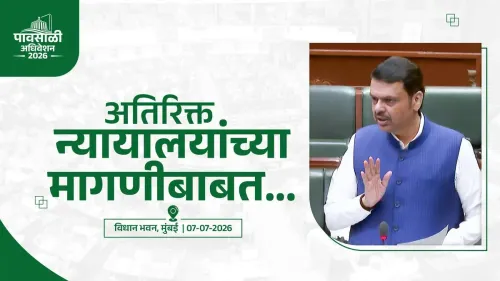
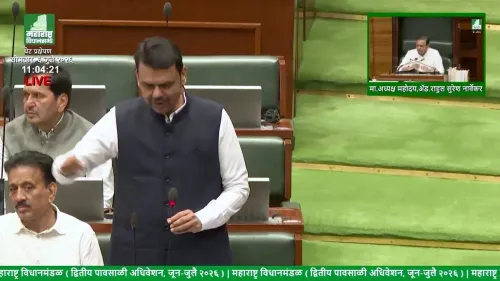
Maharashtra Chief Minister Devendra Fadnavis on Friday, 10 July 2026, condemned the spread of fake news and rumours as a direct insult to the state, making the remarks from the floor of the Maharashtra Legislative Assembly in Mumbai during the ongoing Monsoon Session 2026.
Context
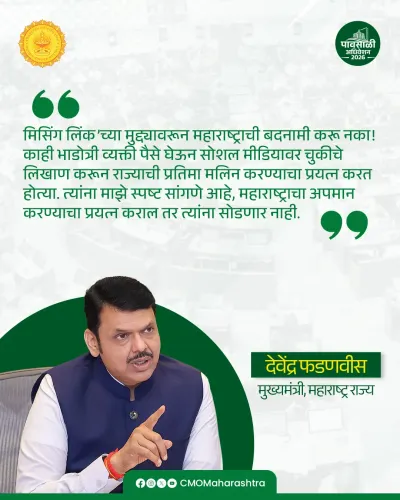
Addressing the assembly, Fadnavis stated in both English and Marathi: 'खोट्या बातम्या पेरणे, अफवा पसरवणे' — 'spreading fake news and sowing rumours' — amounts to an insult to Maharashtra. The bilingual framing of the remark, delivered from the Vidhan Sabha, signalled that his message was aimed at a broad audience spanning both English and Marathi speakers across the state.
The statement came during a session that has historically served as a flashpoint for exchanges between the ruling dispensation and the opposition over governance performance and public perception of the state administration.
Policy Backdrop
Concerns over digital misinformation have been a recurring theme in Indian legislative discourse since the central government amended the IT (Intermediary Guidelines and Digital Media Ethics Code) Rules in 2021, which placed obligations on social media intermediaries to curb the spread of false information. Several state governments, including those led by the BJP, have since echoed those concerns in their own legislative forums.
Maharashtra's Monsoon Sessions have frequently featured debates on rumour-mongering, particularly as social media platforms accelerate the reach of unverified claims about the state's governance, infrastructure, and law-and-order situation. Fadnavis, who has served multiple terms at the helm of the state, has consistently positioned factual reporting and state image as governance priorities.
Stakeholders and Impact
The remarks are directed at a wide set of actors: opposition parties who raise questions on the assembly floor, social media users who circulate unverified content, and the broader media ecosystem that amplifies such narratives. Opposition benches are likely to contest the characterisation, arguing that scrutiny of the government cannot be equated with the spreading of misinformation.
For ordinary citizens and civil society, the statement raises questions about where the line falls between legitimate criticism and the 'fake news' label — a distinction that has become increasingly contested in Indian political discourse. Journalists and digital-rights advocates are expected to watch subsequent assembly proceedings closely for any concrete legislative proposals that may follow the chief minister's remarks.
What's Next
The remainder of the 2026 Monsoon Session will be closely watched for any state-level measures that Fadnavis or his government may propose to address digital misinformation — whether through legislative amendments, regulatory guidance, or executive directives to law-enforcement agencies. If the statement moves beyond rhetoric into policy, it could set a precedent for how state governments in India approach the regulation of online speech in the years ahead.
Point of View
The chief minister shifts the debate from the specifics of any allegation to the character of those making it. This rhetorical move puts the opposition in a defensive position: contesting the label risks being seen as defending falsehoods. The critical question going forward is whether the statement remains political theatre or becomes the foundation for concrete — and potentially contentious — state-level measures targeting digital speech.
NationPress
10 Jul 2026
Frequently Asked Questions
What did Devendra Fadnavis say about fake news in the Maharashtra assembly?
On 10 July 2026, Chief Minister Devendra Fadnavis told the Maharashtra Legislative Assembly that spreading fake news and rumours is an insult to Maharashtra, making the remark in both English and Marathi during the Monsoon Session 2026.
When is the Maharashtra Monsoon Session 2026?
The Maharashtra Monsoon Session 2026 is being held at the Vidhan Sabha in Mumbai; the session was ongoing as of 10 July 2026, when Fadnavis made his remarks on misinformation.
Has Maharashtra proposed any law against fake news?
As of Fadnavis's 10 July 2026 statement, no specific legislative measure against fake news had been announced; the remainder of the Monsoon Session 2026 will indicate whether policy proposals follow.
Why do Indian politicians raise fake news issues in assembly sessions?
Indian state assemblies, especially during monsoon sessions, frequently see debates on misinformation because social media has amplified the reach of unverified claims about governance, making it a politically salient issue for ruling parties seeking to protect their public image.
What is India's existing law on fake news and digital misinformation?
At the central level, the IT (Intermediary Guidelines and Digital Media Ethics Code) Rules of 2021 require social media intermediaries to take action against misinformation; individual states, including Maharashtra, do not yet have standalone fake-news statutes.