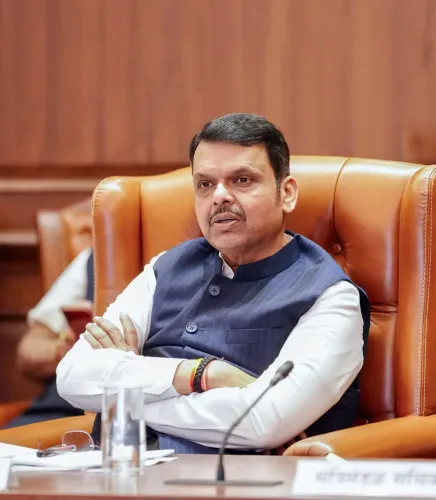
CM Fadnavis Chairs NHAI Flyover Meet for Solapur
Synopsis
Chief Minister Devendra Fadnavis chaired a meeting at Vidhan Bhavan on 3 July 2026 with ministers and senior officials to discuss two NHAI-proposed flyovers for Solapur city, signalling active state-centre coordination on highway infrastructure for one of Maharashtra's key tier-2 urban centres.
Key Takeaways
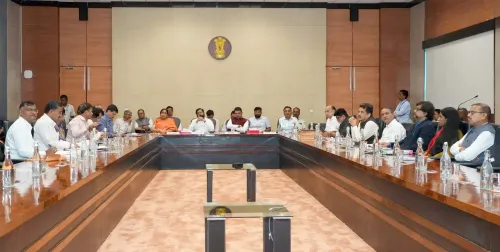
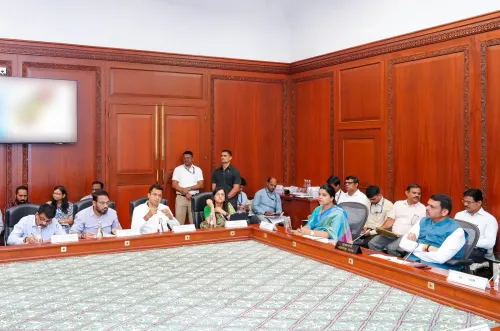
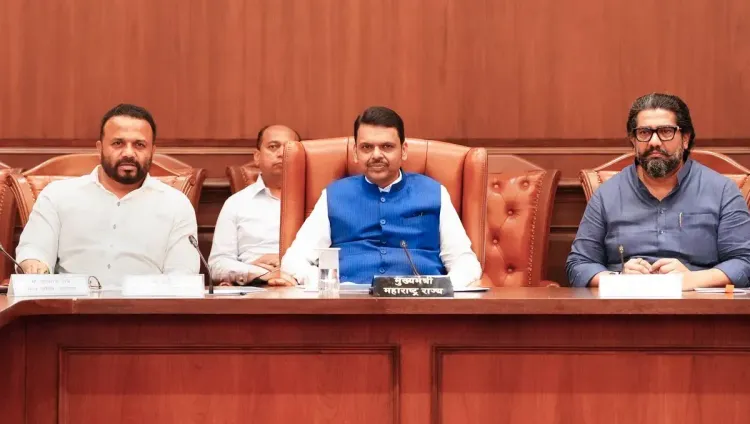
CM Devendra Fadnavis chaired the meeting at Vidhan Bhavan, Mumbai on 3 July 2026 at 2:30 pm .
Two NHAI-proposed flyovers in Solapur city were the primary agenda item.
Minister Jaykumar Gore , Minister ShivendraSinh Raje Bhonsle , and MLA Devendra Kothe attended alongside senior officials.
Solapur is a strategic highway junction connecting Maharashtra to Karnataka and Hyderabad.
The meeting reflects Maharashtra's broader pattern of coordinating with central agencies like NHAI to upgrade tier-2 city infrastructure.
Tender finalisation and land acquisition updates are the expected next steps for the two flyover projects.
The Chief Minister's Office of Maharashtra announced on 3 July 2026 that Chief Minister Devendra Fadnavis chaired a high-level meeting at Vidhan Bhavan, Mumbai, to deliberate on two proposed flyovers by the National Highways Authority of India (NHAI) in Solapur city, along with other urban infrastructure matters.
Context
The meeting, held at 2:30 pm, brought together Minister Jaykumar Gore, Minister ShivendraSinh Raje Bhonsle, and MLA Devendra Kothe, alongside senior government officials. The gathering signals active coordination between the Maharashtra state government and the central nodal agency, NHAI, on urban highway infrastructure in Solapur — a key tier-2 city in western Maharashtra.
'सोलापूर शहरातील भारतीय राष्ट्रीय महामार्ग प्राधिकरणाच्या (NHAI) प्रस्तावित दोन उड्डाणपुलांसह विविध विषयांसंदर्भात बैठक' ['a meeting regarding NHAI's two proposed flyovers in Solapur city along with various topics'], the official post stated.
Policy Backdrop
NHAI, established in 1989, serves as the nodal agency for building and maintaining national highways, including urban flyovers. The Bharatmala Pariyojana, launched in 2017, expanded NHAI's mandate to include urban flyover projects as part of a broader national highway upgrade push. Maharashtra has previously coordinated with NHAI on Solapur highway stretches under earlier phases of the National Highways Development Project.
Solapur occupies a strategic position as a junction on national highways connecting Maharashtra to Karnataka and Hyderabad, making its road infrastructure critical for both inter-state freight movement and local commuter traffic. The two proposed flyovers under discussion are intended to address congestion on NHAI-managed stretches passing through the city.
Stakeholders and Impact
The primary beneficiaries of the proposed flyovers would be Solapur's daily commuters, long-haul highway transporters, and local traders whose supply chains depend on smooth movement along national highway corridors. Urban flyovers on NHAI stretches typically require coordinated land acquisition and funding between the central agency and the state government, making ministerial-level meetings a necessary step before projects advance to the tendering stage.
The presence of multiple ministers — Jaykumar Gore and ShivendraSinh Raje Bhonsle — alongside the constituency MLA Devendra Kothe reflects the political weight attached to infrastructure decisions affecting regional constituencies. Such multi-stakeholder meetings are standard practice in Maharashtra when central agency projects intersect with local urban planning.
What's Next
The immediate next steps for the two Solapur flyover projects would involve finalising tender documents and resolving land acquisition requirements — both of which typically follow after political and administrative consensus is established at meetings of this kind. Any formal cost or timeline announcements are expected to emerge through NHAI's project pipeline or the Maharashtra state budget process.
Maharashtra's sustained focus on upgrading tier-2 city road infrastructure, in alignment with central funding mechanisms, suggests that Solapur's flyover proposals are likely to feature in upcoming NHAI annual plans as the state-centre coordination matures into actionable project clearances.
Point of View
Making its urban road network a pressure point for both freight logistics and voter sentiment. The multi-minister attendance also reflects the coalition dynamics of the current Maharashtra government, where infrastructure announcements serve as visible deliverables for regional political stakeholders. Progress on the two flyovers will be a useful indicator of how effectively the state can translate central agency coordination into on-ground project execution.
NationPress
3 Jul 2026
Frequently Asked Questions
What was discussed in CM Fadnavis's meeting on 3 July 2026?
The meeting chaired by Chief Minister Devendra Fadnavis at Vidhan Bhavan focused on two flyovers proposed by NHAI for Solapur city, along with other urban infrastructure topics.
Where are the two proposed NHAI flyovers located?
The two proposed flyovers are located in Solapur city, a major highway junction in western Maharashtra connecting to Karnataka and Hyderabad.
Who attended the Solapur NHAI flyover meeting?
Minister Jaykumar Gore, Minister ShivendraSinh Raje Bhonsle, MLA Devendra Kothe, and senior government officials attended the meeting chaired by CM Devendra Fadnavis.
What is NHAI's role in the Solapur flyover project?
NHAI, the National Highways Authority of India, is the central agency that has proposed the two flyovers and would be responsible for their construction and funding under its national highway mandate.
What are the next steps for the Solapur flyover projects?
The expected next steps include tender finalisation and land acquisition, which typically follow after state and central agency coordination is established at ministerial-level meetings.