CM Mohan Yadav holds talks with KfW Bank on 200 mn euro MP energy push
Synopsis
Madhya Pradesh CM Dr. Mohan Yadav met Germany's KfW Bank CEO and Country Director on 3 July 2026 in Bhopal. The delegation indicated interest in approximately 200 million euros to fund electricity distribution upgrades and solar-hour agricultural feeder supply under the state's Energy Reform Phase-2 programme.
Key Takeaways
Mohan Yadav met KfW Bank officials at the Madhya Pradesh secretariat on 3 July 2026 .
The German delegation expressed interest in approximately 200 million euros in financial support for Madhya Pradesh .
Funds are proposed for electricity distribution infrastructure and solar-hour supply to agricultural feeders under Energy Reform Phase-2 .
The engagement aligns with national schemes including PM-KUSUM and the Revamped Distribution Sector Scheme .
Key beneficiaries would be Madhya Pradesh's power distribution companies and the state's farming community.
A formal financing agreement and rollout schedule are yet to be formalised.
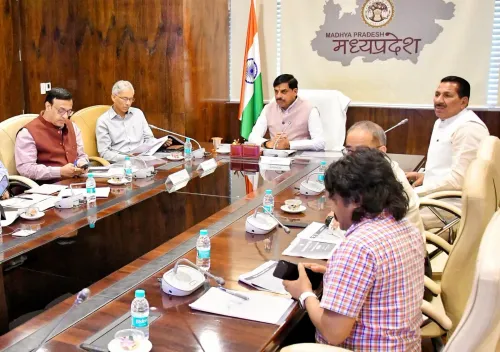
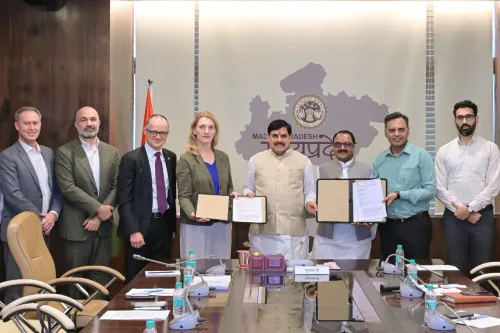
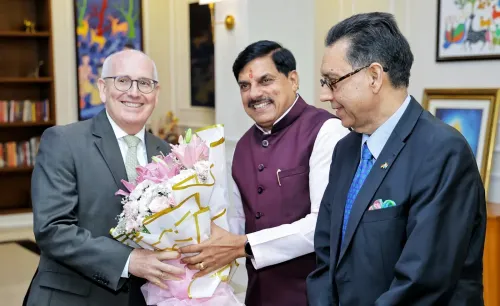
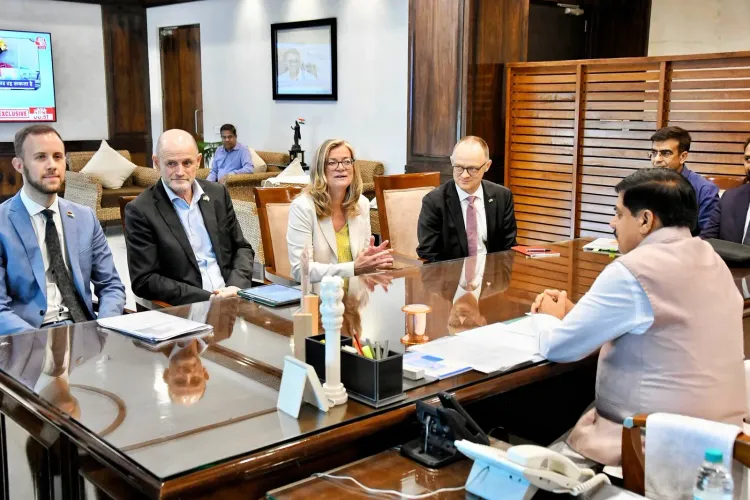
Madhya Pradesh Chief Minister Dr. Mohan Yadav held discussions on Friday, 3 July 2026 with senior officials of Germany's KfW Bank at the state secretariat in Bhopal, exploring bilateral cooperation across multiple sectors including energy. The German delegation expressed interest in providing financial support of approximately 200 million euros for electricity distribution infrastructure and solar-hour supply to agricultural feeders under Energy Reform Phase-2 in Madhya Pradesh.
Context
Chief Minister Yadav posted on X that the meeting at the mantralaya (state secretariat) covered 'increasing mutual cooperation in energy and various other sectors in Madhya Pradesh.' The KfW delegation, which included the bank's CEO Ms. Christiane Leibek and Country Director Mr. Wolfan Muth, presented the proposal for concessional financing tied to grid modernisation and farm-feeder solarisation. The discussions signal a potential deepening of India-Germany development finance ties at the state level.
Policy Backdrop
Energy Reform Phase-2 is Madhya Pradesh's structured programme to upgrade electricity distribution networks and extend solar-powered supply to agricultural feeders, reducing dependence on conventional grid power for farming. The initiative aligns with two major national schemes: the PM-KUSUM scheme launched in 2019, which promotes solarisation of agricultural pumps and feeders across states, and the Revamped Distribution Sector Scheme approved in 2021, which provides central government support for power-distribution reforms. KfW, a German state-owned development bank, has a long track record of financing renewable energy and grid modernisation projects in India through concessional loans and grants, making it a natural partner for such initiatives.
Stakeholders and Impact
The primary beneficiaries of the proposed 200 million euro investment would be Madhya Pradesh's power distribution companies and the state's farming community. Reliable solar-hour supply to agricultural feeders would reduce erratic power cuts that affect irrigation schedules, directly impacting crop productivity for millions of farmers in the state. Improved distribution infrastructure would also reduce aggregate technical and commercial losses, a persistent challenge for state discoms across India.
India has increasingly positioned itself as a destination for international climate finance, and engagements like this one reflect a broader strategy of leveraging bilateral development banks to fund state-level energy transitions. Several other Indian states have previously received KfW support for comparable distribution and solar-feeder projects, providing a template for the Madhya Pradesh proposal.
What's Next
The immediate focus will be on whether Friday's discussions translate into a formal financing agreement between Madhya Pradesh and KfW, along with a defined rollout schedule for the distribution upgrades and agricultural feeder solarisation works under Energy Reform Phase-2. A formalised deal would represent one of the larger single-state energy-infrastructure financing commitments from a European development institution in recent years. The outcome will be closely watched by other state governments seeking concessional international funding for their own power-sector modernisation programmes.
Point of View
Moving beyond dependence solely on central government allocations. The proposed 200 million euro interest is substantial for a single-state energy project and, if formalised, would signal growing confidence among bilateral lenders in MP's reform trajectory. This fits a wider pattern of BJP-governed states actively courting international climate finance as a complement to domestic schemes like PM-KUSUM and the Revamped Distribution Sector Scheme. The agricultural feeder focus is politically significant too, as reliable solar-powered farm supply is a direct lever for rural voter sentiment in a state where agriculture dominates the economy.
NationPress
3 Jul 2026
Frequently Asked Questions
What did CM Mohan Yadav discuss with KfW Bank?
CM Dr. Mohan Yadav discussed increasing bilateral cooperation in energy and other sectors, with the KfW delegation expressing interest in approximately 200 million euros for electricity distribution and agricultural feeder solarisation under Madhya Pradesh's Energy Reform Phase-2.
What is KfW Bank and why is it involved in Madhya Pradesh?
KfW is a German state-owned development bank that finances international projects in energy, climate, and sustainable infrastructure. It has previously supported similar power-sector and solar-feeder projects in India, making it a key partner for state-level energy modernisation.
What is Energy Reform Phase-2 in Madhya Pradesh?
Energy Reform Phase-2 is Madhya Pradesh's programme to upgrade electricity distribution networks and extend solar-powered supply to agricultural feeders, reducing dependence on conventional grid power for farming and aligning with national schemes like PM-KUSUM.
How will farmers benefit from the KfW investment in MP?
Reliable solar-hour supply to agricultural feeders would reduce erratic power cuts affecting irrigation, directly improving crop productivity for farmers in Madhya Pradesh. Better distribution infrastructure would also reduce power losses across the state.
Has KfW funded energy projects in India before?
Yes, KfW has a track record of providing concessional loans and grants for renewable energy and grid modernisation projects across multiple Indian states, making the Madhya Pradesh engagement part of a broader India-Germany development finance partnership.