CM Mohan Yadav Signs Indo-German Agri-Voltaic MoU for MP
Synopsis
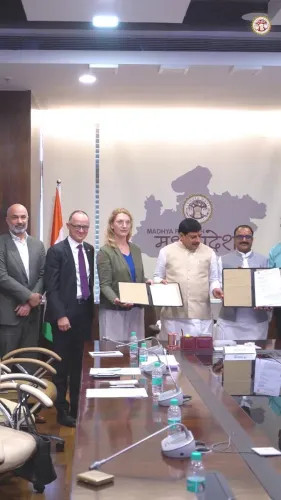
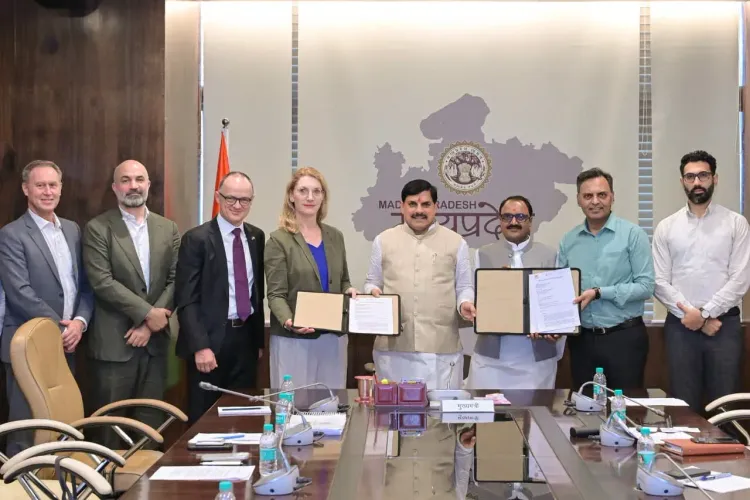
Madhya Pradesh Chief Minister Dr. Mohan Yadav announced on 15 June 2026 that the state has signed an MoU with the German government-backed Indo-German Agri Voltaic Cooperation Project, enabling farmers to generate solar power on their fields and earn additional income alongside traditional agriculture.
Key Takeaways
An MoU was signed on 15 June 2026 between Madhya Pradesh's Department of New and Renewable Energy, MPEDCL , and the Indo-German Agri Voltaic Cooperation Project .
The project is backed by the German government and promotes dual land use — solar power generation alongside active farming.
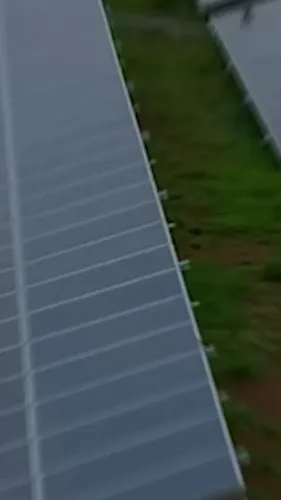
Farmers in Madhya Pradesh will be able to install solar panels on their fields to earn additional income without abandoning cultivation.
The initiative aligns with India's national target of 500 GW non-fossil energy capacity by 2030 .
The MoU may be linked to the central PM-KUSUM scheme for funding and scaling agri-voltaic installations.
MPEDCL will serve as the state's nodal agency for implementing the partnership.
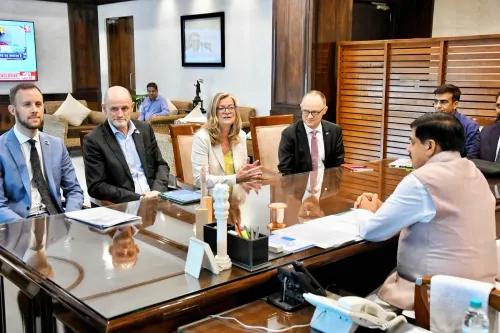
Madhya Pradesh Chief Minister Dr. Mohan Yadav announced on Monday, 15 June 2026 that the state government has signed a Memorandum of Understanding between its Department of New and Renewable Energy, the Madhya Pradesh Energy Development Corporation Limited (MPEDCL), and the German government-supported Indo-German Agri Voltaic Cooperation Project, aimed at promoting solar energy generation on agricultural land.
Context
In his post, Dr. Yadav stated: 'आज राज्य सरकार के नवीन एवं नवीकरणीय ऊर्जा विभाग... के मध्य MoU हस्ताक्षरित हुआ' ('Today, an MoU was signed between the state government's Department of New and Renewable Energy... and the Indo-German Agri Voltaic Cooperation Project'). He added that the partnership's goal is to encourage solar power generation on agricultural land, enabling farmers to earn additional income by installing solar panels on their fields alongside regular farming activities.
The signing marks a formal institutional step in Madhya Pradesh's renewable energy strategy, linking state agencies with an established bilateral cooperation framework backed by the German government.
Policy Backdrop
Agri-voltaics — the practice of co-locating solar panels and crops on the same land — has gained policy traction in India following the launch of the PM-KUSUM scheme in 2019, which piloted solarisation of agricultural pumps and agri-voltaic systems. India's broader national target of 500 GW of non-fossil energy capacity by 2030 has pushed states to explore dual land-use models that generate power without displacing food production.
Germany has been a consistent bilateral partner in India's energy transition, providing technical expertise and financial support through established cooperation mechanisms. The Indo-German Agri Voltaic Cooperation Project represents one such channel, channelling German support into state-level implementation in Madhya Pradesh.
Stakeholders and Impact
The primary beneficiaries are Madhya Pradesh's farming communities, who stand to earn supplementary income from solar generation without giving up agricultural use of their land. Renewable energy developers and state agencies will gain a structured framework to roll out agri-voltaic installations across the state.
The MPEDCL, as the state's nodal agency for renewable energy programmes, will be central to implementation. The MoU also creates a potential link with central schemes such as PM-KUSUM, which could provide additional funding pathways for scaling pilot projects.
What's Next
The immediate focus will be on identifying pilot sites, finalising benefit-sharing mechanisms for farmers, and establishing rollout timelines under the MoU. Observers will watch whether this agreement is integrated with central government funding under PM-KUSUM to accelerate deployment at scale.
If successfully implemented, the initiative could position Madhya Pradesh as a model for other Indian states seeking to balance agricultural livelihoods with renewable energy expansion — a dual imperative that sits at the heart of India's climate and rural economy agenda.
Point of View
A model that addresses two persistent policy tensions simultaneously: farmer income stress and renewable energy land availability. By anchoring the partnership with German institutional support, the state government lends it credibility and access to technical know-how that purely domestic initiatives often lack. Chief Minister Dr. Mohan Yadav's emphasis on farmer income — rather than just energy capacity — reflects a politically calibrated framing that ties the energy transition to rural welfare, a message with broad resonance in a predominantly agrarian state. The real test will be whether the MoU translates into operational pilot projects with transparent benefit-sharing, or remains a high-profile announcement without measurable ground-level impact.
NationPress
14 Sept 2026
Frequently Asked Questions
What is the Indo-German Agri Voltaic Cooperation Project in Madhya Pradesh?
It is a German government-supported initiative that promotes the installation of solar panels on agricultural land, allowing farmers in Madhya Pradesh to generate solar power and earn additional income while continuing to farm the same land.
What did CM Mohan Yadav announce on 15 June 2026?
Chief Minister Dr. Mohan Yadav announced the signing of an MoU between the Madhya Pradesh Department of New and Renewable Energy, MPEDCL, and the Indo-German Agri Voltaic Cooperation Project to promote solar energy generation on farmland.
How will Madhya Pradesh farmers benefit from agri-voltaic solar panels?
Farmers can install solar panels on their fields and sell the electricity generated, earning supplementary income without giving up agricultural use of the land — effectively using the same plot for both food production and power generation.
What is agri-voltaics and how does it work?
Agri-voltaics is the practice of co-locating solar photovoltaic panels and crops on the same piece of land. The panels generate electricity while crops grow beneath or between them, maximising land productivity.
Is the Madhya Pradesh agri-voltaic project linked to the PM-KUSUM scheme?
There is potential alignment, as the central PM-KUSUM scheme already supports solarisation of agricultural pumps and agri-voltaic pilots. Whether this specific MoU will draw PM-KUSUM funding is subject to future implementation decisions.