CM Mohan Yadav Signs AgriVoltaic MoU With German Project
Synopsis
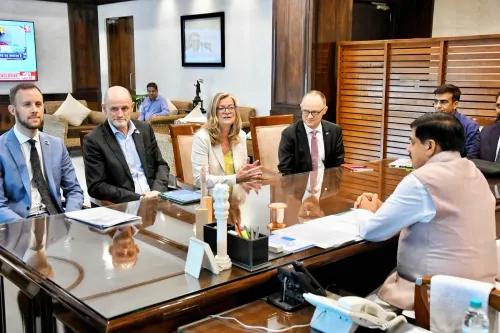
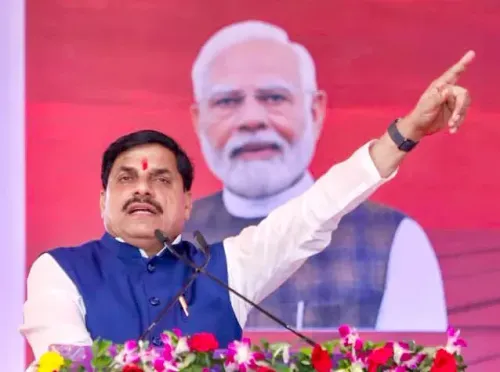
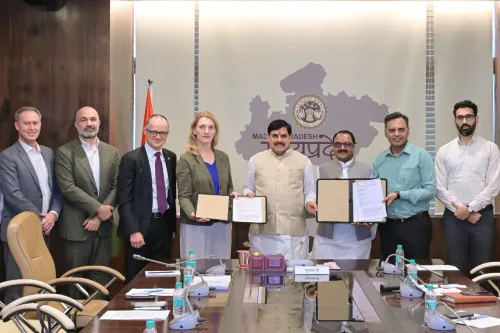
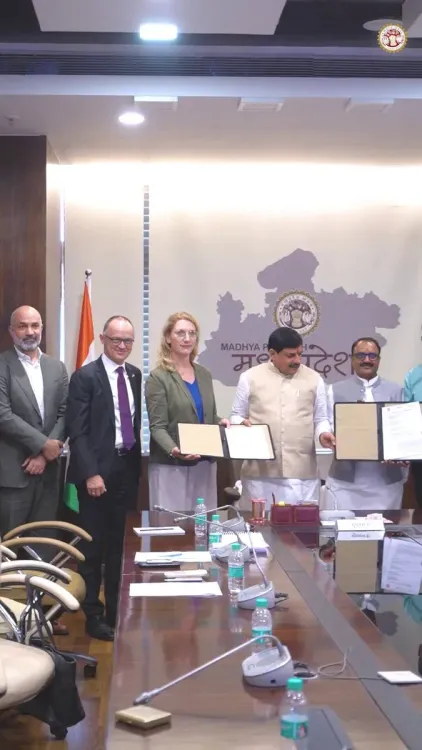
Chief Minister Dr. Mohan Yadav witnessed the signing of an MoU between Madhya Pradesh's renewable energy department, MPEDCL, and the German-backed Indo-German AgriVoltaic Cooperation Project on June 15, 2026. The deal aims to develop dual-use solar-agriculture infrastructure aligned with PM-KUSUM 2.0 to raise farmer incomes and boost energy security.
Key Takeaways
An MoU was signed on June 15, 2026 between MPEDCL , the Department of New and Renewable Energy of Madhya Pradesh, and the Indo-German AgriVoltaic Cooperation Project (IGCA) in the presence of CM Dr.
IGCA is a German government-supported initiative and will provide technical, economic, design, and financial feasibility support for agri-voltaic projects in Madhya Pradesh .
The initiative aligns with PM-KUSUM 2.0 , India's central scheme to expand decentralised solar energy for farmers.
Key stated goals include raising farmer incomes , improving land-use efficiency , strengthening energy security , and promoting climate-resilient rural development .
India targets 500 GW of non-fossil fuel capacity by 2030 ; agri-voltaics is seen as a way to expand solar without displacing agriculture.
The next steps involve identifying pilot agri-voltaic sites across Madhya Pradesh for technical assessment and eventual implementation.
The Chief Minister's Office of Madhya Pradesh announced on Monday, June 15, 2026, that an MoU was signed and exchanged at the state secretariat in the presence of Chief Minister Dr. Mohan Yadav between the Department of New and Renewable Energy, Madhya Pradesh Energy Development Corporation Limited (MPEDCL), and the Indo-German AgriVoltaic Cooperation Project (IGCA), a German government-supported initiative.
Context
The post, shared by the official CMO account, states: 'Mukhyamantri Dr. Mohan Yadav ki upasthiti mein aaj mantralaya mein... MoU par hastakshar kiye gaye' — ('In the presence of Chief Minister Dr. Mohan Yadav, an MoU was signed today at the secretariat'). The agreement brings together the state's nodal renewable energy body and a bilateral German cooperation project to jointly develop agri-voltaic infrastructure across Madhya Pradesh.
Agri-voltaics refers to the dual use of agricultural land for both crop cultivation and solar power generation, with panels installed at heights that allow farming to continue beneath them. The model is gaining traction globally as a way to resolve land-use conflicts between solar expansion and food production.
Policy Backdrop
Under the partnership, IGCA will support the identification, technical and economic assessment, design, financial feasibility evaluation, and implementation of agri-voltaic projects in the state. The CMO stated the initiative aligns with PM-KUSUM 2.0 and other central schemes aimed at expanding decentralised solar energy.
PM-KUSUM (Pradhan Mantri Kisan Urja Suraksha evam Utthaan Mahabhiyan), launched in 2019, was designed to promote solar pump installation and grid-connected solar plants for farmers. Its 2.0 iteration focuses on feeder-level solar plants, and state-level MoUs with technical partners are a recognised pathway for accelerating rollout. India-Germany energy cooperation has deep roots, with a formal renewable energy partnership framework established in 2006 and subsequently expanded under climate cooperation agreements.
India has committed to achieving 500 GW of non-fossil fuel power capacity by 2030 under its updated Nationally Determined Contributions. Agri-voltaics has emerged as one of the more viable instruments to meet this target without displacing agricultural activity, particularly in agrarian states like Madhya Pradesh.
Stakeholders and Impact
The CMO's post identifies three direct beneficiary outcomes: raising farmers' incomes, improving land-use efficiency, and strengthening energy security for electricity generated under the scheme. A fourth stated goal is promoting climate-resilient rural development. Small and marginal farmers who own or lease agricultural land are the primary target group, as they stand to earn lease or energy revenue while continuing cultivation.
MPEDCL, the state's nodal agency for renewable energy, will serve as the institutional anchor on the government side. Germany's development cooperation priorities in climate-resilient rural infrastructure make IGCA a natural technical partner for feasibility and design support in this context.
What's Next
The immediate next step involves identification of pilot agri-voltaic sites across Madhya Pradesh under the framework of the new MoU, followed by technical and financial feasibility assessments by IGCA. These pilots are expected to feed into the state's PM-KUSUM 2.0 targets over the coming years.
Successful demonstration projects could position Madhya Pradesh as a model for other agrarian states seeking to balance solar expansion with agricultural land rights — a tension that has complicated renewable energy rollout in several states. The broader outcome will depend on how quickly identified sites move from assessment to implementation under the new bilateral framework.
Point of View
The state is positioning itself to access central scheme funding while leveraging German expertise in agri-voltaic design — a combination that could accelerate deployment if pilot sites are identified quickly. The optics of a sitting Chief Minister presiding over the signing also suggest the administration views this as a flagship initiative rather than a routine departmental agreement. Whether the partnership delivers measurable farmer income gains will ultimately depend on the pace of site identification and the financial structures offered to smallholder farmers.
NationPress
16 Sept 2026
Frequently Asked Questions
What is the Indo-German AgriVoltaic Cooperation Project (IGCA)?
The Indo-German AgriVoltaic Cooperation Project (IGCA) is a German government-supported initiative that promotes the combined use of agricultural land for both crop cultivation and solar power generation. It provides technical, economic, and financial feasibility support to partner states in India.
What did Madhya Pradesh sign with Germany's IGCA on June 15, 2026?
Madhya Pradesh signed an MoU between its Department of New and Renewable Energy, MPEDCL, and IGCA on June 15, 2026, in the presence of Chief Minister Dr. Mohan Yadav to develop agri-voltaic projects in the state.
What is agrivoltaics and how does it help farmers?
Agrivoltaics is the practice of installing solar panels above agricultural land so that both electricity generation and farming can happen simultaneously on the same plot. It can raise farmer incomes through energy revenue or lease payments while keeping land productive for crops.
How does this MoU relate to PM-KUSUM 2.0?
The MoU is explicitly aligned with PM-KUSUM 2.0, the central government scheme that promotes feeder-level and decentralised solar plants for farmers. Agri-voltaic projects identified under the IGCA partnership are expected to be implemented within the PM-KUSUM 2.0 framework.
What is Madhya Pradesh's role in India's 500 GW renewable energy target?
As a large agrarian state, Madhya Pradesh is seen as a key contributor to India's target of 500 GW of non-fossil fuel capacity by 2030. Agri-voltaic projects allow the state to expand solar capacity without converting farmland exclusively to energy use, reducing land-use conflicts.