MP CM Mohan Yadav Touts 12-Year Renewable Energy Leap
Synopsis
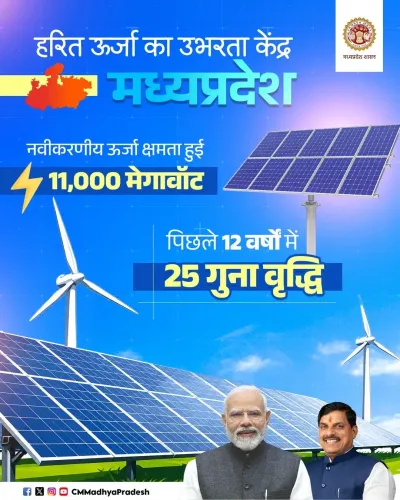
Chief Minister Dr. Mohan Yadav says Madhya Pradesh has achieved a major renewable energy expansion over 12 years through solar, pumped hydro storage, and biomass policies, claiming the state now produces India's cheapest electricity and has drawn significant new investment.
Key Takeaways
Twelve years of renewable energy policy implementation cited by CM Dr.
Mohan Yadav as the foundation of MP's clean-energy growth.
State policies cover three pillars : renewable energy, pumped hydro storage, and biomass — addressing both generation and intermittency.
MP government claims to be producing India's cheapest electricity — an assertion that aligns with national tariff-decline trends but remains independently unverified.
The New and Renewable Energy Department of Madhya Pradesh is the nodal body driving policy design and investment facilitation.
MP's push feeds into India's national target of 500 GW non-fossil capacity by 2030 , with states competing on policy incentives.
Key indicators to watch: rollout of pumped-storage and biomass projects and any revision in retail tariffs by the state power regulator.
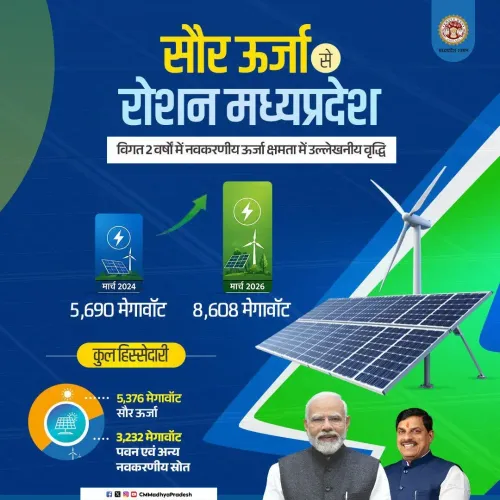
Twelve years of sustained policy investment have quietly transformed Madhya Pradesh into one of India's renewable energy frontrunners — and Chief Minister Dr. Mohan Yadav made that case publicly on Thursday, 6 August 2026, pointing to a state now claiming to produce the country's cheapest electricity.
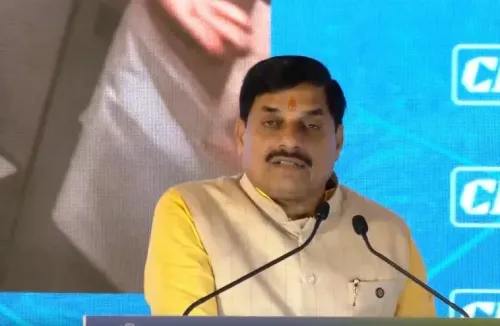
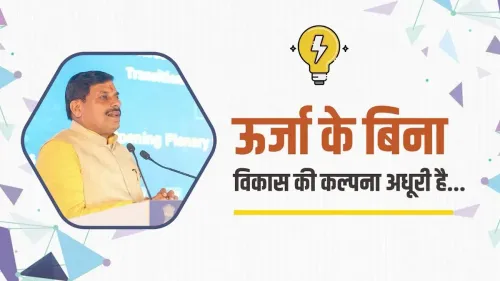
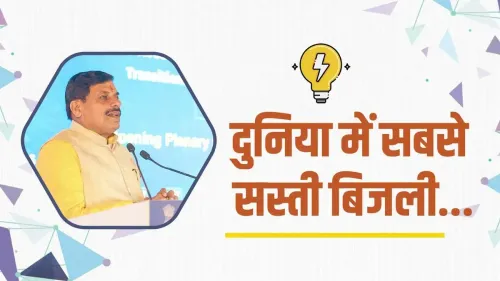
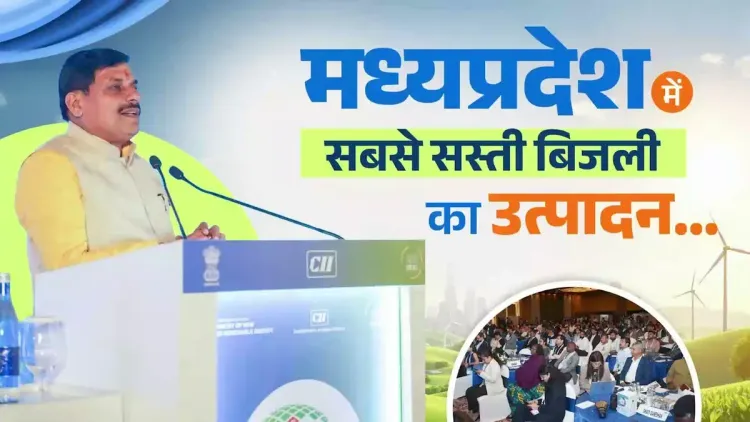
Speaking through the Chief Minister's Office, Dr. Yadav credited a suite of dedicated policies — covering renewable energy, pumped hydro storage, and biomass — for unlocking fresh investment and innovation across the state. 'प्रदेश में देश की सबसे सस्ती बिजली का उत्पादन किया जा रहा है' ('the state is producing the country's cheapest electricity'), he said, a claim that lands as both an economic pitch and a political statement.
From the Solar Policy of 2012 to a Diversified Energy Mix
The twelve-year arc Dr. Yadav references traces back to Madhya Pradesh's Solar Policy of 2012, which followed the National Solar Mission launched in 2010 and set the state on a course of private-sector solar park development and grid-connected projects. What began as a solar-first push has since broadened: the state has layered in pumped hydro storage — critical for smoothing out solar and wind intermittency — and biomass policies designed to tap rural feedstock and support agrarian communities.
The New and Renewable Energy Department of Madhya Pradesh has been the institutional engine behind this expansion, framing and implementing each successive policy wave. The result, the government argues, is a diversified clean-energy portfolio rather than dependence on a single source.
Cheapest Power Claim and India's 500 GW Race
The assertion of producing India's cheapest electricity is the sharpest edge of Dr. Yadav's message — and the hardest to independently verify. What is well-established is the national trajectory: competitive bidding across India has driven solar tariffs to historic lows since 2015, and states with early mover advantage in land allocation and grid infrastructure have consistently landed lower tariff discoveries. Madhya Pradesh's emphasis on cost reduction fits squarely within that pattern.
The broader stakes are national. India has committed to 500 GW of non-fossil energy capacity by 2030, and states are in active competition — offering policy incentives, land banks, and transmission support — to attract the renewable investment needed to hit that target. A state that can credibly claim the lowest generation costs holds a powerful card in that race.
The next test is concrete: whether the pumped-storage and biomass projects now in the pipeline translate into grid-level capacity additions, and whether the state power regulator reflects any cost gains in revised retail tariffs for consumers. That is where the twelve-year story either pays off — or stays a headline.
Point of View
Policy-stable destination in India's fiercely competitive clean-energy market. The inclusion of pumped hydro and biomass alongside solar signals a deliberate move beyond the optics of headline solar capacity toward a more defensible, grid-reliable story. The 'cheapest electricity' claim, while unverified, echoes a broader BJP-governed state playbook of framing energy affordability as governance proof. Whether the claim survives regulatory scrutiny will determine how durable this political dividend actually is.
NationPress
20 Sept 2026
Frequently Asked Questions
What renewable energy policies has Madhya Pradesh introduced?
Madhya Pradesh has implemented policies covering solar and renewable energy, pumped hydro energy storage, and biomass energy — building on the state's original Solar Policy of 2012 to create a diversified clean-energy framework.
Does Madhya Pradesh really produce India's cheapest electricity?
Chief Minister Dr. Mohan Yadav has made this claim, and it aligns with the national trend of falling solar tariffs through competitive bidding since 2015. However, this specific claim has not been independently verified from official regulatory data.
What is pumped hydro storage and why is MP investing in it?
Pumped hydro storage uses surplus electricity to pump water uphill and releases it through turbines when demand rises, acting as a large-scale battery. Madhya Pradesh is investing in it to manage the intermittency of solar and wind power.
Who is Dr. Mohan Yadav?
Dr. Mohan Yadav is the Chief Minister of Madhya Pradesh, in office since December 2023, representing the BJP government that has continued and expanded the state's renewable energy agenda.
How does Madhya Pradesh's renewable push connect to India's 2030 energy target?
India has set a national target of 500 GW of non-fossil energy capacity by 2030. Madhya Pradesh's solar, biomass, and storage policies contribute to this goal and place the state in competition with others for renewable investment.