CM Fadnavis Chairs SC/ST Atrocities Act Review Meet
Synopsis
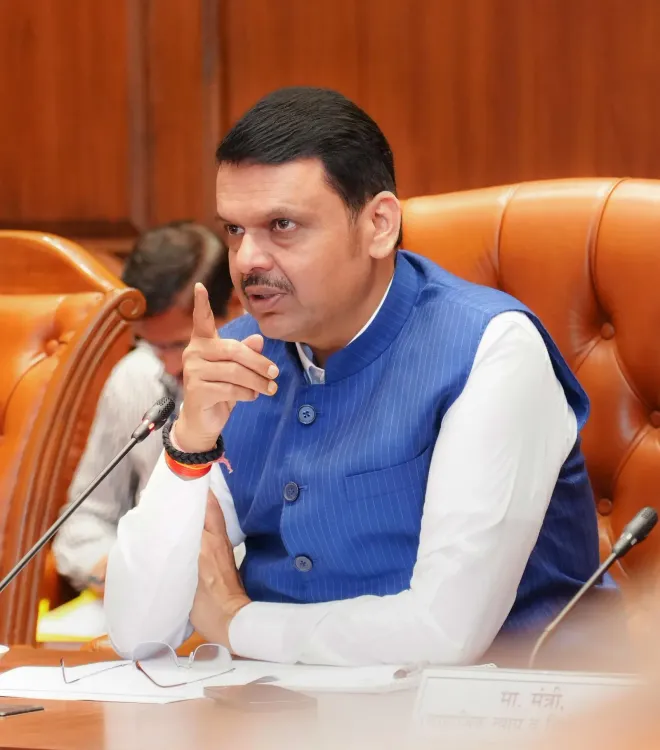
Chief Minister Devendra Fadnavis on 3 July 2026 chaired the High Powered State Level Vigilance and Monitoring Committee meeting for the SC/ST (Prevention of Atrocities) Act at Vidhan Bhavan, Mumbai, with MP Dr. Hemant Savara and senior officials in attendance.
Key Takeaways
CM Devendra Fadnavis chaired the High Powered State Level Vigilance and Monitoring Committee on 3 July 2026 at Vidhan Bhavan, Mumbai .
The committee reviews implementation of the Scheduled Castes and Scheduled Tribes (Prevention of Atrocities) Act , enacted in 1989 and amended in 2015 and 2018 .
Hemant Savara , MLAs, and senior state officials attended the meeting.
States are mandated under Rule 16 of the PoA Rules to hold such reviews at least quarterly, covering FIR registration, charge-sheeting, and victim relief.
Maharashtra has historically reported high volumes of atrocity cases alongside persistent gaps in conviction rates, drawing central advisories.
Outcomes will inform Maharashtra's annual report to the Ministry of Social Justice and Empowerment .
The Chief Minister's Office of Maharashtra announced on 3 July 2026 that Chief Minister Devendra Fadnavis chaired a meeting of the High Powered State Level Vigilance and Monitoring Committee for the implementation of the Scheduled Castes and Scheduled Tribes (Prevention of Atrocities) Act and Rules at Vidhan Bhavan, Mumbai, at 1:40 PM.
Context
The meeting brought together Member of Parliament Dr. Hemant Savara, several Members of the Legislative Assembly, and senior state officials to review the Act's implementation across Maharashtra. The post, shared in English, Marathi, and Hindi, underscores the cross-community significance the state government attaches to the exercise. Vidhan Bhavan serves as the official seat of the Maharashtra Legislature and is a routine venue for high-level committee deliberations.
Policy Backdrop
The Scheduled Castes and Scheduled Tribes (Prevention of Atrocities) Act was enacted by Parliament in 1989 and has since been amended in 2015 and 2018 to broaden the list of offences and restore procedural safeguards for victims. Under Rule 16 of the Prevention of Atrocities Rules, every state is mandated to constitute a State Level Vigilance and Monitoring Committee and convene it at least once every quarter to assess progress on FIR registration, charge-sheeting, special court proceedings, and relief and rehabilitation disbursement. Maharashtra constituted its committee in the early 1990s, and it has been periodically reconstituted by successive governments. The Ministry of Social Justice and Empowerment at the Centre issues periodic advisories to states, including Maharashtra, where both the volume of registered cases and persistent gaps in conviction rates have drawn attention over the years.
Stakeholders and Impact
The committee's work directly concerns Scheduled Caste and Scheduled Tribe communities across Maharashtra, who rely on the Act's provisions for timely legal redress, relief compensation, and rehabilitation support. Dr. Hemant Savara, a Member of Parliament associated with tribal constituency representation in Maharashtra, brings a parliamentary perspective to the state-level review. The presence of senior district and police officials alongside elected representatives signals an intent to align administrative machinery with legislative mandates at the ground level.
What's Next
The minutes of this quarterly review and any directives issued to district administrations will feed into Maharashtra's annual report to the Ministry of Social Justice and Empowerment. Forthcoming data from the National Crime Records Bureau on atrocity cases registered in Maharashtra will serve as an external benchmark for the committee's effectiveness. Sustained high-level oversight of this kind is seen as critical to improving charge-sheet rates and ensuring timely compensation reaches victims across the state.
Point of View
Particularly ahead of potential scrutiny from the Ministry of Social Justice and NCRB data releases. The inclusion of a tribal-constituency MP alongside MLAs and bureaucrats suggests the state is attempting to bridge the parliamentary and executive tracks of accountability on the PoA Act. Maharashtra's historically high case volumes make this committee more than a procedural formality — it is a pressure point where political accountability and administrative delivery intersect. The regularity and seniority of such meetings will ultimately be judged by measurable outcomes: conviction rates, compensation disbursals, and special court pendency figures.
NationPress
3 Jul 2026
Frequently Asked Questions
What is the High Powered State Level Vigilance and Monitoring Committee in Maharashtra?
It is a statutory body constituted under Rule 16 of the SC/ST (Prevention of Atrocities) Rules, tasked with reviewing the quarterly implementation of the Act, including FIR registration, charge-sheeting, special court progress, and victim relief disbursement across Maharashtra.
Why did CM Devendra Fadnavis chair this meeting?
As Chief Minister, Fadnavis heads the High Powered State Level Vigilance and Monitoring Committee, which is mandated to meet at least quarterly to oversee enforcement of the SC/ST (Prevention of Atrocities) Act and ensure state machinery is aligned with the law's requirements.
What is the SC/ST Prevention of Atrocities Act?
The Scheduled Castes and Scheduled Tribes (Prevention of Atrocities) Act, enacted in 1989, provides for special courts, stringent penalties, and relief and rehabilitation for victims of caste-based atrocities. It was amended in 2015 and 2018 to expand offences and restore procedural protections.
Who is Dr. Hemant Savara and why was he present?
Dr. Hemant Savara is a Member of Parliament from Maharashtra associated with tribal constituency representation. His presence at the state-level committee meeting reflects the parliamentary stakeholder dimension in monitoring the Act's implementation.
What happens after this committee meeting in Maharashtra?
The review findings feed into Maharashtra's annual report to the Ministry of Social Justice and Empowerment at the Centre, and the committee's directives guide district administrations on case management, compensation delivery, and special court pendency reduction.