BESCOM: Caste details optional in Gruha Jyoti re-verification drive
Synopsis
BESCOM's clarification that caste details are optional in the Gruha Jyoti re-verification drive has done little to fully douse the political fire. The BJP's objection cuts to the heart of a key Congress welfare promise — 200 units of free power, no conditions attached — and whether a data-collection exercise quietly redraws the eligibility map without a formal policy change.
Key Takeaways
BESCOM clarified on 3 July 2026 that caste or beneficiary category details are optional , not mandatory, during the Gruha Jyoti re-verification drive.
Field staff have been instructed to select a 'Refused to provide information' option in the Seva Sindhu app if a beneficiary declines to share caste data.
The door-to-door re-verification across Karnataka began on 1 July 2026 , collecting documents including Aadhaar, voter ID, PAN card, and ration card.
The BJP alleged the Congress government was attaching income and caste conditions to a scheme originally promised as universal up to 200 units .
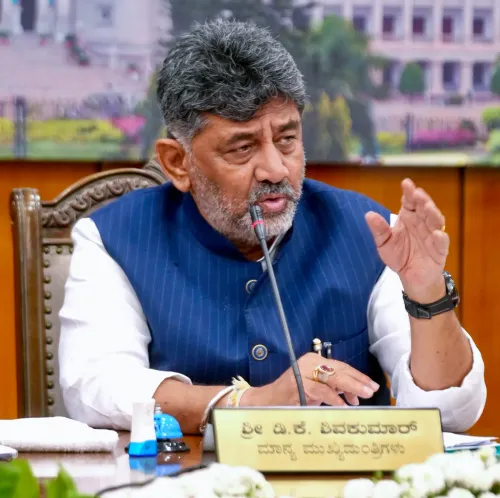
Shivakumar defended the drive, citing reports of commercial establishments misusing benefits meant for domestic households.
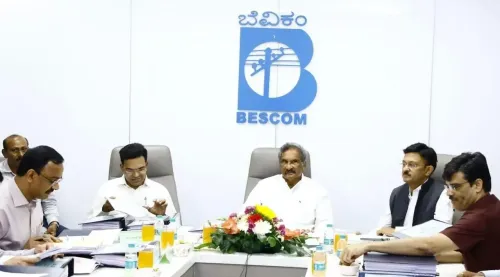
The Bangalore Electricity Supply Company (BESCOM) on Friday, 3 July 2026, clarified that providing caste or beneficiary category information during the ongoing Gruha Jyoti free power scheme re-verification drive is entirely optional and not a mandatory requirement. The clarification was issued in response to widespread queries raised across media and social media platforms about the collection of caste-related data from electricity consumers.
What the Re-Verification Drive Involves
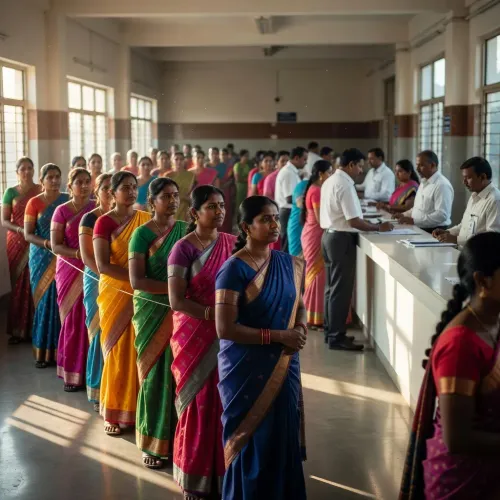
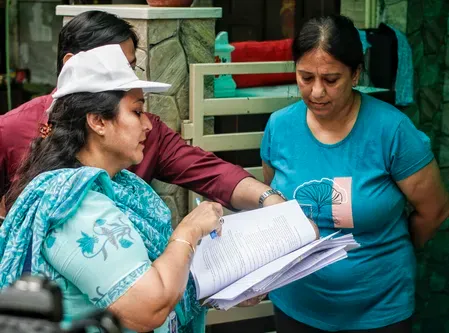
BESCOM staff and meter readers have been conducting door-to-door visits to residential households across Karnataka since 1 July 2026, collecting beneficiary data under the Gruha Jyoti scheme. Data is being gathered through the Seva Sindhu mobile application as well as printed declaration forms. Documents sought include Aadhaar, voter ID, PAN card, ration card, and caste certificate.
BESCOM's Clarification on Caste Data
Addressing public concern, BESCOM stated that entering a beneficiary's caste certificate information is purely voluntary. 'If a beneficiary does not wish to share their caste details, field staff have already been instructed to select the ‘Refused to provide information’ option available in the Seva Sindhu mobile application,' the utility said. The power company reiterated that no beneficiary is required to furnish caste information against their will.
The Political Controversy
The re-verification drive triggered a political row after the Bharatiya Janata Party (BJP) objected to the inclusion of PAN card and caste certificate details in the data-collection process. The BJP alleged that the Congress government was attempting to determine eligibility based on income and caste, contrary to the original promise of up to 200 units of free electricity without such preconditions.
The Congress government pushed back, maintaining that the exercise was designed to identify ineligible beneficiaries and curb misuse of the scheme. Chief Minister D.K. Shivakumar had previously stated that the government received credible reports of commercial establishments and other ineligible consumers availing benefits meant exclusively for domestic households, making a fresh verification necessary.
Why This Matters
The Gruha Jyoti scheme is a flagship welfare initiative of the Karnataka government, and any perception of eligibility conditions being attached retroactively carries significant political and administrative weight. The controversy reflects a broader tension in welfare scheme design between targeting efficiency and the promise of universality. With the drive already underway across the state, BESCOM's clarification is aimed at restoring public confidence and ensuring field-level compliance with the voluntary-only approach to caste data.
How effectively the 'Refused to provide information' option is exercised in practice — and whether field staff uniformly honour it — will determine whether the controversy subsides or escalates in the days ahead.
Point of View
While politically motivated, touches a legitimate concern: welfare schemes that were promised unconditionally should not acquire conditions through the back door of a re-verification exercise. The Congress government's defence rests on curbing misuse, but it has yet to publish data on the scale of alleged misuse that warranted this statewide exercise. That transparency gap is what is keeping the controversy alive.
NationPress
2 Oct 2026
Frequently Asked Questions
Is it mandatory to provide caste details during the Gruha Jyoti re-verification drive?
No. BESCOM has clarified that providing caste or beneficiary category information is entirely optional. Field staff are instructed to select a 'Refused to provide information' option in the Seva Sindhu app if a beneficiary declines to share caste data.
What is the Gruha Jyoti scheme re-verification drive?
It is a statewide door-to-door exercise launched by the Karnataka government on 1 July 2026 to identify ineligible beneficiaries and check alleged misuse of the Gruha Jyoti free electricity scheme, which provides up to 200 units of free power to eligible domestic households.
Why did the BJP object to the re-verification process?
The BJP alleged that collecting PAN card and caste certificate details amounted to the Congress government attaching income and caste-based eligibility conditions to a scheme that was originally promised as unconditional for up to 200 units of free electricity.
Why did the Karnataka government launch the re-verification?
Chief Minister D.K. Shivakumar stated that the government received reports of commercial establishments and other ineligible consumers availing benefits meant exclusively for domestic households, making a fresh verification necessary to protect the scheme's integrity.
How is the beneficiary data being collected?
BESCOM staff and meter readers are visiting residential households across Karnataka and collecting data through the Seva Sindhu mobile application and printed declaration forms. Documents include Aadhaar, voter ID, PAN card, ration card, and — on a voluntary basis — caste certificates.