CM Fadnavis Chairs Urban Challenge Fund Meet in Mumbai

Synopsis
Chief Minister Devendra Fadnavis chaired an Urban Challenge Fund review at Varsha residence on 13 July 2026, outlining a ₹44,800 crore blended-finance plan covering 22 urban development components across Maharashtra's major cities.
Key Takeaways
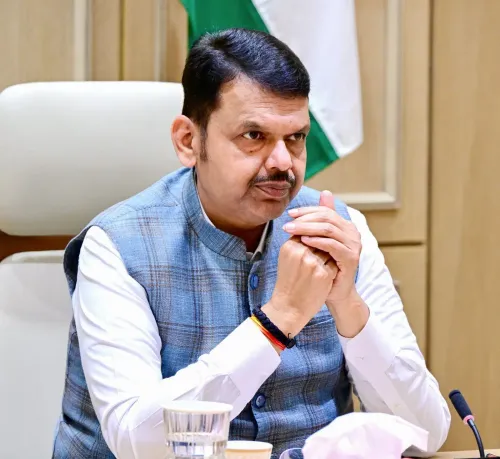
CM Devendra Fadnavis chaired the Urban Challenge Fund review meeting at Varsha residence, Mumbai , on 13 July 2026 .
Maharashtra's UCF envelope totals ₹44,800 crore — ₹11,200 crore each from centre and state, plus ₹22,400 crore from market sources.
Nashik and Pune municipal corporations have already received National Apex Committee (NAC) approval for water supply and sanitation funding under this model.
Pimpri-Chinchwad and Nagpur municipal corporations are next in line for UCF-based project financing.
The programme covers approximately 22 components including digital governance, transit-oriented development, circular economy, and pedestrian-friendly transport.
Fund mobilisation will use municipal bonds and public-private partnerships to overcome institutional and fiscal constraints in city infrastructure delivery.
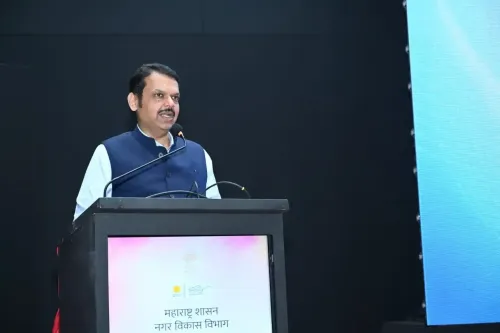
The Chief Minister's Office of Maharashtra announced on Monday, 13 July 2026 that Chief Minister Devendra Fadnavis chaired a high-level meeting at Varsha residence, Mumbai, to review the Urban Challenge Fund (UCF) and chart a new direction for city development across the state.
Speaking at the meeting, CM Fadnavis said the Urban Challenge Fund should be used to drive creative transformation in urban development, treating cities as growth engines and removing barriers to their progress. 'शहरांना विकासाचे केंद्र मानून त्यांच्या प्रगतीतील अडथळे दूर करण्यासाठी' ('making cities centres of development and removing obstacles to their progress') was the stated objective, according to the official post.
Context
Maharashtra has already made early moves under the UCF framework. Nashik Municipal Corporation and Pune Municipal Corporation have previously raised funds on this model for water supply and sanitation projects, and both have received approval from the National Apex Committee (NAC) — the central-level body that appraises and clears state proposals for urban development finance.
CM Fadnavis also noted that select projects in Pimpri-Chinchwad Municipal Corporation and Nagpur Municipal Corporation are set to receive funding through the Urban Challenge Fund mechanism, widening the programme's footprint across the state.
Policy Backdrop
The UCF is designed to sit alongside existing central and state grant-based urban schemes, filling the gap created by institutional, financial, and administrative constraints that slow down infrastructure project execution in cities. It enables fund mobilisation through municipal bonds and public-private partnerships (PPP), a blended-finance model that Maharashtra has been building towards since national urban missions such as AMRUT and the Smart Cities Mission were launched in 2015.
The financial structure discussed at the meeting proposes a total project envelope of ₹44,800 crore for Maharashtra — comprising ₹11,200 crore from the central government, ₹11,200 crore from the state government, and ₹22,400 crore from market-based sources. This sits within a national UCF project pipeline proposed at ₹90,000 crore.
Scope and Key Components
The UCF programme for Maharashtra will cover approximately 22 major components. These include digital governance, core urban infrastructure development, circular economy initiatives, traffic decongestion projects, last-mile connectivity, and the rejuvenation of city areas spanning 5 to 20 sq km.
Further components encompass positioning small and medium cities as development hubs, redevelopment of peth areas (traditional urban precincts), pedestrian- and cycle-friendly transport projects, demonstration projects, transit hub upgrades, transit-oriented development infrastructure, city development centres, creative urban redevelopment, and water supply and sanitation projects. Minister of State Madhuri Misal and senior officials were present at the meeting.
What's Next
The immediate focus will be on rolling out the first tranche of projects under the ₹44,800 crore Maharashtra envelope and securing further National Apex Committee clearances for additional cities. The success of the bond and PPP financing model in Nashik and Pune is expected to serve as a template for scaling the approach to Pimpri-Chinchwad, Nagpur, and potentially other urban local bodies. Maharashtra's ability to attract market-based capital — which accounts for half the proposed outlay — will be the critical variable determining the pace of urban infrastructure delivery in the state.
Point of View
800 crore envelope in market-based sources — half the total — the state is making a calculated bet that municipal creditworthiness built through earlier bond issuances in Nashik and Pune can be replicated at scale. The 22-component architecture, spanning everything from circular economy to transit-oriented development, reflects a deliberate convergence of national urban mission priorities under a single state-level vehicle. The political calculus is clear: visible urban transformation in major Maharashtra cities ahead of the electoral cycle strengthens CM Fadnavis's development credentials.
NationPress
13 Jul 2026
Frequently Asked Questions
What is the Urban Challenge Fund in Maharashtra?
The Urban Challenge Fund (UCF) is a financing mechanism that combines central and state government grants with municipal bonds and public-private partnerships to fund innovative urban infrastructure and service delivery projects in Maharashtra's cities.
How much money is proposed under the Urban Challenge Fund for Maharashtra?
Maharashtra's UCF envelope proposes ₹44,800 crore in total — ₹11,200 crore from the central government, ₹11,200 crore from the state government, and ₹22,400 crore from market-based sources such as bonds and PPPs.
Which cities in Maharashtra have already received Urban Challenge Fund approvals?
Nashik Municipal Corporation and Pune Municipal Corporation have received National Apex Committee (NAC) approval for water supply and sanitation projects under the UCF model. Pimpri-Chinchwad and Nagpur are set to follow.
What projects will the Urban Challenge Fund cover in Maharashtra?
The fund will cover approximately 22 components including digital governance, core urban infrastructure, circular economy, traffic decongestion, last-mile connectivity, transit-oriented development, pedestrian and cycle-friendly transport, water supply, sanitation, and redevelopment of traditional urban precincts.
Who attended the Urban Challenge Fund meeting chaired by CM Fadnavis?
The meeting at Varsha residence, Mumbai on 13 July 2026 was attended by Minister of State Madhuri Misal and senior state government officials, alongside Chief Minister Devendra Fadnavis who chaired the session.