CM Fadnavis Disburses ₹5,029 Cr Loan Waiver to 6.22 Lakh Farmers
Synopsis
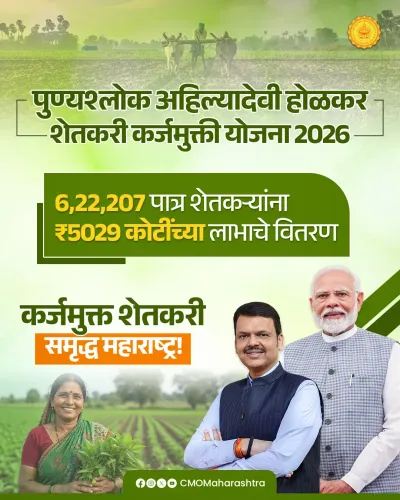
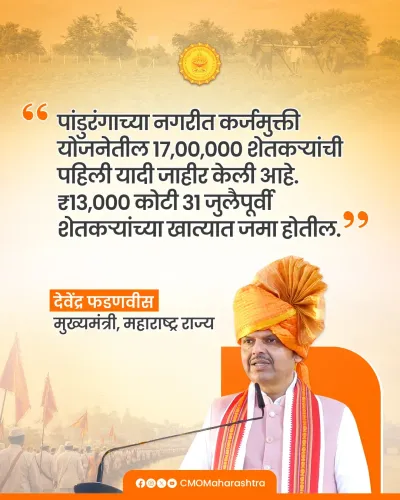
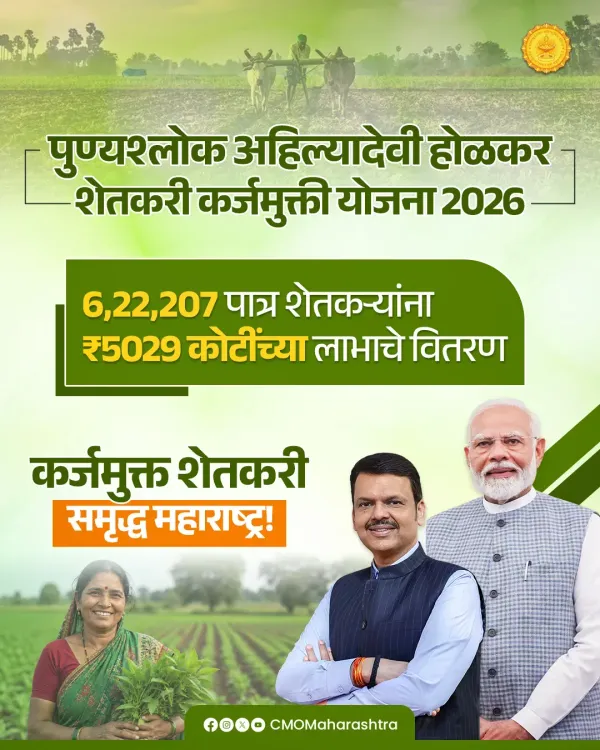
Chief Minister Devendra Fadnavis disbursed ₹5,029 crore to 6,22,207 eligible farmers under the Punyashlok Ahilyadevi Holkar Shatakari Karjmukti Yojana 2026 on 7 August 2026, marking Maharashtra's latest large-scale farm debt relief effort.
Key Takeaways
₹5,029 crore disbursed in a single event to 6,22,207 eligible farmers in Maharashtra on 7 August 2026 .
The scheme is named the Punyashlok Ahilyadevi Holkar Shatakari Karjmukti Yojana 2026 , after the 18th-century Holkar ruler.
Chief Minister Devendra Fadnavis personally presided over the distribution.
The average benefit per farmer works out to approximately ₹80,800 .
Maharashtra has a history of large-scale farm loan waivers, including a major initiative in 2017 under Fadnavis's earlier tenure.
Subsequent tranches and the scheme's reflection in the next state budget remain key developments to watch.
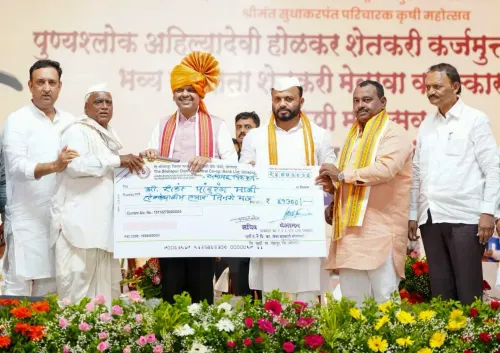
Over six lakh farmers in Maharashtra woke up to tangible relief on Friday, 7 August 2026, as Chief Minister Devendra Fadnavis personally handed out benefits worth ₹5,029 crore under the state's newest farm loan waiver programme — a disbursal that puts real money in the hands of 6,22,207 eligible cultivators in one stroke.
What the 'Punyashlok Ahilyadevi Holkar' scheme covers
The programme, formally titled the Punyashlok Ahilyadevi Holkar Shatakari Karjmukti Yojana 2026, is named after the celebrated 18th-century Holkar ruler Ahilyadevi Holkar, remembered for her administrative reforms across the Malwa region. The government's choice of name signals an intent to frame the relief as part of a longer tradition of farmer-first governance in the Maratha political imagination.
The Chief Minister's Office announced the disbursal via its official account, stating — 'शेतकऱ्यांच्या प्रगतीला नवे बळ!' ('New strength for farmers' progress!') — as Fadnavis presided over the distribution event.
Fadnavis and Maharashtra's recurring debt-relief cycle
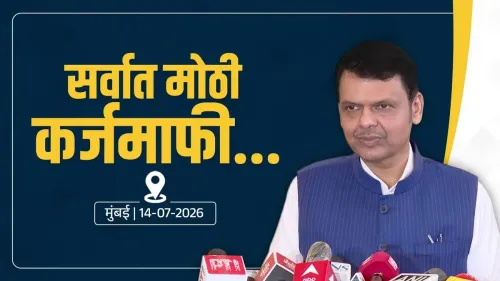
This is not the first time Devendra Fadnavis has anchored a large-scale farm loan waiver. During his earlier tenure as Chief Minister, the Maharashtra government in 2017 launched a major debt relief initiative to address acute agrarian distress — a pattern that has played out across multiple Indian states as monsoon failures, input-cost spikes, and commodity price volatility repeatedly squeeze rural households.
Maharashtra's agricultural sector — spanning cash crops like cotton and sugarcane alongside food grains — has historically been vulnerable to these pressures, making periodic debt relief a near-structural feature of the state's fiscal calendar.
₹5,029 crore, 6.22 lakh beneficiaries: the scale in perspective
At ₹5,029 crore disbursed to 6,22,207 farmers, the average benefit per beneficiary works out to roughly ₹80,800 — a figure that, while not erasing long-term indebtedness, can meaningfully break a short-term debt trap and restore a farmer's credit eligibility with institutional lenders.
Analysts watching Maharashtra's rural economy will now track whether subsequent tranches follow, and how the scheme's outlay figures into the state's next budget session — the true test of whether this disbursal is a one-time event or the first instalment of a sustained relief architecture.
For now, Maharashtra's farmers have a number: ₹5,029 crore, distributed in a single day. The question is what the state builds around it.
Point of View
Particularly ahead of legislative cycles. For Fadnavis, who anchored a similar initiative in 2017, the scheme consolidates his image as a CM responsive to rural distress — a constituency that remains decisive in Maharashtra elections. The naming of the scheme after Ahilyadevi Holkar is a deliberate cultural choice, tapping into a legacy of benevolent administration that resonates across caste lines in the state. The real policy test, however, lies in what structural reforms — crop insurance, MSP access, irrigation — accompany the waiver, since debt relief alone has historically not broken the cycle of farm indebtedness.
NationPress
7 Aug 2026
Frequently Asked Questions
What is the Punyashlok Ahilyadevi Holkar Shatakari Karjmukti Yojana 2026?
It is a Maharashtra state government scheme launched in 2026 to waive farm loans for eligible farmers. Under this scheme, Chief Minister Devendra Fadnavis disbursed ₹5,029 crore to 6,22,207 farmers on 7 August 2026.
How many farmers benefited from the Maharashtra farm loan waiver in 2026?
A total of 6,22,207 eligible farmers received benefits under the Punyashlok Ahilyadevi Holkar Shatakari Karjmukti Yojana 2026.
How much money was disbursed under Maharashtra's 2026 farm loan waiver?
₹5,029 crore was distributed in a single disbursal event presided over by Chief Minister Devendra Fadnavis on 7 August 2026.
Who is Ahilyadevi Holkar and why is the scheme named after her?
Ahilyadevi Holkar was an 18th-century Holkar ruler celebrated for her administrative and welfare reforms in the Malwa region. The Maharashtra government named the farm loan waiver scheme after her to invoke her legacy of farmer-friendly governance.
Has Maharashtra done a farm loan waiver before?
Yes. The Maharashtra government under Devendra Fadnavis had previously announced a major farm loan waiver in 2017 to address agrarian distress, making the 2026 scheme part of a recurring pattern of debt relief in the state.