CM Fadnavis distributes 500 sq ft homes to BDD Chawl residents
Synopsis
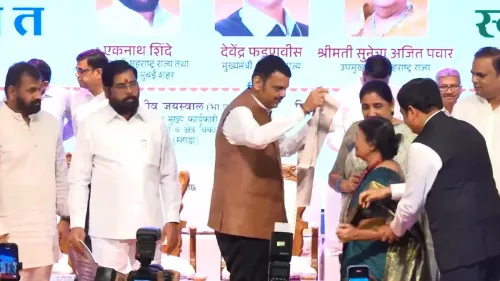
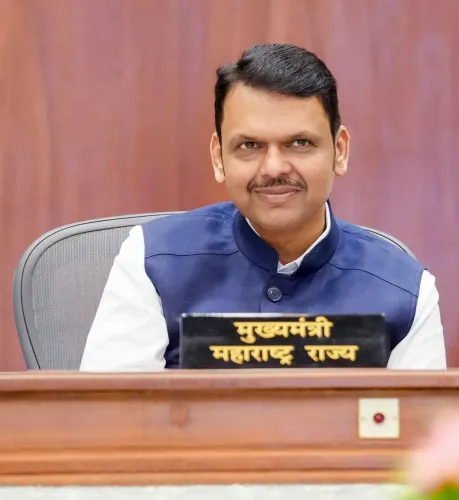
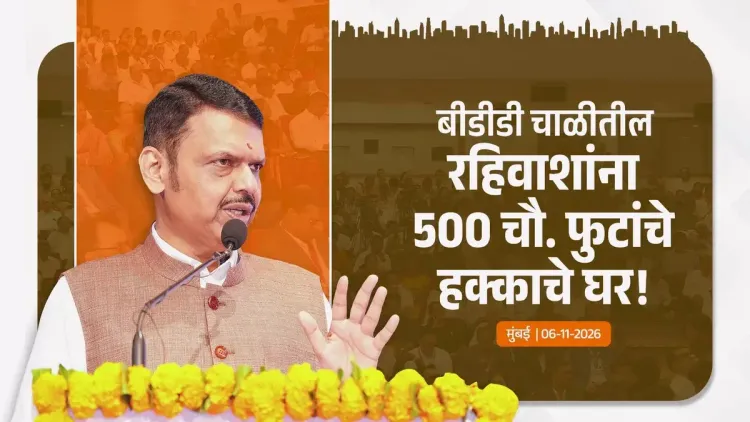
Maharashtra CM Devendra Fadnavis on 6 November 2026 oversaw the distribution of 500 sq ft modern rehabilitation flats to BDD Chawl residents at Na. M. Joshi Marg, Lower Parel, through MHADA under the state's Ashray Yojana — a milestone in Mumbai's decades-long chawl redevelopment effort.
Key Takeaways
500 sq ft fully equipped rehabilitation flats distributed to BDD Chawl residents at Na.
Joshi Marg, Lower Parel on 6 November 2026 .
MHADA (Maharashtra Housing and Area Development Authority) is the implementing agency for the BDD Chawl Redevelopment Project.
The distribution falls under Maharashtra's Ashray Yojana , the state's housing rehabilitation scheme for eligible chawl tenants.
BDD Chawls are early-20th-century colonial-era tenements in central Mumbai; redevelopment has been underway since the 2010s .
The Lower Parel handover is one phase of a multi-cluster project; Worli and Naigaon clusters remain at varying stages.
CM Devendra Fadnavis announced the milestone on X in both Marathi and Hindi.
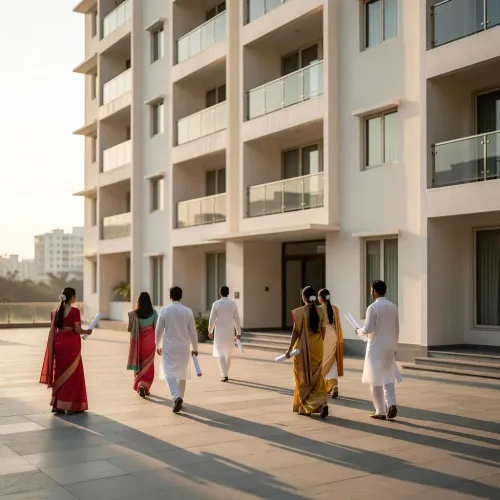
Decades of cramped colonial-era living in Mumbai's BDD Chawls edged closer to an end on 6 November 2026, as Maharashtra Chief Minister Devendra Fadnavis oversaw the distribution of fully equipped 500 square-foot rehabilitation flats to residents of the Na. M. Joshi Marg, Lower Parel cluster — a moment that marks a tangible milestone in one of the city's most ambitious urban renewal drives.
Posting on X in Marathi and Hindi, CM Fadnavis announced: 'ना. म. जोशी मार्ग, लोअर परळ येथील बीडीडी चाळीतील रहिवाशांना सर्व सोयी-सुविधांनी सुसज्ज अशी 500 चौरस फुटांची घरे प्रदान!' — 'Residents of BDD Chawl at Na. M. Joshi Marg, Lower Parel, have been provided with 500 sq ft homes equipped with all modern amenities.' The event was tagged under the state's Ashray Yojana and carried out by MHADA, Maharashtra's nodal housing and redevelopment authority.What BDD Chawls are, and why this matters to Mumbai
The BDD Chawls — Board of Development Department tenements — are among Mumbai's most iconic examples of colonial-era mass housing, constructed in the early 20th century to house mill workers and low-income families in dense central neighbourhoods. Spread across clusters in Lower Parel, Naigaon, N. M. Joshi Marg, and Worli, these structures have housed generations of Mumbaikars in conditions that have long since fallen below modern habitability standards: shared bathrooms, cramped single-room tenements, and ageing infrastructure.
The push to redevelop them has been part of Mumbai's urban renewal agenda since the 2010s, moving through multiple phases of tendering, litigation, and construction. What makes the Lower Parel handover significant is not just the square footage — it is the shift from a shared-facility chawl room to a self-contained, amenity-equipped flat, a qualitative leap for families that have lived on these premises for decades.
MHADA and Ashray Yojana: the machinery behind the move
MHADA (Maharashtra Housing and Area Development Authority) is the state agency driving the BDD Chawl Redevelopment Project, responsible for constructing new residential towers on the original footprints and rehabilitating eligible tenants. The Ashray Yojana is the Maharashtra government's umbrella rehabilitation scheme under which upgraded tenements are formally allotted to qualifying residents — a process that involves verification of occupancy records, consent mechanisms, and legal title transfer.
The Na. M. Joshi Marg cluster in Lower Parel is one of the larger BDD Chawl sites in terms of residential density, making today's distribution event a consequential step for a neighbourhood that sits in the heart of Mumbai's rapidly transforming mill-lands belt.
Remaining phases and what comes next
The BDD Chawl project spans multiple clusters across central Mumbai, and the Lower Parel handover represents one phase in what remains a multi-year undertaking. Attention will now shift to progress at the Worli and Naigaon clusters, where redevelopment and rehabilitation processes are at varying stages of completion. Further flat-distribution events under Ashray Yojana are expected as construction on subsequent towers reaches the handover stage.
For Mumbai's housing policy, the moment is a proof-of-concept: that one of the city's most politically and legally complex redevelopment exercises can move from decades of planning to keys in hands — 500 square feet of modern life where a chawl room once stood.
Point of View
The CM is simultaneously targeting Marathi-speaking chawl voters and projecting urban governance competence ahead of any coming electoral cycle. The Lower Parel location is symbolically loaded: it sits in the transformed mill-lands belt, making the contrast between colonial-era tenement and modern flat a ready-made narrative about Mumbai's reinvention. The key policy question is whether this pace of distribution can be replicated across the remaining, more contested clusters.
NationPress
6 Nov 2026
Frequently Asked Questions
What is the BDD Chawl redevelopment project in Mumbai?
The BDD Chawl redevelopment project is a Maharashtra government initiative to demolish and replace early-20th-century colonial-era tenements in central Mumbai with modern residential towers, providing eligible residents with self-contained flats through MHADA under the Ashray Yojana.
What is Ashray Yojana Maharashtra?
Ashray Yojana is Maharashtra's housing rehabilitation scheme under which eligible residents of redeveloped chawls and slums are formally allotted new, modern tenements — typically 500 sq ft in the case of BDD Chawl beneficiaries.
Where is the Na. M. Joshi Marg BDD Chawl located?
Na. M. Joshi Marg (formerly N. M. Joshi Marg) is a major arterial road in Lower Parel, central Mumbai. The BDD Chawl cluster at this location is one of several such tenement sites across the neighbourhood undergoing MHADA-led redevelopment.
What is MHADA and what role does it play in chawl redevelopment?
MHADA — the Maharashtra Housing and Area Development Authority — is the state government's nodal agency for public housing. In the BDD Chawl project it handles construction of new towers, tenant verification, and the formal handover of rehabilitation flats to eligible residents.
How big are the new BDD Chawl rehabilitation flats?
Each rehabilitation flat being distributed under the BDD Chawl Redevelopment Project measures 500 square feet and is equipped with modern amenities — a significant upgrade from the original single-room chawl tenements that lacked attached bathrooms and basic facilities.