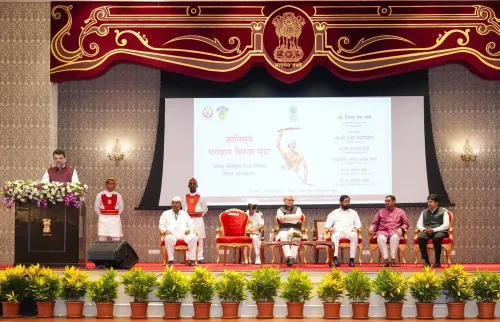
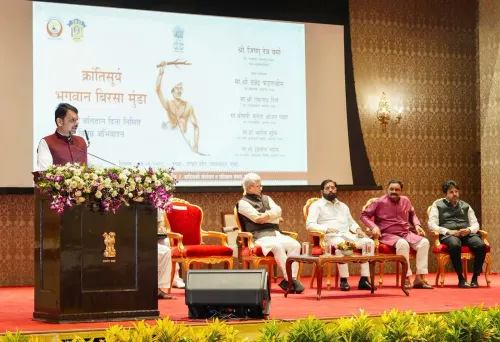
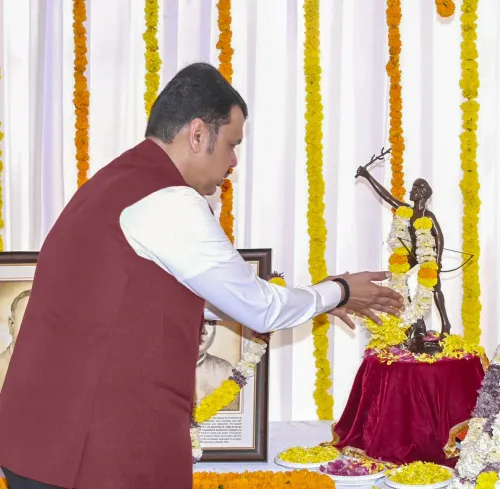
CM Fadnavis, Dy CM Shinde plant trees on Birsa Munda Martyrdom Day
Synopsis
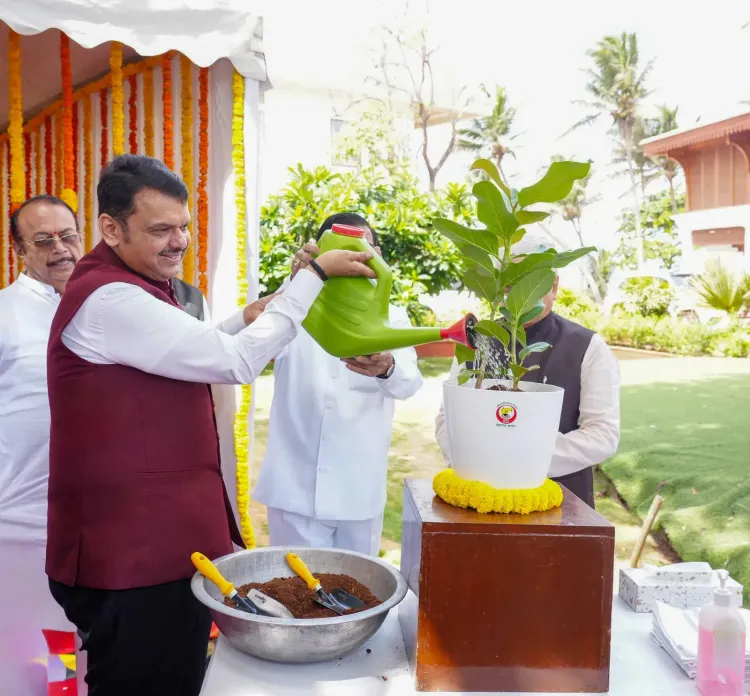
Chief Minister Devendra Fadnavis, Deputy Chief Minister Eknath Shinde, and Governor Jishnu Dev Varma planted trees at Lok Bhavan, Mumbai on 9 June 2026 to honour tribal icon Bhagwan Birsa Munda on his martyrdom anniversary, with senior ministers and legislators also present.
Key Takeaways
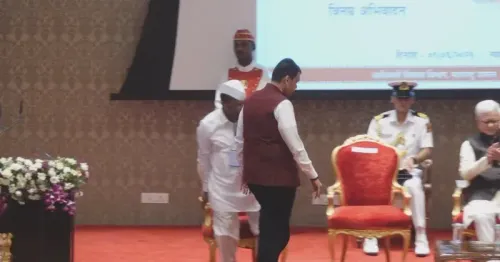
Chief Minister Devendra Fadnavis , Deputy Chief Minister Eknath Shinde , and Governor Jishnu Dev Varma jointly participated in a tree-plantation ceremony at Lok Bhavan, Mumbai on 9 June 2026 .
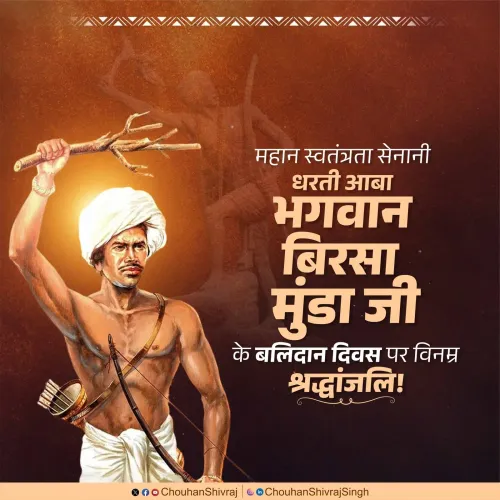
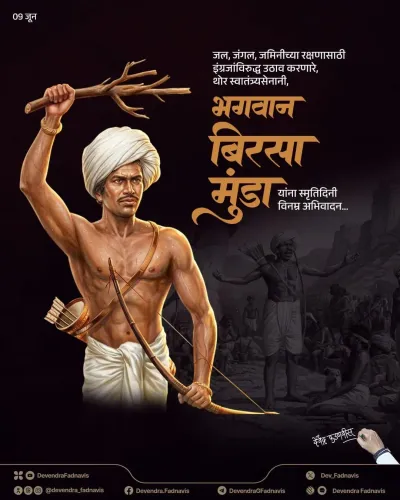
The event marked the martyrdom anniversary (Balidaan Din) of Bhagwan Birsa Munda , the tribal leader revered as Dharti Aaba and Jannayak .
Ashok Uike and MLA Kisan Kathore were among the dignitaries present, reflecting broad institutional participation.
Birsa Munda (1875–1900) led the Munda Rebellion against British land policies and died in British custody at age 25 .
Maharashtra has observed 9 June as Birsa Munda's martyrdom day with public events since at least the early 2000s as part of tribal outreach.
The plantation drive reflects the state's practice of linking Adivasi commemorations to afforestation and tribal welfare initiatives .
The Chief Minister's Office of Maharashtra announced on Tuesday, 9 June 2026 that Chief Minister Devendra Fadnavis and Deputy Chief Minister Eknath Shinde, alongside Governor Jishnu Dev Varma, participated in a tree-plantation ceremony at Lok Bhavan, Mumbai, marking the martyrdom anniversary of tribal icon Bhagwan Birsa Munda.
Context
The event was held to honour Birsa Munda, revered as Jannayak (people's leader) and Dharti Aaba (Father of the Earth) among Adivasi communities. 9 June marks the anniversary of his death in 1900, when he passed away in British custody at the age of 25. The post described the occasion as 'balidaan din' — martyrdom day — reflecting the deep regard in which he is held across tribal communities in India.
Birsa Munda was born in 1875 in the Chotanagpur region and led the Munda Rebellion against British land-acquisition policies, becoming a defining symbol of Adivasi resistance and dignity. His legacy is central to tribal identity politics and welfare discourse in India to this day.
Policy Backdrop
Maharashtra governments have observed Birsa Munda's martyrdom anniversary with public events since at least the early 2000s as part of sustained tribal outreach. The choice to combine the commemoration with a tree-plantation drive at Lok Bhavan is consistent with a broader state practice of linking Adivasi tributes to environmental initiatives, reflecting both cultural respect and policy optics around afforestation targets.
This falls within the wider national framework of programmes such as Vanbandhu Kalyan Yojana, which aims to improve welfare for tribal communities while simultaneously promoting forest and green-cover expansion. The BJP-led Mahayuti alliance in Maharashtra has made tribal outreach a visible part of its governance agenda since returning to power.
Stakeholders and Impact
The ceremony was also attended by Minister Dr. Ashok Uike and MLA Kisan Kathore, along with other dignitaries, signalling broad institutional participation. Dr. Uike, a legislator with roots in tribal constituencies, lends particular symbolic weight to such occasions.
For Maharashtra's tribal communities — among the largest Adivasi populations of any Indian state — these annual observances carry both cultural and political significance. They serve as a public reaffirmation of the state's commitment to recognising Adivasi contributions to India's freedom struggle and to ongoing welfare delivery.
What's Next
The state government is expected to continue annual observances on 9 June in coming years, potentially scaling up the plantation drives as part of Maharashtra's green-cover targets. Observers will watch whether the current administration links these commemorations more formally to tribal welfare scheme milestones or to specific afforestation benchmarks under state and central programmes.
Point of View
Chief Minister, and Deputy Chief Minister all present — elevates what could be a routine tribute into a visible statement of institutional commitment to tribal recognition. Combining commemoration with an environmental act is a politically deft move, addressing both the Adivasi constituency and the state's green-cover narrative in a single gesture. For the Mahayuti alliance, which depends on consolidating tribal votes across Vidarbha and other regions, such high-profile observances serve a dual purpose: cultural legitimacy and electoral groundwork. The pattern suggests these events will grow in scale as the administration seeks to deepen its footprint among communities historically courted by multiple political formations.
NationPress
19 Sept 2026
Frequently Asked Questions
Why is 9 June observed as Birsa Munda's martyrdom day?
Bhagwan Birsa Munda died on 9 June 1900 in British custody in Ranchi, making the date his martyrdom anniversary. He was a tribal leader who led the Munda Rebellion against British land policies and is revered as 'Dharti Aaba' by Adivasi communities across India.
What is the significance of 'Dharti Aaba' for Birsa Munda?
'Dharti Aaba' means 'Father of the Earth' in the Mundari tradition and is a title of deep reverence given to Birsa Munda by Adivasi communities, reflecting his role as a protector of tribal land rights and cultural identity.
Where is Lok Bhavan in Mumbai and why is it used for such events?
Lok Bhavan is an official government venue in Mumbai used for high-level meetings and ceremonial functions by Maharashtra state leaders. Its use for the tree-plantation ceremony underscores the official and institutional nature of the tribute.
Who attended the Birsa Munda martyrdom day event in Mumbai on 9 June 2026?
Governor Jishnu Dev Varma, Chief Minister Devendra Fadnavis, Deputy Chief Minister Eknath Shinde, Minister Dr. Ashok Uike, MLA Kisan Kathore, and other dignitaries attended the tree-plantation ceremony at Lok Bhavan, Mumbai.
How does Maharashtra observe Birsa Munda's anniversary each year?
Maharashtra governments have marked Birsa Munda's martyrdom anniversary on 9 June with public events and tribal outreach programmes since at least the early 2000s, often combining cultural tributes with environmental activities such as tree-plantation drives.