CM Fadnavis: Identifying Bangladeshi nationals now easier, deportations to speed up
Synopsis
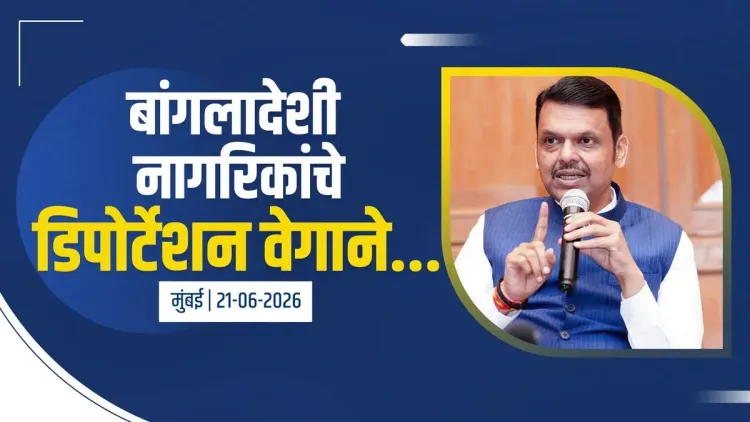
Maharashtra CM Devendra Fadnavis declared at a Mumbai press conference on 21 June 2026 that identifying undocumented Bangladeshi nationals has become easier and that their deportation will now be carried out more swiftly, signalling a renewed state-level push on illegal immigration enforcement.
Key Takeaways
CM Devendra Fadnavis stated at a Mumbai press conference on 21 June 2026 that identifying undocumented Bangladeshi nationals in Maharashtra is now easier.
He added that deportation of such individuals will proceed at a faster pace.
The remarks were made in both Marathi and Hindi , indicating a broad public audience.
Maharashtra has previously conducted periodic enforcement drives alongside states like Assam and Delhi in coordination with central agencies.
The NRC published in Assam in 2019 excluded over 1.9 million people suspected of being undocumented migrants, establishing a national precedent for such exercises.
Next steps include possible formal notification of revised identification protocols and coordination with the Union Ministry of Home Affairs .
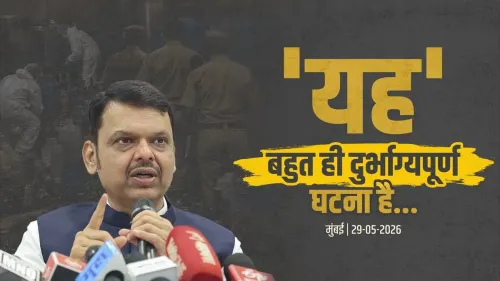
Maharashtra Chief Minister Devendra Fadnavis said on Sunday, 21 June 2026, that identifying undocumented Bangladeshi nationals in the state has become easier and that deportations will now proceed at a faster pace. The remarks were made at a press conference in Mumbai.
Context
Speaking to reporters in Mumbai, CM Fadnavis said — in both Marathi and Hindi — 'बांगलादेशी नागरिकांचा शोध लावणे आता सोपे झाले असून, त्यांचे डिपोर्टेशनही अधिक वेगाने होईल' ('Identifying Bangladeshi nationals has now become easier, and their deportation will also happen more swiftly'). The statement signals a renewed push by the Maharashtra government on an issue that has periodically surfaced in the state's law-enforcement discourse.
The Chief Minister did not specify the new tools or protocols enabling faster identification, but the remarks at a formal press conference suggest an institutional shift in the state's approach to detecting undocumented migrants.
Policy Backdrop
Concerns over illegal immigration from Bangladesh into Indian states have persisted for decades. The Assam Accord of 1985 first established a legal basis for detecting foreigners who entered after 1971, and the final National Register of Citizens (NRC) published in Assam in 2019 excluded over 1.9 million people suspected of being undocumented immigrants, predominantly from Bangladesh.
Maharashtra, alongside states such as Assam and Delhi, has conducted periodic enforcement drives in coordination with central agencies to identify and deport undocumented Bangladeshi nationals. The issue sits at the intersection of border management, citizenship law, and internal security — themes that have featured prominently in BJP-led governments' policy positions at both the state and national level.
Stakeholders and Impact
The most immediate stakeholders are the Maharashtra state police and central immigration and border-management agencies, who would be responsible for executing any accelerated identification and deportation drive. Civil society groups and legal advocates have historically raised due-process concerns around such exercises, particularly regarding the risk of detaining or deporting long-settled residents who lack documentation.
Undocumented migrants themselves face the most direct consequences, including detention and removal. The statement also carries political resonance ahead of any future electoral cycle, as immigration enforcement has been a consistent mobilising issue for the BJP in urban Maharashtra.
What's Next
Formal notification of revised identification protocols and coordination meetings with the Union Ministry of Home Affairs on deportation logistics are the immediate steps to watch. Whether Maharashtra moves toward a state-level registry mechanism or relies on enhanced inter-agency data-sharing will shape how quickly the Chief Minister's stated goal translates into operational action.
The pace and scale of any resulting drives will be closely monitored by both civil liberties organisations and political opponents, making transparency around the process a key factor in how this policy initiative is received.
Point of View
Particularly in urban centres where the issue has electoral salience. By framing the change as a procedural improvement — identification is now 'easier' — the Chief Minister signals institutional readiness without committing to specific numbers or timelines, a posture that allows political credit without immediate accountability. The statement also echoes the broader national debate around the NRC and citizenship law, keeping Maharashtra aligned with the BJP's federal narrative on border security. How quickly operational action follows the press-conference announcement will determine whether this is a policy shift or a political signal.
NationPress
22 Jun 2026
Frequently Asked Questions
What did Maharashtra CM Devendra Fadnavis say about Bangladeshi nationals?
At a press conference in Mumbai on 21 June 2026, CM Fadnavis said that identifying undocumented Bangladeshi nationals has become easier and that their deportation will now happen more swiftly.
How does Maharashtra identify illegal Bangladeshi immigrants?
Maharashtra state police conduct enforcement drives in coordination with central agencies to identify undocumented Bangladeshi nationals. CM Fadnavis indicated on 21 June 2026 that the identification process has been made easier, though specific new protocols were not detailed at the press conference.
What is the NRC and how does it relate to Bangladeshi deportation?
The National Register of Citizens (NRC) was updated in Assam and published in 2019, excluding over 1.9 million people suspected of being undocumented immigrants, primarily from Bangladesh. It established a national precedent for state-level identification and deportation exercises.
Has Maharashtra deported Bangladeshi nationals before?
Yes, Maharashtra has periodically conducted drives to identify and deport undocumented Bangladeshi nationals, in coordination with central agencies, similar to actions taken by other states such as Assam and Delhi.
What happens next after Fadnavis's deportation announcement?
The immediate steps to watch include formal notification of any revised identification protocols and coordination with the Union Ministry of Home Affairs on deportation logistics, which will determine how quickly the stated acceleration is implemented.