CM Fadnavis: Centre Acting Firmly on NEET Exam Irregularities
Synopsis
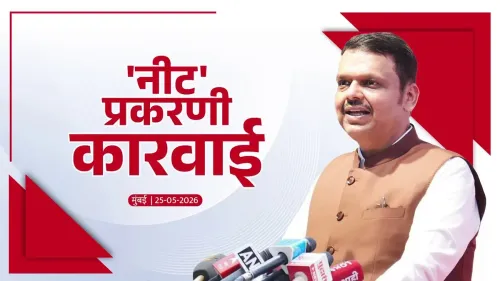
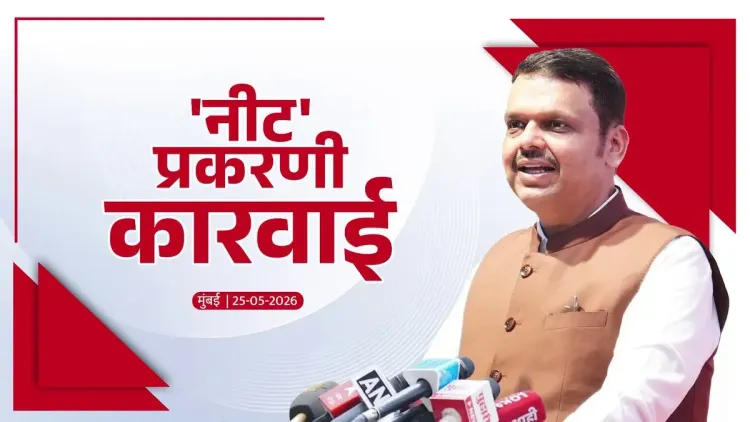
Maharashtra CM Devendra Fadnavis stated on 25 May 2026 that the central government has taken serious cognisance of NEET examination irregularities and that arrests have been made after getting to the root of the matter, reassuring students and parents of firm action.
Key Takeaways
CM Devendra Fadnavis posted on 25 May 2026 from Mumbai that the Centre has acted seriously on the NEET exam irregularities case .
He stated that arrests have been made after investigators got to the root of the matter.
The post was made in both Marathi and Hindi , signalling deliberate bilingual outreach.
The NEET examination, conducted by the National Testing Agency (NTA) , has faced allegations of paper leaks and irregularities since 2024 .
The CBI and the Supreme Court of India had previously been involved in monitoring the case.
The statement is aimed at reassuring lakhs of medical aspirants across Maharashtra and India.
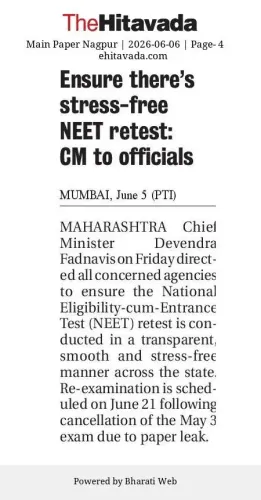
Maharashtra Chief Minister Devendra Fadnavis on Monday, 25 May 2026, stated that the central government has taken serious cognisance of the NEET examination irregularities case and that arrests have been made after getting to the root of the matter. The statement, posted from Mumbai, came as a reply on X and was accompanied by a video.
Context
Fadnavis posted in both Marathi and Hindi, conveying the same message in both languages. In Marathi, he wrote: 'नीट परीक्षा प्रकरणासंदर्भात केंद्र सरकारने गंभीर दखल घेतली असून, या प्रकरणाची पाळेमुळे खणून काढत संबंधितांना अटकही करण्यात आली आहे' — meaning, 'The central government has taken serious note of the NEET examination matter and, having dug to the roots of the case, the concerned persons have also been arrested.' The Hindi version conveyed an identical message, signalling a deliberate bilingual outreach to both Marathi and Hindi-speaking audiences across Maharashtra and beyond.
The post is framed as a reply, indicating Fadnavis was responding to a query or criticism directed at him or the government regarding the handling of the NEET case. By invoking central government action and arrests, he sought to underline that the matter is being handled with seriousness at the highest level.
Policy Backdrop
The National Eligibility cum Entrance Test (NEET) is India's single gateway examination for admission to undergraduate medical courses, conducted by the National Testing Agency (NTA), an autonomous body under the Ministry of Education. Allegations of paper leaks and systemic irregularities in 2024 had triggered investigations by the Central Bureau of Investigation (CBI) and drew the attention of the Supreme Court of India, which monitored the examination process closely.
These developments placed the NTA under intense scrutiny, with demands for structural reforms in how high-stakes national entrance tests are designed, conducted, and secured. The episode became a flashpoint for student protests and political debate across the country, with millions of medical aspirants and their families directly affected by questions over exam integrity.
Stakeholders and Impact
The primary stakeholders in the NEET case are lakhs of medical aspirants who appear for the examination each year, along with their families who invest significant resources in preparation. Any irregularity in the process directly undermines the merit-based system that determines entry into India's medical colleges.
Fadnavis's statement, coming from the Chief Minister of Maharashtra — one of the states with the largest number of NEET aspirants — carries political weight. It signals the ruling dispensation's position that central agencies are actively pursuing accountability, and serves as a reassurance to students and parents that the matter has not been allowed to lapse.
What's Next
Attention will now turn to further updates from central investigative agencies on the arrests mentioned by Fadnavis, and whether the probe leads to broader institutional changes at the NTA. Demands for greater transparency in exam administration and structural reforms in the conduct of NEET are likely to persist in public and parliamentary discourse.
Any announcement regarding changes to the examination framework or the functioning of the NTA will be closely watched by student groups, opposition parties, and education policymakers alike. The coming weeks may prove decisive in determining whether this round of central action translates into lasting systemic reform.
Point of View
Positioning the BJP-led central government as decisive on an issue that has galvanised student anger and opposition criticism since 2024. By emphasising arrests and a 'root-level' probe, he seeks to neutralise the narrative that the NEET irregularities were handled lightly. The choice to respond publicly — and in both Marathi and Hindi — suggests the party is conscious of the electoral sensitivity of education integrity in Maharashtra. This fits a broader pattern where state BJP leaders amplify central agency action to reinforce the government's law-and-order credibility on high-visibility cases.
NationPress
9 Oct 2026
Frequently Asked Questions
What did CM Fadnavis say about the NEET exam case?
CM Devendra Fadnavis stated on 25 May 2026 that the central government has taken serious cognisance of the NEET examination irregularities and that arrests have been made after getting to the root of the matter.
What is the NEET exam controversy about?
The NEET controversy centres on allegations of paper leaks and systemic irregularities in the conduct of India's national medical entrance test, which came to a head in 2024 and triggered CBI investigations and Supreme Court scrutiny.
Who conducts the NEET examination in India?
The NEET examination is conducted by the National Testing Agency (NTA), an autonomous body under India's Ministry of Education.
Have arrests been made in the NEET paper leak case?
According to CM Devendra Fadnavis's statement on 25 May 2026, arrests have been made in connection with the NEET irregularities case after investigators got to the root of the matter.
What reforms are expected in NEET after the irregularities?
Demands for structural reforms in the NTA's functioning and greater transparency in exam administration are ongoing; any formal announcements from the central government are awaited.