NEET 2026: Fadnavis orders CCTV vigil, cybersecurity checks at Maharashtra centres
Synopsis
Days after the 2026 NEET-UG paper leak forced a nationwide cancellation, Maharashtra CM Devendra Fadnavis has personally chaired a security review, ordering round-the-clock CCTV monitoring, cybersecurity checks, and special vigil in Pune and Latur — signalling that the state is treating exam integrity as a law-and-order priority, not just an administrative one.
Key Takeaways
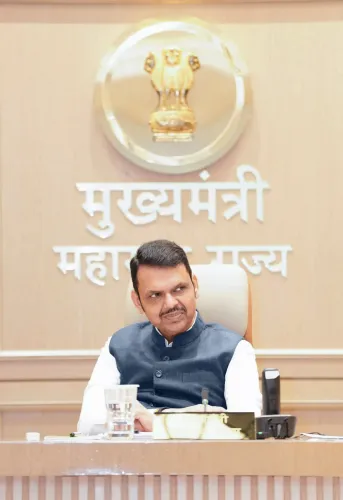
CM Devendra Fadnavis chaired a high-level review meeting on 5 June to oversee NEET examination preparedness in Maharashtra.
All CCTV systems at exam centres must remain fully operational; robust cybersecurity measures are mandatory.
Special administrative focus ordered for Pune and Latur due to high student density and coaching culture.
NTA Director General Abhishek Singh presented micro-planning details, security arrangements, and centre-wise infrastructure status.
Directives follow the 2026 NEET-UG paper leak that led to the cancellation of the national entrance examination.
Authorities have been placed on standby for monsoon preparedness to prevent logistical disruptions on exam day.
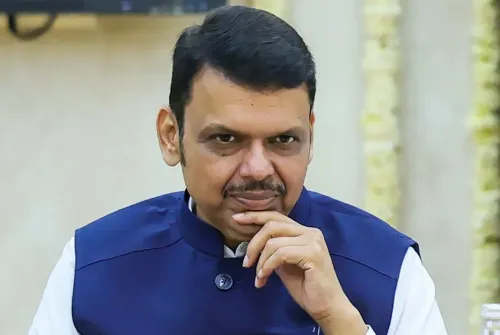
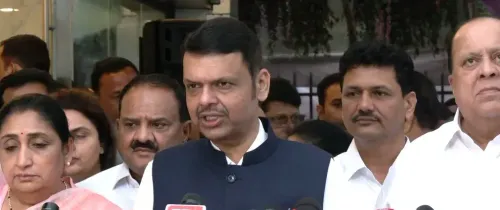
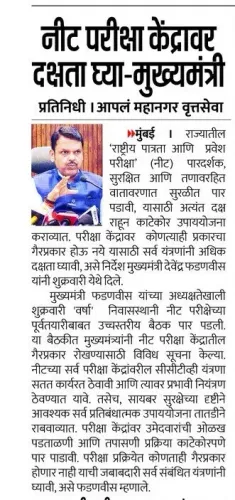
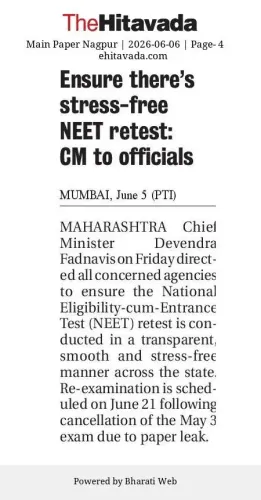
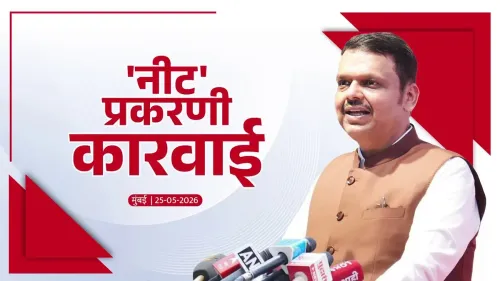
Maharashtra Chief Minister Devendra Fadnavis on Friday, 5 June directed state authorities to enforce stringent security and anti-malpractice protocols at all National Eligibility cum Entrance Test (NEET) examination centres across the state, with a special focus on Pune and Latur. The directives were issued at a high-level review meeting chaired by the Chief Minister to assess preparatory arrangements ahead of the upcoming NEET examination.
Key Directives Issued
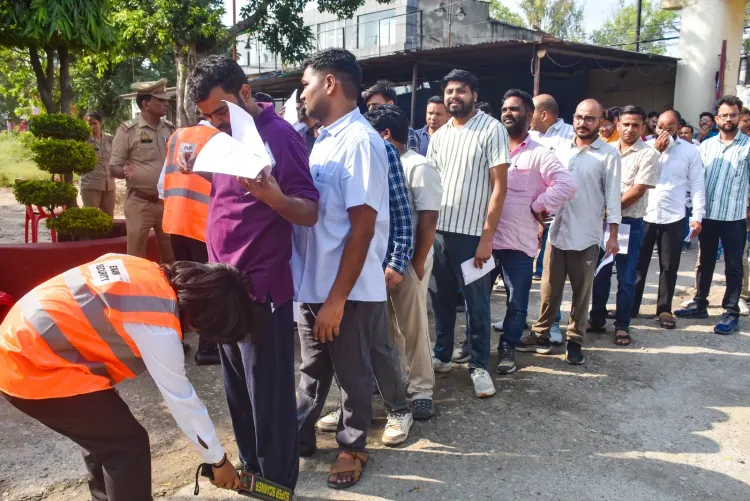
Fadnavis mandated that all CCTV systems at examination centres remain fully operational and under continuous monitoring throughout the exam. He also called for robust cybersecurity measures and insisted that candidate inspection and identity verification be carried out with the highest level of stringency.
The Chief Minister further directed that social media platforms be used proactively to disseminate accurate information to students, parents, and citizens. Any rumours or misleading content about the examination process must be countered with immediate official clarifications, he said, to prevent unnecessary anxiety among aspirants.
Special Focus on Pune and Latur
Fadnavis singled out Pune and Latur for heightened administrative attention. Pune, historically regarded as the 'Oxford of the East,' hosts a large student population and a significant number of examination centres. Latur, renowned for the 'Latur Pattern' — an intensive coaching methodology that draws medical aspirants from across Maharashtra — presents its own set of high-stakes challenges, including risks of paper leaks, dummy candidates, and digital malpractice.
Authorities in both districts have been asked to ensure coordinated efforts among the district administration, police department, education department, and related agencies to guarantee seamless security, effective traffic management, uninterrupted power supply, drinking water availability, medical facilities, and monsoon preparedness.
NTA Presentation and Micro-Planning
Abhishek Singh, Director General of the National Testing Agency (NTA), delivered a comprehensive presentation at the meeting detailing the number of NEET examination centres in Maharashtra, available infrastructure, security arrangements, and the micro-planning framework designed for smooth conduct of the exam.
Backdrop: The 2026 NEET Paper Leak
The Chief Minister's directives come directly in the wake of the 2026 NEET-UG paper leak, which triggered widespread controversy and ultimately led to the cancellation of the examination. That episode exposed systemic vulnerabilities in examination security and intensified public and political scrutiny of the NTA's processes. This review meeting signals that state authorities are determined not to allow a repeat.
Notably, the explicit mention of monsoon preparedness underscores the logistical complexity unique to Maharashtra's geography — sudden heavy downpours can disrupt public transport, cause power outages, or flood low-lying areas near examination centres. According to government sources, local municipalities and disaster management cells have been placed on standby to ensure students face no obstacles in reaching their centres on time.
With the NEET examination carrying enormous consequences for lakhs of medical aspirants, the coming days will test whether Maharashtra's multi-agency coordination translates into the incident-free conduct that students and their families are counting on.
Point of View
Where the incentive to cheat is highest and the scrutiny most intense. The real question is whether a review meeting and CCTV mandates are sufficient, or whether Maharashtra needs an independent observer mechanism at sensitive centres. Directives issued from the top have a way of dissipating by the time they reach a district-level exam superintendent — accountability must be built into the system, not just announced from it.
NationPress
21 Oct 2026
Frequently Asked Questions
Why did CM Fadnavis call a special review meeting for NEET 2026?
The meeting was called in the aftermath of the 2026 NEET-UG paper leak, which led to the cancellation of the national entrance examination and raised serious concerns about examination security. Fadnavis chaired the session to assess preparatory arrangements and issue anti-malpractice directives to all concerned state authorities.
What security measures have been ordered for NEET centres in Maharashtra?
CM Fadnavis has directed that all CCTV systems remain fully operational and continuously monitored, that cybersecurity protocols be enforced, and that candidate identity verification be carried out with maximum stringency. Coordinated arrangements for traffic management, power supply, medical facilities, and monsoon preparedness have also been mandated.
Why are Pune and Latur under special focus for NEET 2026?
Pune is one of Maharashtra's largest student hubs, hosting numerous examination centres, while Latur is known for the 'Latur Pattern' of intensive medical coaching that draws aspirants from across the state. The high concentration of coaching centres and competitive pressure in both cities makes them more vulnerable to malpractice such as paper leaks and dummy candidates.
What role is the NTA playing in Maharashtra's NEET preparations?
NTA Director General Abhishek Singh presented a detailed briefing at the review meeting, covering the number of examination centres in Maharashtra, available facilities, security arrangements, and the micro-planning framework for smooth conduct of the exam.
How is the state preparing for monsoon disruptions during NEET?
According to government sources, local municipalities and disaster management cells have been placed on standby to address potential disruptions from heavy rainfall, including transport delays, power outages, and flooding near examination centres, ensuring students can reach their centres without hindrance.