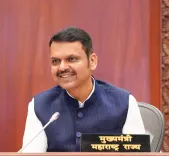
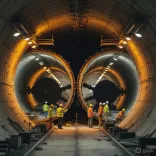
CM Fadnavis inaugurates MMRDA projects, calls Thane-Borivali tunnel India's largest
Synopsis
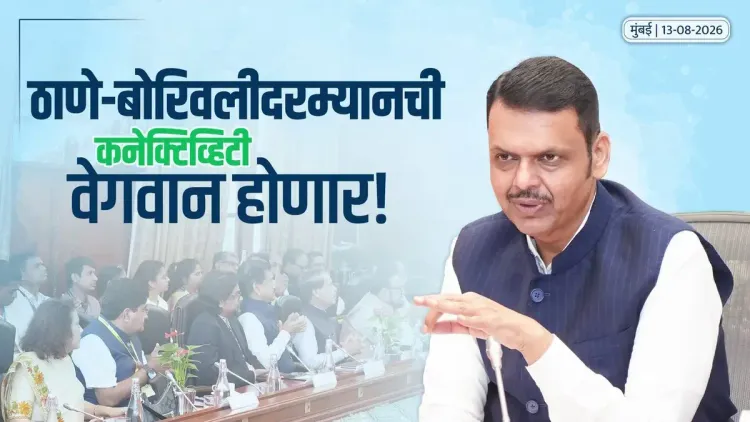
Maharashtra CM Devendra Fadnavis inaugurated MMRDA projects in Mumbai on 13 August 2026, announcing the Thane-Borivali Twin Tunnel will be India's largest twin tunnel, promising faster connectivity between two of the city's most congested suburban nodes.
Key Takeaways
Maharashtra CM Devendra Fadnavis inaugurated multiple MMRDA projects in Mumbai on 13 August 2026 .
The Thane-Borivali Twin Tunnel was declared set to become India's largest twin tunnel , establishing a new national record.
The project aims to provide a direct underground road link between Thane and Borivali , bypassing the Sanjay Gandhi National Park.
MMRDA is the executing agency, continuing its long-running mandate to expand transport capacity across the Mumbai Metropolitan Region .
The multi-project inauguration was timed to the eve of Independence Day , a recurring pattern in Maharashtra's infrastructure calendar.
The 'largest twin tunnel' record claim and final commissioning timeline require further confirmation as construction progresses.
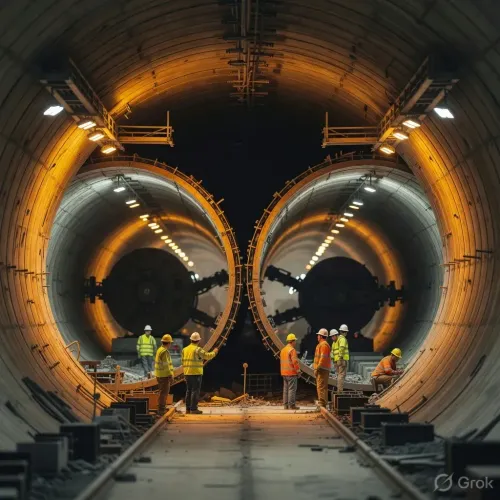
A tunnel that could rewrite Mumbai's commute story broke into the spotlight on 13 August 2026, as Maharashtra Chief Minister Devendra Fadnavis inaugurated a series of MMRDA projects in Mumbai and declared the Thane-Borivali Twin Tunnel set to become the largest twin tunnel in the country.
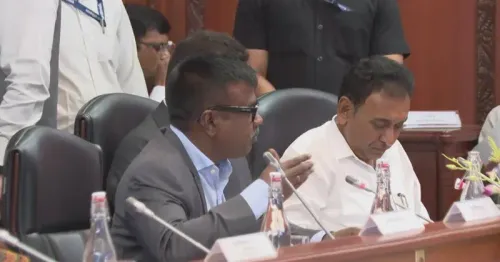
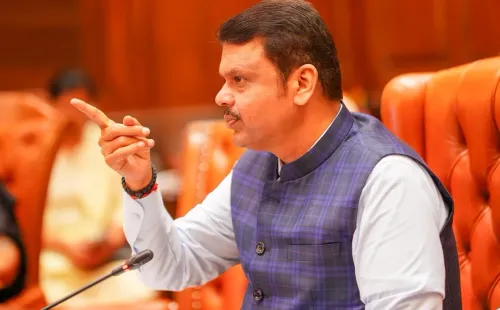
Speaking at the inauguration, Fadnavis said the project would 'establish a new record as the country's largest twin tunnel' and that it would make Mumbai's connectivity 'faster and easier.' The remarks, delivered in both Marathi and Hindi, underscored the state government's intent to frame the project as a national landmark — not merely a local road upgrade.
What the Thane-Borivali tunnel actually does
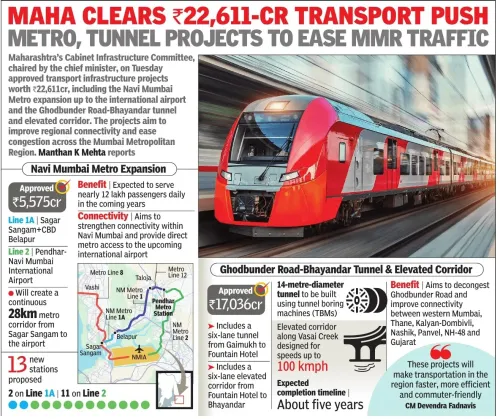
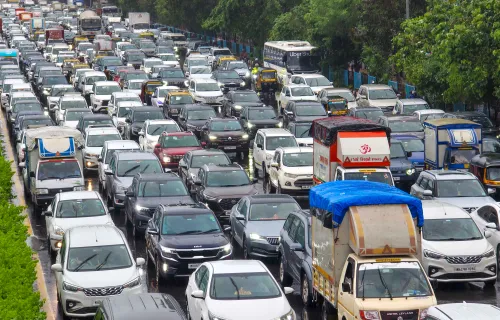
The Thane-Borivali Twin Tunnel is a road tunnel project being executed by the Mumbai Metropolitan Region Development Authority (MMRDA). It links the Thane and Borivali areas — two densely populated nodes of the Mumbai Metropolitan Region that are currently separated by the Sanjay Gandhi National Park, forcing commuters onto congested surface roads. A direct tunnel connection would cut travel time significantly for lakhs of daily commuters.
MMRDA has driven successive waves of transport infrastructure across the Mumbai region since the 2000s — metro corridors, coastal roads, elevated highways. The twin-tunnel project sits within that longer arc, representing the agency's push into underground road infrastructure to complement its metro rail expansion.
MMRDA's wider inauguration push on Independence Day eve
The 13 August 2026 event was not a single ribbon-cutting — it was a multi-project inauguration series by MMRDA, timed to the eve of Independence Day. Such clustered inaugurations are a recurring feature of Maharashtra's infrastructure calendar, allowing the state government to signal momentum on multiple fronts simultaneously.
The Thane-Borivali tunnel was the headline announcement, but the broader event signals that MMRDA's project pipeline — spanning metros, roads, and now tunnels — is moving through successive commissioning phases. Further milestones, including construction progress and a final commissioning timeline for the twin tunnel, remain the key markers to watch.
Why Mumbai's connectivity gap keeps driving mega-projects
Mumbai is India's financial capital, but its geography — a peninsula hemmed by the sea, with suburban corridors stretching north — creates chronic bottlenecks. The Thane-Borivali corridor is one of the most congested, with the national park acting as a physical barrier between the eastern and western suburbs. Infrastructure that punches through that barrier has outsized impact on commute times, logistics, and real estate across both nodes.
Maharashtra governments across administrations have consistently turned to MMRDA as the execution vehicle for such projects, insulating them from the slower pace of municipal procurement. The current government's decision to frame the tunnel as a record-setting national achievement — 'India's largest twin tunnel' — is a deliberate signal that the state intends to compete on scale, not just completion.
The record claim and the exact commissioning date still await independent verification as construction advances — but the political intent is already on the record.
Point of View
Not just Mumbai commuters. This mirrors a broader BJP governance playbook of anchoring urban infrastructure to superlatives and scale. The real test, however, will be the construction and commissioning timeline: MMRDA's record on large projects includes both landmark completions and significant delays, and the Thane-Borivali tunnel's complexity means that gap between announcement and delivery will be closely scrutinised.
NationPress
13 Aug 2026
Frequently Asked Questions
What is the Thane-Borivali Twin Tunnel?
The Thane-Borivali Twin Tunnel is a road tunnel project being built by MMRDA to provide a direct underground link between Thane and Borivali in Mumbai, bypassing the Sanjay Gandhi National Park and reducing travel time for commuters on one of the city's most congested routes.
Why is the Thane-Borivali tunnel called India's largest twin tunnel?
Maharashtra CM Devendra Fadnavis declared at the 13 August 2026 MMRDA inauguration that the Thane-Borivali Twin Tunnel will set a new national record as the country's largest twin tunnel, though this claim awaits independent verification as construction progresses.
What is MMRDA and what projects does it handle?
MMRDA, the Mumbai Metropolitan Region Development Authority, is the state agency responsible for planning and executing large-scale transport and urban infrastructure projects across the Mumbai Metropolitan Region, including metro corridors, roads, and tunnel projects.
When was the Thane-Borivali Twin Tunnel inaugurated?
CM Devendra Fadnavis inaugurated a series of MMRDA projects including the Thane-Borivali Twin Tunnel on 13 August 2026 in Mumbai, on the eve of Independence Day.
How will the Thane-Borivali tunnel benefit Mumbai commuters?
The tunnel will offer a direct underground road connection between Thane and Borivali, significantly cutting travel time compared to current surface routes that are heavily congested, benefiting lakhs of daily commuters across both suburban nodes.