CM Maharashtra Opens Chembur Metro Station on Line 2B

Synopsis
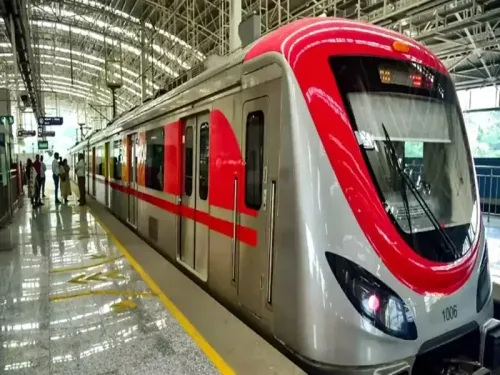
The Chief Minister's Office of Maharashtra announced the inauguration of Chembur Metro Station under Line 2B Phase 1A on 13 August 2026. The station integrates suburban rail, monorail, and four major road corridors, marking a significant multi-modal transit milestone for eastern Mumbai.
Key Takeaways
Chembur Metro Station has been inaugurated under Metro Line 2B, Phase 1A and opened to the public.
The station connects with Chembur Suburban Railway Station and Chembur Monorail Station , creating a three-rail interchange.
It is located near four major road arteries: the Eastern Express Highway , Sion-Panvel Highway , Eastern Freeway , and Santacruz-Chembur Link Road .
MMRDA is the nodal agency overseeing Mumbai Metro Line 2B's phased development.
Mumbai's first metro, Line 1 , launched in 2014 ; Line 2B is part of a multi-corridor expansion since then.
CM Devendra Fadnavis is associated with oversight of the metro expansion programme.
Eastern Mumbai just got a new transit anchor. The Chief Minister's Office of Maharashtra announced the public inauguration of Chembur Metro Station under Metro Line 2B, Phase 1A on 13 August 2026 — a station that connects the suburb's existing suburban railway and monorail nodes into a single, seamless interchange for the first time.
A multi-modal hub takes shape at Chembur
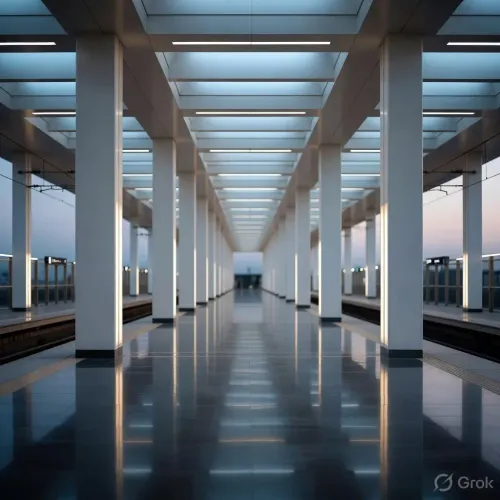
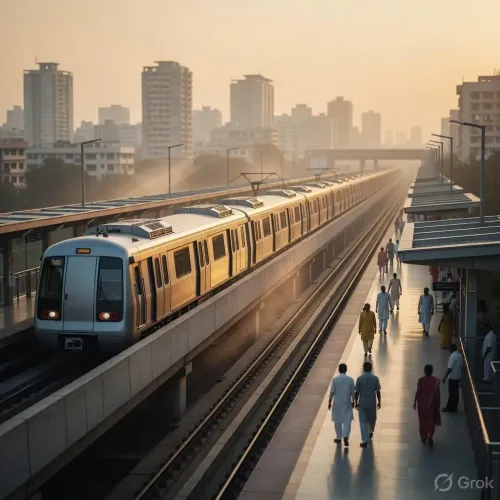
The new metro station is positioned to function as a genuine multi-modal transit centre. Connectivity with the Chembur Suburban Railway Station and the Chembur Monorail Station means commuters can now switch between three distinct rail systems at a single point — a rarity in Mumbai's sprawling transit network.
The station also sits at the convergence of four of eastern Mumbai's busiest road arteries: the Eastern Express Highway, the Sion-Panvel Highway, the Eastern Freeway, and the Santacruz-Chembur Link Road (SCLR). For residents of Chembur and surrounding suburbs, that geography translates into faster, safer, and more reliable access to public transport from virtually every approach direction.
Line 2B's role in Mumbai's metro expansion
Mumbai Metro Line 2B is an eastern corridor being developed by the Mumbai Metropolitan Region Development Authority (MMRDA) to extend metro coverage into suburbs that have historically depended on overcrowded suburban rail. The city's first metro — Line 1 (Versova-Andheri-Ghatkopar) — was inaugurated in 2014, and Maharashtra has since pursued a phased, multi-corridor expansion strategy to knit together the metropolitan region's fragmented transit landscape.
The Chembur station opening under Phase 1A marks a concrete step in that arc. Chief Minister Devendra Fadnavis, tagged directly in the announcement alongside MMRDA, has been closely associated with the oversight of Mumbai's metro build-out — a project that carries both commuter relief and political weight ahead of ongoing urban development commitments.
What the eastern suburbs gain
For the densely populated eastern suburbs, the calculus is straightforward: reduced dependence on road transport, shorter last-mile distances, and a credible alternative to the perpetually packed Central and Harbour railway lines. The station's proximity to major highways also opens the door for park-and-ride use, drawing in commuters from further afield who currently drive into the city.
Progress on the remaining phases of Metro Line 2B and the broader rollout of additional metro corridors across the Mumbai Metropolitan Region will determine how quickly this single-station gain compounds into a network-level shift for Mumbai's commuters.
Point of View
Monorail, suburban rail — at interchange points, a model that signals maturity in urban infrastructure planning. For CM Fadnavis, each such opening reinforces a governance narrative centred on delivery of long-promised infrastructure. The real test, however, will be the pace at which the remaining Line 2B phases are completed — partial corridors deliver partial relief, and Mumbai's commuter patience has been stretched across years of phased announcements.
NationPress
13 Aug 2026
Frequently Asked Questions
What is Chembur Metro Station and which line does it serve?
Chembur Metro Station is a newly inaugurated station on Mumbai Metro Line 2B, Phase 1A , located in the eastern suburb of Chembur. It is designed to serve as a multi-modal transit hub connecting the metro with suburban rail and monorail services.
Which other transport systems connect to the new Chembur Metro Station?
The station connects with the Chembur Suburban Railway Station and the Chembur Monorail Station , allowing passengers to transfer between three rail systems at a single location.
What roads are near the Chembur Metro Station?
The station is close to four major roads: the Eastern Express Highway , the Sion-Panvel Highway , the Eastern Freeway , and the Santacruz-Chembur Link Road (SCLR) .
Who is responsible for building Mumbai Metro Line 2B?
MMRDA (Mumbai Metropolitan Region Development Authority) is the nodal agency planning and implementing Metro Line 2B as part of Mumbai's broader metro network expansion.
When did Mumbai get its first metro line?
Mumbai's first metro corridor, Line 1 (Versova-Andheri-Ghatkopar) , was inaugurated in 2014 . Line 2B is part of the subsequent multi-corridor expansion of the city's metro network.