CM Fadnavis inaugurates multiple BMC flyovers in Mumbai

Synopsis
Chief Minister Devendra Fadnavis inaugurated multiple BMC flyovers in Mumbai on 22 October 2026 in a live-streamed ceremony, marking a fresh push to tackle the city's chronic traffic congestion and advance Maharashtra's urban mobility agenda.
Key Takeaways
Chief Minister Devendra Fadnavis inaugurated several Brihanmumbai Municipal Corporation flyovers on 22 October 2026 .
The ceremony was broadcast live, reflecting the Maharashtra government's emphasis on public transparency for infrastructure delivery.
BMC has been executing successive flyover projects since the early 2000s as part of Mumbai's traffic-decongestion strategy.
The new flyovers are part of a broader urban mobility grid that includes the Mumbai Metro expansion and the Mumbai Coastal Road .
Mumbai's population of over 20 million makes road decongestion a high-stakes civic and economic priority.
Urban planners will watch whether these flyovers integrate effectively with ongoing metro and coastal road infrastructure.
Mumbai's gridlocked arteries got a fresh injection of relief on Thursday, 22 October 2026, as Chief Minister Devendra Fadnavis inaugurated multiple flyovers built by the Brihanmumbai Municipal Corporation (BMC) in a live-streamed ceremony — a visible stamp of the Maharashtra government's push to move millions of commuters faster across India's financial capital.
What was inaugurated and why it matters for Mumbai's roads
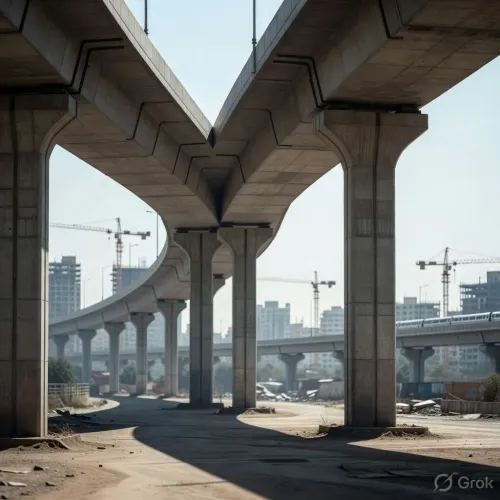
The Chief Minister's Office of Maharashtra announced the event as a lok'arpan — a public dedication — of several BMC flyovers, handed over to the city by CM Fadnavis. While the civic body has not yet published a full list of the specific structures, the ceremony was broadcast live, signalling the administration's intent to put the completions on public record in real time. Mumbai, home to over 20 million residents, has battled chronic traffic congestion for decades, and each completed overpass directly cuts travel time on some of the city's most choked corridors.
BMC's long flyover pipeline and Fadnavis's urban development focus
BMC has been executing successive flyover projects since the early 2000s as part of Mumbai's traffic-decongestion master plan. Devendra Fadnavis, across his tenures as Chief Minister, has consistently positioned road infrastructure completions as proof-of-delivery governance — visible, driveable, impossible to dismiss. The pattern is deliberate: a sitting Chief Minister presiding over an inauguration converts a civil engineering milestone into a political signal about administrative momentum.
Maharashtra governments have long treated BMC-led road works as a cornerstone of urban mobility policy for the Mumbai Metropolitan Region. These flyovers also sit within a larger grid that includes the ongoing Mumbai Metro network expansion and the Mumbai Coastal Road project — meaning every new overpass feeds into a city-wide mobility re-engineering that has been building for years.
What commuters and planners will watch next
Urban planners and daily commuters alike will track whether the newly opened flyovers ease pressure on feeder roads and complement existing metro stations. The next pressure test for BMC's infrastructure pipeline will be how quickly subsequent project completions follow — and whether they integrate seamlessly with the metro and coastal corridor already under use.
For a city where minutes lost in traffic translate directly into economic cost, every ribbon cut on a new flyover is less ceremony and more arithmetic.
Point of View
Urban infrastructure delivery has been a consistent policy signature, and these completions reinforce that brand. The broader significance lies in how Mumbai's flyover grid is evolving into a multi-modal system: each new overpass only realises its full value when it dovetails with metro corridors and coastal road access, making integration — not just construction — the real benchmark going forward.
NationPress
22 Oct 2026
Frequently Asked Questions
Which flyovers did CM Devendra Fadnavis inaugurate in Mumbai in October 2026?
Chief Minister Devendra Fadnavis inaugurated multiple BMC flyovers in Mumbai on 22 October 2026. The specific names and locations of each flyover have not been officially listed yet, but the ceremony was broadcast live by the Chief Minister's Office of Maharashtra.
What is the BMC's role in Mumbai's flyover projects?
The Brihanmumbai Municipal Corporation (BMC) is Mumbai's civic body responsible for planning, funding, and executing road infrastructure including flyovers. BMC has been building flyovers since the early 2000s as part of the city's traffic-decongestion strategy.
How do the new BMC flyovers help Mumbai's traffic problem?
New flyovers reduce travel time on congested surface roads by allowing vehicles to bypass junctions and bottlenecks. For a city of over 20 million people, each completed flyover can meaningfully cut commute times on key corridors.
What other infrastructure projects are running alongside Mumbai's flyovers?
Mumbai's flyover programme runs alongside the ongoing Mumbai Metro network expansion and the Mumbai Coastal Road project. Together, these form a larger urban mobility grid aimed at easing movement across the Mumbai Metropolitan Region.
What is Devendra Fadnavis's track record on Mumbai infrastructure?
Devendra Fadnavis, across his tenures as Chief Minister of Maharashtra, has consistently prioritised urban road and transport infrastructure. Inaugurating completed BMC projects has been a recurring feature of his governance approach, positioning road delivery as a visible metric of administrative performance.