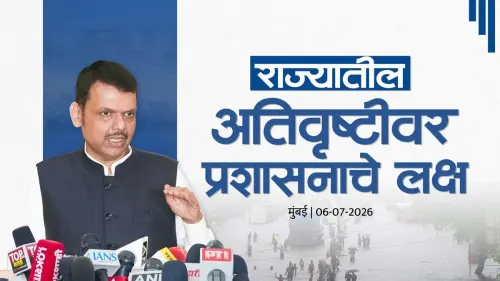
CM Fadnavis Reviews Monsoon Crisis, Issues Red Alert Directives

Synopsis
Chief Minister Devendra Fadnavis personally reviewed Maharashtra's monsoon crisis on 6 July 2026, issuing red alerts for Palghar and Konkan, ordering evacuation of 500 citizens, warning of a potential 350 mm cloudburst near Nashik, and advising Warkari pilgrims to skip Alandi as all four bridges over the Indrayani river are submerged.
Key Takeaways
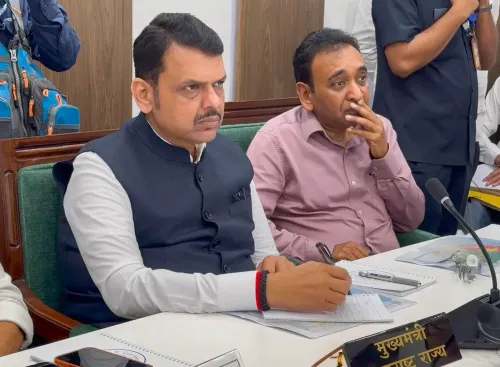
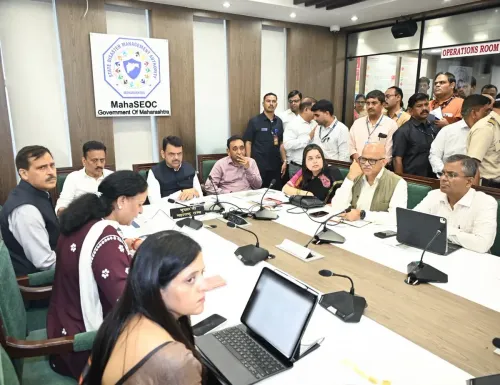
CM Devendra Fadnavis chaired an emergency monsoon review at the Mantralaya disaster management control room on 6 July 2026 .
Rivers in Raigad, Palghar, and Ratnagiri have crossed danger levels; Palghar and Konkan are under red alert .
500 citizens are being evacuated in Palghar ; two locations in Satara ghat area have also been cleared.
Mumbai received 90% of its July rainfall in four days , felling 310 trees ; a high tide is expected from 3:00 PM on 6 July .
All four bridges at Alandi are submerged; Warkari pilgrims have been directed to proceed directly to Pune and not enter Alandi.
NDRF and SDRF teams are on standby statewide; conditions are expected to improve from 8 July 2026 .
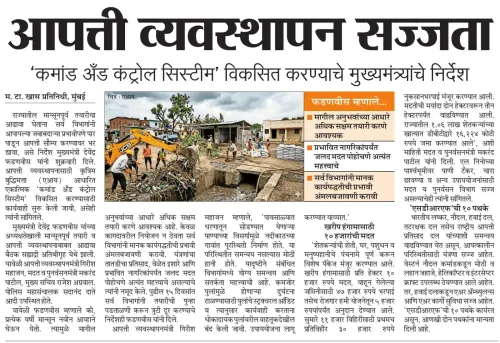
The Chief Minister's Office of Maharashtra announced on Monday, 6 July 2026 that Chief Minister Devendra Fadnavis visited the disaster management control room at Mantralaya, Mumbai, to personally review the state's deteriorating monsoon situation and issue a comprehensive set of emergency directives to district and state officials.
Context
The review meeting, held amid an escalating weather emergency, was attended by Minister Girish Mahajan, the state's Chief Secretary, the Director General of Police, and the Brihanmumbai Municipal Corporation (BMC) Commissioner. Divisional commissioners and district collectors across affected regions joined via video conference. The session produced a detailed set of instructions covering evacuation, traffic management, and public safety.
The post stated, 'पुढचे 2 दिवस सतर्क रहा' ('Stay alert for the next two days'), with the situation expected to improve from 8 July onwards.
Policy Backdrop
Maharashtra's disaster response framework operates under the Disaster Management Act, 2005, which mandates the Maharashtra State Disaster Management Authority (MSDMA) to coordinate multi-agency monsoon response. Direct oversight by the Chief Minister during extreme weather has become standard practice within this integrated framework, with daily control-room reviews and pre-positioned NDRF and SDRF teams being routine during orange and red alerts.
The state's Konkan coast, Western Ghats, and the Mumbai Metropolitan Region are recurrently affected between June and September each year, requiring district-level preparedness protocols to be activated swiftly. This year's monsoon has been particularly intense, with Mumbai recording 90% of its total July rainfall within just four days, causing 310 trees to fall across the city.
Stakeholders and Impact
Rivers in Raigad, Palghar, and Ratnagiri districts have crossed danger levels. Palghar and the Konkan region are under red alert, with evacuation of 500 citizens in Palghar already under way. In Nashik Rural, extremely heavy rainfall — with the possibility of a cloudbursts reaching 350 mm — is forecast for the early hours of 7 July, prompting evacuation orders and police alerts.
The Alandi Palkhi procession, scheduled to begin on 7 July, faces disruption as all four bridges over the Indrayani river at Alandi are submerged due to flooding. CM Fadnavis has directed the Pune District Collector to take special care of Warkari pilgrims and has instructed them to proceed directly to Pune without entering Alandi. The Mumbai–Ahmedabad National Highway has also been affected by debris, and the National Highways Authority of India (NHAI) has been directed to clear it and restore traffic flow.
In Satara ghat areas, heavy rainfall has led to the displacement of residents from two locations. Mumbai is bracing for a high tide from 3:00 PM combined with stronger winds than the previous day. Construction associations at active building sites have been placed on alert for potential landslides.
What's Next
Between 6 and 7 July, moderate to heavy rainfall is forecast in the ghat areas of central Maharashtra, raising the possibility of discharge from several dams in the region. Residents along riverbanks in central Maharashtra, Mumbai-MMR, and Konkan have been specifically asked to follow local administration guidelines strictly.
NDRF and SDRF teams are deployed and on standby across affected districts. Disaster management control rooms at every district, taluka, and village level have been activated. Citizens have been urged to avoid sea beaches during high tide, exercise extreme caution on ghat roads and near flooded rivers, and contact emergency control rooms immediately in case of crisis. The administration expects conditions to begin improving from 8 July 2026.
Point of View
Following a pattern where Maharashtra's top office uses visible, real-time oversight to pre-empt criticism of slow disaster response. The directives — spanning evacuations, highway clearance, pilgrim safety, and dam discharge warnings — reveal how densely interconnected Maharashtra's monsoon vulnerabilities are across geography and governance layers. The Alandi Palkhi advisory is particularly sensitive: redirecting lakhs of Warkari pilgrims carries religious and political weight that goes well beyond routine flood management. The two-day timeline framing, with an explicit improvement forecast from 8 July, also manages public anxiety while holding district machinery accountable to a visible deadline.
NationPress
5 Oct 2026
Frequently Asked Questions
Which districts in Maharashtra are under red alert on 6 July 2026?
Palghar and the broader Konkan region are under red alert as of 6 July 2026 , with rivers in Raigad, Palghar, and Ratnagiri having crossed danger levels.
What is the status of the Alandi Palkhi procession due to flooding?
All four bridges over the Indrayani river at Alandi are submerged due to flooding. CM Fadnavis has directed Warkari pilgrims to skip Alandi and proceed directly to Pune instead.
How many people are being evacuated in Palghar?
Approximately 500 citizens are being moved to safer locations in Palghar as part of ongoing evacuation operations under the red alert.
When will heavy rains ease in Maharashtra?
The state government expects the situation to begin improving from 8 July 2026 . The next two days — 6 and 7 July — are described as critical.
Is the Mumbai–Ahmedabad highway open during the Maharashtra floods?
The Mumbai–Ahmedabad National Highway has been partially blocked by debris due to heavy rain. CM Fadnavis has directed the NHAI to coordinate clearance and restore normal traffic flow.