CM Fadnavis Reviews Monsoon Crisis at SEOC, Issues Flood Alerts

Synopsis
Chief Minister Devendra Fadnavis chaired an emergency monsoon review at SEOC on 6 July 2026, issuing red alerts for Palghar and Konkan, ordering evacuation of 500 citizens, warning warkaris against entering Alandi due to Indrayani flooding, and declaring the next two days critical across Maharashtra.
Key Takeaways
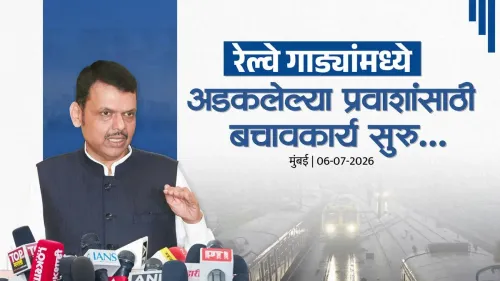
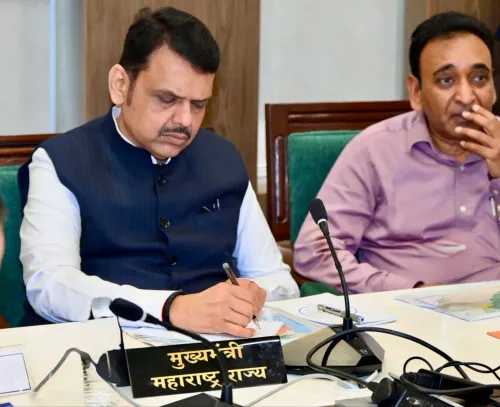
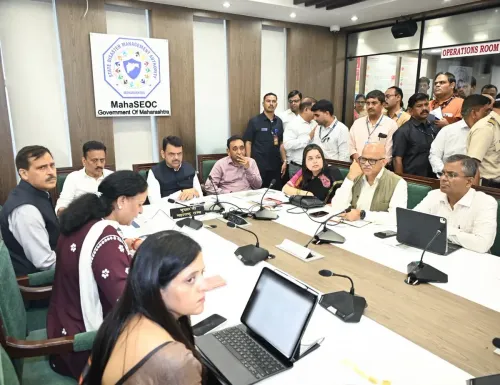
CM Devendra Fadnavis personally reviewed the flood situation at SEOC, Mantralaya on 6 July 2026 with top state officials and district authorities.
Rivers in Raigad , Palghar , and Ratnagiri have crossed danger levels; Palghar and the Konkan region are under red alert for 7 July .
500 citizens in Palghar are being evacuated; a cloudburst alert has been issued for rural Nashik with around 350 mm of rainfall forecast.
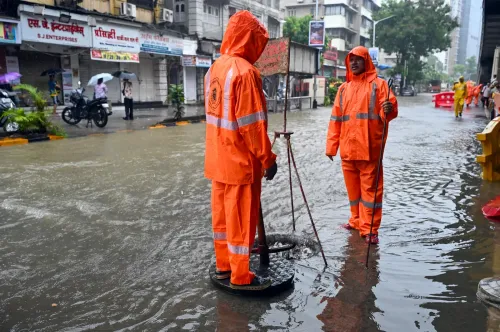
Mumbai recorded 90% of July's rainfall in four days , with 310 trees fallen and high-tide warnings from 3 pm on 6 July .
All four bridges into Alandi are submerged; warkaris have been advised not to enter Alandi for the Palkhi Sohla procession.
NDRF and SDRF teams are on standby statewide; situation is expected to improve from 8 July .
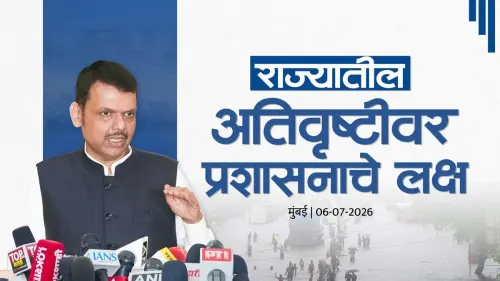
The Chief Minister's Office of Maharashtra announced on Monday, 6 July 2026 that Chief Minister Devendra Fadnavis visited the State Emergency Operation Centre (SEOC) at Mantralaya, Mumbai to personally review the deteriorating rainfall and flood situation across the state, with rivers in multiple districts breaching danger levels and red alerts issued for the Konkan region and parts of western Maharashtra.
Context
The review meeting at SEOC brought together Minister Girish Mahajan, the Chief Secretary, the Director General of Police, and the BMC Commissioner, alongside senior officials. Divisional Commissioners and District Collectors across Maharashtra joined via video conference, reflecting the scale of the unfolding emergency.
CM Fadnavis directed authorities to plan 'carefully and in detail' for landslide-prone locations and warned that the next two days are critical, with conditions expected to improve only from 8 July onwards. Rivers in Raigad, Palghar, and Ratnagiri districts have already crossed danger levels.
Policy Backdrop
Maharashtra's multi-agency monsoon response framework — anchored in the Disaster Management Act, 2005 and strengthened after the catastrophic 2005 Mumbai floods — activates SEOC, pre-positions NDRF (National Disaster Response Force) and SDRF (State Disaster Response Force) teams, and coordinates with agencies like NHAI for highway clearance each monsoon season. Both NDRF and SDRF teams have been placed on standby at multiple locations across the state.
The Mumbai-Ahmedabad highway has been affected by debris, and CM Fadnavis directed authorities to coordinate with NHAI for immediate clearance. In the Satara ghat region, heavy rainfall has already necessitated the relocation of residents from two locations.
Stakeholders and Impact
Mumbai has recorded 90 percent of July's total rainfall in just four days, resulting in 310 trees falling across the city. High winds — expected to intensify through the day — have prompted evacuations from landslide-prone areas, and construction organisations have been placed on alert for active building sites. A high tide beginning at 3 pm on 6 July compounds the risk, with wind speeds projected to exceed those of the previous day.
The annual Palkhi Sohla — the sacred procession of warkaris (pilgrims) scheduled to commence from Alandi on 7 July — has been severely disrupted. Flooding of the Indrayani river has submerged all four bridges leading into Alandi. CM Fadnavis has ordered the Pune District Collector to take special care of warkaris and directed pilgrims not to enter Alandi, advising them instead to make their way to Pune from wherever they currently are.
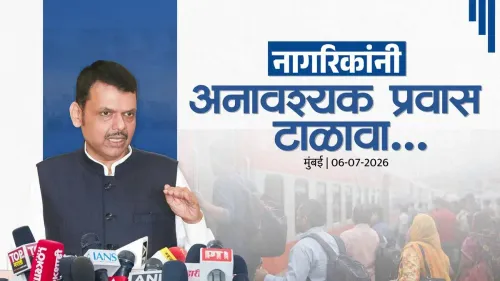
In Palghar, which is under a red alert for 7 July, 500 citizens are being moved to safer locations. The rural Nashik region faces a cloudburst alert for early morning on 7 July, with forecasts of around 350 mm of rainfall. The Konkan region is also under red alert, and citizens in low-lying areas near rivers across central Maharashtra, Mumbai-MMR, and Konkan have been urged to follow local administration instructions strictly.
What's Next
Authorities expect the situation to stabilise from 8 July, but moderate to heavy rainfall is forecast across the ghat regions of central Maharashtra on 6–7 July, which may trigger water discharge from some dams. Citizens have been advised to avoid beaches during high-tide periods and exercise extreme caution on ghat roads.
In case of emergency, residents have been directed to immediately contact the local administration or the state emergency control room. Disaster management units remain in contact at the district, taluka, and village levels. Any revision to the Palkhi Sohla schedule will depend on how quickly the Indrayani river recedes — a situation that will be closely watched over the next 48 hours.
Point of View
Not routine monsoon management. The simultaneous disruption of the Palkhi Sohla, one of Maharashtra's most politically and culturally sensitive pilgrimages, adds a layer of complexity that goes beyond standard disaster response. The 90-percent-of-monthly-rainfall-in-four-days figure for Mumbai underscores a pattern of extreme precipitation events that existing urban drainage infrastructure was not designed to handle. How swiftly the state manages the Alandi situation and whether the Palkhi resumes on schedule will be closely watched by both the administration and the Varkari community.
NationPress
5 Oct 2026
Frequently Asked Questions
Should warkaris go to Alandi for Palkhi Sohla on 7 July 2026?
No. CM Devendra Fadnavis has directed that warkaris should not enter Alandi as all four bridges leading into the town are submerged due to Indrayani river flooding. Pilgrims are advised to make their way to Pune instead.
Which districts in Maharashtra are on red alert for floods?
Palghar and the Konkan region are under red alert for 7 July 2026. Rivers in Raigad, Palghar, and Ratnagiri have already crossed danger levels.
How much rain has Mumbai received in July 2026?
Mumbai recorded 90 percent of its total July rainfall in just four days, leading to 310 trees falling across the city and prompting high-tide and high-wind advisories.
When will the Maharashtra flood situation improve?
CM Fadnavis has stated the next two days — 6 and 7 July — are critical, and the situation is expected to improve from 8 July 2026 onwards.
What number should I call in a flood emergency in Maharashtra?
Citizens should immediately contact their local administration or the state emergency control room. Disaster management units are active at the district, taluka, and village levels across Maharashtra.