CM Fadnavis Joins Pandharpur Wari, Hails Bhakti Tradition
Synopsis
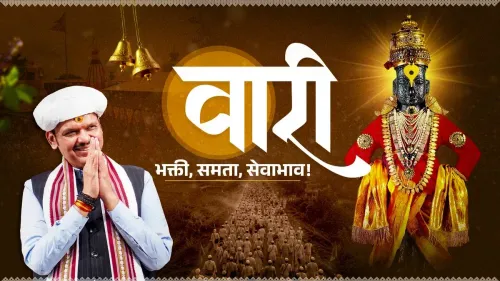
Maharashtra Chief Minister Devendra Fadnavis shared a heartfelt reflection on the Pandharpur Wari on 23 July 2026, describing the pilgrimage as an 'unbroken festival of faith, equality, and devotion' and invoking the chant 'Dnyanoba Tukaram' that resonates among lakhs of Varkari pilgrims walking to the Vitthal-Rukmini temple in Solapur.
Key Takeaways
CM Devendra Fadnavis posted a personal reflection on the Pandharpur Wari on 23 July 2026 , describing it as 'an unbroken festival of faith, equality, and devotion.' He highlighted the chant 'Dnyanoba Tukaram' — invoking 13th-century saint Dnyaneshwar and 17th-century saint Tukaram — as the defining refrain of the pilgrimage.
The Pandharpur Wari culminates at the Vitthal-Rukmini temple in Pandharpur, Solapur district , drawing lakhs of Varkari pilgrims annually.
Fadnavis emphasised the Wari's principle of samata (equality), a core value of Maharashtra's Bhakti tradition.
The Maharashtra state government coordinates extensive logistics — crowd management, water supply, and medical services — across Solapur and Pune divisions for the annual pilgrimage.
The post concluded with the devotional chant 'Vitthal...
Jai Hari Vitthal!' , underlining the Chief Minister's personal identification with the tradition.
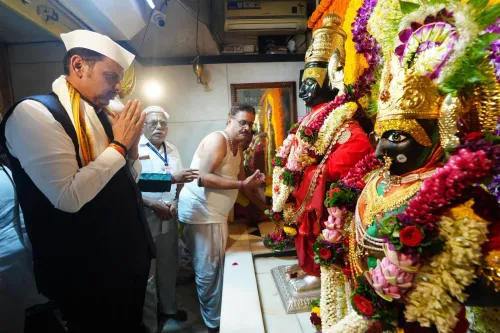
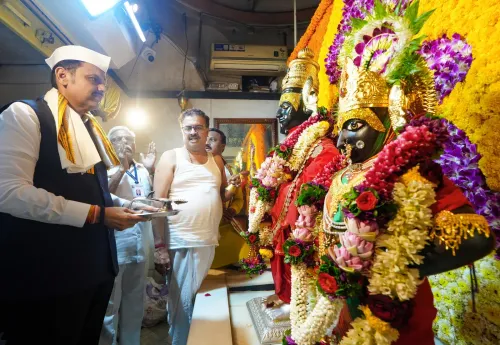
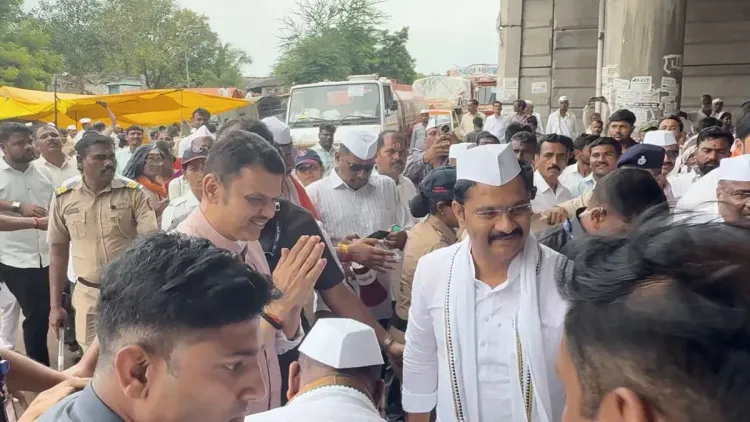
Maharashtra Chief Minister Devendra Fadnavis on Thursday, 23 July 2026, shared a deeply personal reflection on the Pandharpur Wari, describing the annual pilgrimage as 'an unbroken festival of faith, equality, and devotion' and expressing how walking among the Varkaris moved him spiritually.
Context
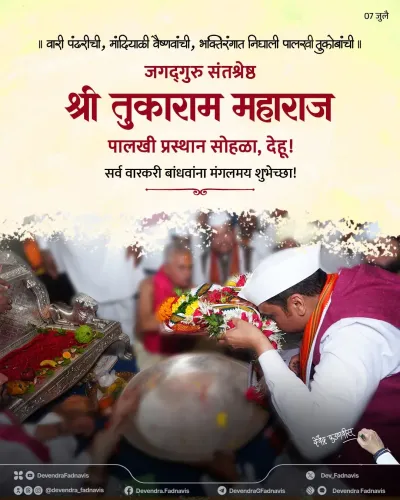
Posting in Marathi on X, Fadnavis wrote: 'पंढरीची वारी म्हणजे श्रद्धेचा, समतेचा आणि भक्तीचा अखंड उत्सव' ('The Pandharpur Wari is an unbroken festival of faith, equality, and devotion'). He described how the chant 'Dnyanoba Tukaram' — echoing at every step — and the 'unwavering faith in the eyes of lakhs of Varkaris' transported him to 'an altogether different world.' The post concluded with the devotional invocation 'Vitthal... Vitthal... Jai Hari Vitthal!'
The Wari is one of Maharashtra's most significant religious gatherings, drawing lakhs of pilgrims — known as Varkaris — who walk hundreds of kilometres to reach the Vitthal-Rukmini temple in Pandharpur, Solapur district. The pilgrimage culminates on Ashadhi Ekadashi, a major date in the Vaishnava calendar.
Policy Backdrop
The Pandharpur Wari tradition traces its roots to the 13th century, when Sant Dnyaneshwar — whose palanquin leads one of the principal processions — composed his foundational Marathi works. The tradition was reinforced in the 17th century by Sant Tukaram, whose devotional abhangas (verses) remain the sonic heartbeat of the pilgrimage. The joint chant 'Dnyanoba Tukaram' — a contraction of both saints' names — is the defining refrain heard along every route to Pandharpur.
Successive Maharashtra governments have treated the Ashadhi Wari as a major administrative event, coordinating crowd management, water supply, and medical services across Solapur and Pune divisions. State machinery typically deploys district-level task forces weeks in advance to ensure the safety of pilgrims travelling on foot through multiple districts.
Stakeholders and Impact
The Varkari community — cutting across caste and class lines — is among Maharashtra's most cohesive socio-religious constituencies. The pilgrimage's emphasis on samata (equality), explicitly invoked by Fadnavis in his post, is a core theological principle of the Bhakti movement that the saints Dnyaneshwar and Tukaram championed centuries ago.
For rural and semi-urban Maharashtra, the Wari is not merely a religious event but a social institution. A Chief Minister's visible participation and public reflection on the experience carries significant resonance with these communities, reinforcing the state's custodial role in preserving the tradition.
What's Next
State government preparations — including crowd management logistics, water and sanitation infrastructure, and medical camps — along the pilgrimage routes through Solapur district will be closely watched as the Ashadhi Wari season progresses. Fadnavis's public identification with the pilgrimage signals continued high-level political attention to Maharashtra's Bhakti heritage, a tradition that transcends electoral cycles and connects the state's administrative leadership to its deepest cultural roots.
Point of View
He draws on the Bhakti movement's egalitarian theology, which carries broad appeal across the Varkari community's diverse social base. This aligns with a well-established pattern in Maharashtra politics where engagement with Wari imagery signals both administrative commitment and electoral attunement to rural and semi-urban constituencies. The personal, experiential register of the post — 'an experience that can only be lived' — sets it apart from routine ceremonial messaging, suggesting a more sustained political investment in the Bhakti heritage narrative.
NationPress
23 Jul 2026
Frequently Asked Questions
What is the Pandharpur Wari pilgrimage?
The Pandharpur Wari is an annual pilgrimage in Maharashtra where lakhs of Varkari devotees walk to the Vitthal-Rukmini temple in Pandharpur, Solapur district, chanting the names of saints Dnyaneshwar and Tukaram. It culminates on Ashadhi Ekadashi and is one of the largest religious gatherings in India.
What did CM Devendra Fadnavis say about the Pandharpur Wari?
On 23 July 2026, Fadnavis described the Wari as 'an unbroken festival of faith, equality, and devotion,' saying the chant 'Dnyanoba Tukaram' and the faith visible on pilgrims' faces transported him to 'an altogether different world.' He ended with the invocation 'Vitthal... Vitthal... Jai Hari Vitthal!'
Who are Sant Dnyaneshwar and Sant Tukaram?
Sant Dnyaneshwar was a 13th-century Marathi saint whose philosophical works are foundational to the Varkari tradition, while Sant Tukaram was a 17th-century saint-poet whose devotional abhangas remain central to Wari chanting. Their combined names form the chant 'Dnyanoba Tukaram' heard throughout the pilgrimage.
Where is Pandharpur located?
Pandharpur is a town in Solapur district, Maharashtra, situated on the banks of the Bhima river. It is home to the Vitthal-Rukmini temple and serves as the sacred endpoint of the annual Wari pilgrimage.
What arrangements does the Maharashtra government make for the Wari?
The Maharashtra state government coordinates crowd management, water supply, sanitation, and medical services across Solapur and Pune divisions for the Ashadhi Wari. District-level task forces are typically deployed weeks in advance to ensure the safety of lakhs of pilgrims travelling on foot.