Rajasthan Petro-Zone opens for petrochemical investment as refinery begins output
Synopsis
Rajasthan's Petro-Zone is open for business — and the state is betting that assured access to refinery by-products like HDPE, LLDPE, and PP will do what most industrial zones cannot: eliminate the raw material uncertainty that kills petrochemical projects before they start. With five agencies now coordinating investor outreach, the zone's success will test whether Rajasthan can convert refinery output into a full downstream industrial ecosystem.
Key Takeaways
Rajasthan Refinery has commenced production, triggering a formal push to fill the adjoining Petro-Zone with downstream petrochemical industries.
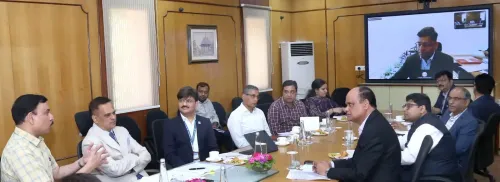
Additional Chief Secretary Aparna Arora chaired a high-level review meeting at the Jaipur Secretariat on 23 July to drive investor outreach.
Industries based on HDPE , LLDPE , and Polypropylene (PP) will have assured access to refinery feedstock, eliminating raw material procurement delays.
RIICO and the Department of Industries directed to identify investors and assess market demand and supply prospects for petrochemical products.
Preference to be given to industries with low water requirements or those capable of using treated water.
HPCL , RIICO , BIP , and the Industries Department will jointly engage prospective investors; infrastructure including roads, power, and water to be developed in parallel.
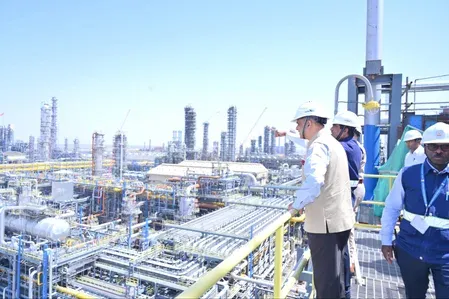
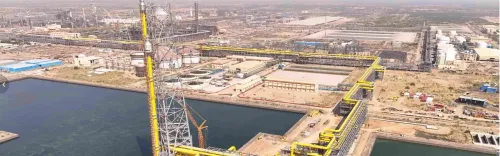
The Rajasthan Refinery has commenced production, and the state government is now actively positioning the adjoining Petro-Zone as a premier investment destination for downstream petrochemical industries, backed by assured raw material supply and significant industrial growth prospects. The push was formalised at a high-level review meeting held at the Secretariat in Jaipur on Wednesday, 23 July.
Key Developments from the Review Meeting
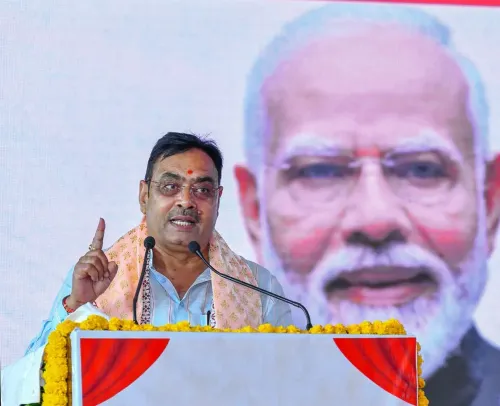
Additional Chief Secretary (Mines and Petroleum) Aparna Arora, who chaired the meeting, said the ready availability of refinery by-products would make the Petro-Zone a commercially attractive location for investors. She specifically highlighted that industries manufacturing products based on High-Density Polyethylene (HDPE), Linear Low-Density Polyethylene (LLDPE), and Polypropylene (PP) would have assured access to feedstock, removing a critical bottleneck that typically delays project commissioning.
Arora directed the Department of Industries and the Rajasthan State Industrial Development and Investment Corporation (RIICO) to identify prospective investors and actively encourage them to set up manufacturing units in the zone. She also stipulated that preference be given to industries with low water requirements or those capable of utilising treated water — a directive that reflects the water-stress realities of the region.
What Industries Can Expect
HPCL Director (Marketing) Amit Garg outlined the breadth of downstream manufacturing that the Petro-Zone can support. Products range from water storage tanks, carry bags, and fertiliser packaging to irrigation pipes, plastic containers, chemical drums, BOPP products, diapers, and road dividers, among others. Garg said investors would benefit from assured raw material availability, negligible inventory costs, and incentives offered for establishing units in the zone.
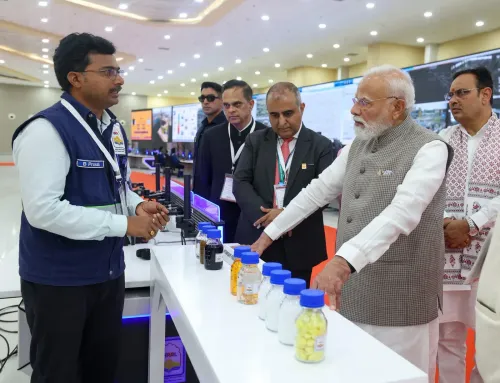
Notably, the elimination of raw material procurement delays — a common pain point for petrochemical manufacturers — was flagged as a structural advantage. Rajasthan Refinery CEO Kamlakar Vikhar presented a detailed overview of the refinery's products and production capacity at the meeting.
Coordinated Push by Multiple Agencies
RIICO Managing Director Suresh Ola and Industries Commissioner Nilabh Saxena confirmed that the Department of Industries, RIICO, the Bureau of Investment Promotion (BIP), and Hindustan Petroleum Corporation Limited (HPCL) would jointly engage with prospective investors to promote the Petro-Zone. Arora called for coordinated action across all five agencies to ensure the zone achieves its investment targets.
She also directed RIICO to ensure that essential infrastructure — including roads, power supply, and water — is developed in parallel to facilitate industrial investment, signalling that the government intends to de-risk the zone for early movers.
Economic Case for the Petro-Zone
According to Arora, developing downstream petrochemical industries within Rajasthan would enable local utilisation of refinery by-products, attract fresh industrial capital, generate direct and indirect employment, increase state revenue, and strengthen the broader economy. The meeting was attended by senior officials from the Department of Industries, RIICO, the Petroleum Department, HPCL, and Rajasthan Refinery, including Special Secretary (Mines) Namrata Vrishni and Director (Petroleum) Awadhesh Singh.
With infrastructure planning now underway and investor outreach being formalised, the Petro-Zone's next phase will hinge on how quickly RIICO can complete its market demand assessment and attract anchor investors to the region.
Point of View
And if the Rajasthan Refinery delivers consistent by-product volumes, that advantage is real. The risk is execution — five agencies coordinating investor outreach is as likely to produce bureaucratic overlap as it is a seamless single-window experience. The water-use directive is also worth watching: Rajasthan's industrial zones have historically underestimated water constraints, and tying investor eligibility to treated-water capability is prudent but will narrow the field of applicants. Whether the Petro-Zone becomes a genuine industrial cluster or another announced zone that fills slowly will depend on how fast RIICO completes its demand assessment and whether anchor investors commit before the first-mover incentive window closes.
NationPress
21 Oct 2026
Frequently Asked Questions
What is the Rajasthan Petro-Zone and why is it significant?
The Rajasthan Petro-Zone is an industrial zone adjacent to the Rajasthan Refinery, designated for downstream petrochemical manufacturing. It is significant because the refinery's commencement of production now provides a local, assured supply of feedstock — including HDPE, LLDPE, and Polypropylene — removing a key barrier for petrochemical investors.
Which industries are best suited for the Rajasthan Petro-Zone?
Industries manufacturing products based on HDPE, LLDPE, and Polypropylene are considered best suited, according to Additional Chief Secretary Aparna Arora. These include manufacturers of water storage tanks, packaging bags, irrigation pipes, plastic containers, BOPP products, and other plastic goods, as outlined by HPCL Director Amit Garg.
What incentives are available for investors in the Petro-Zone?
Investors in the Petro-Zone are offered assured raw material availability from the adjacent refinery, negligible inventory costs, and state incentives for setting up manufacturing units. RIICO is also directed to develop essential infrastructure — roads, power, and water — to support early investors.
Which agencies are coordinating the Petro-Zone investor push?
Five agencies are jointly driving investor outreach: the Department of Industries, RIICO, the Bureau of Investment Promotion (BIP), the Petroleum Department, and HPCL. RIICO MD Suresh Ola and Industries Commissioner Nilabh Saxena confirmed the coordinated approach at the 23 July review meeting.
Why is water use a condition for setting up in the Petro-Zone?
Additional Chief Secretary Aparna Arora directed that preference be given to industries with low water requirements or those able to use treated water, reflecting Rajasthan's arid conditions and the need to manage water resources sustainably in the industrial zone.