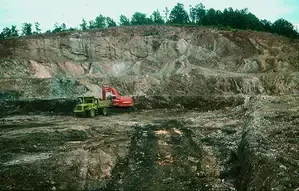
Rajasthan pushes oil firms to boost crude output with advanced tech
Synopsis
Rajasthan, which produces 54,000 barrels of crude oil daily yet has seen output slide in recent years, has called oil majors including Cairn India and ONGC to a high-level meeting and ordered a shift to advanced recovery technologies — while simultaneously pushing for faster exploration across its four major basins. A long-term action plan is now in the works.
Key Takeaways
Rajasthan held a high-level meeting on 14 July to address declining crude oil production in the state.
The state currently produces 54,000 barrels of crude oil per day and 2.2 MMSCMD of natural gas per day .
Rajasthan ranks second in onshore natural gas production and third in crude oil production nationally.
The state has granted 12 petroleum mining leases and 12 petroleum exploration licences so far.
Active exploration spans three of four major basins: Jaisalmer , Barmer-Sanchore , and Bikaner-Nagaur .
Cairn India , ONGC , Oil India Limited , and Focus Energy presented their production plans at the meeting.
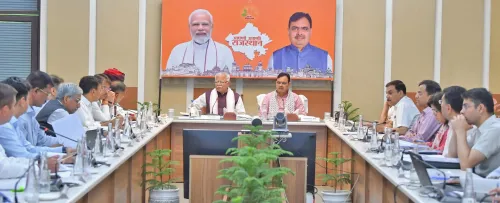
The Rajasthan government on Tuesday, 14 July convened a high-level meeting at the Secretariat in Jaipur, directing oil and gas companies operating in the state to adopt advanced recovery technologies and accelerate exploration in order to reverse a multi-year decline in crude oil production. The state currently produces approximately 54,000 barrels of crude oil per day and 2.2 million standard cubic metres (MMSCMD) of natural gas per day.
What Officials Said
Additional Chief Secretary (Mines and Petroleum) Aparna Arora, who chaired the meeting, stressed that companies must pursue a two-pronged strategy — ramping up exploration in new prospective areas while simultaneously deploying globally proven enhanced recovery technologies in existing fields. She underlined that maximising the refining of Rajasthan's crude within the state would drive significant value addition and economic growth.
Arora noted that Rajasthan ranks second in onshore natural gas production and third in crude oil production nationally, underscoring the state's strategic importance to India's domestic energy supply. The state currently has the capacity to process around 1.5 million tonnes of crude oil produced within its borders.
Key Basins and Licences
Petroleum Director Awadhesh Singh informed the meeting that Rajasthan has so far granted 12 petroleum mining leases and 12 petroleum exploration licences. The state has four major crude oil and natural gas basins: the Jaisalmer Basin, Barmer-Sanchore Basin, Bikaner-Nagaur Basin, and Vindhyan Basin. Exploration and production activities are currently active in the first three of these basins.
Companies at the Table
Representatives from Cairn India, Oil and Natural Gas Corporation (ONGC), Oil India Limited (OIL), and Focus Energy made detailed presentations on their ongoing exploration and production activities. The meeting was also attended by Special Secretary (Mines) Namrata Vrishni, SG Sunil Kumar Verma, Joint Director (Petroleum) Dilip Raj Sharma, and Deputy Directors Rohit Mallah, Mohan Kumawat, and Ankit Soni.
Why This Matters
India's dependence on crude oil imports remains a persistent strain on the current account, making domestic production growth a national priority. Rajasthan's output decline, if unchecked, risks eroding one of the country's few significant onshore producing regions. This comes amid a broader push by the Centre to raise domestic oil and gas output and reduce import dependence. A long-term action plan with sustained production targets is now expected to be formulated following the meeting's deliberations.
Point of View
But the prescription — 'adopt advanced technologies' — has been on the table for years without a binding timeline or measurable target attached to it. The state ranks third nationally in crude production, yet output is falling; that gap between potential and performance points to structural issues beyond technology adoption alone, including royalty disputes, infrastructure bottlenecks, and the pace of licence conversions. Until the forthcoming action plan includes verifiable production milestones tied to licence conditions, Tuesday's meeting risks being another high-level dialogue that produces a report rather than barrels.
NationPress
13 Oct 2026
Frequently Asked Questions
Why is Rajasthan's crude oil production declining?
The Rajasthan government has acknowledged a multi-year decline in crude oil output but has not publicly specified a single cause. Officials have called on producing companies to adopt advanced enhanced recovery technologies to reverse the trend, suggesting ageing fields are a key factor.
How much crude oil does Rajasthan produce per day?
Rajasthan currently produces approximately 54,000 barrels of crude oil per day and 2.2 million standard cubic metres of natural gas per day, according to figures presented at the 14 July meeting.
Which companies operate oil and gas fields in Rajasthan?
Cairn India, Oil and Natural Gas Corporation (ONGC), Oil India Limited, and Focus Energy are among the key companies engaged in exploration and production in Rajasthan. All four made presentations at the state government's high-level meeting.
What are Rajasthan's major oil and gas basins?
Rajasthan has four major hydrocarbon basins: the Jaisalmer Basin, Barmer-Sanchore Basin, Bikaner-Nagaur Basin, and Vindhyan Basin. Active exploration and production are currently underway in the Jaisalmer, Barmer-Sanchore, and Bikaner-Nagaur basins.
What is the next step after the Jaipur meeting?
Officials indicated that a comprehensive long-term action plan for increasing crude oil and natural gas production will be formulated, with emphasis on advanced recovery technologies and expanded exploration. No specific deadline for the plan was announced publicly.