CM Fadnavis Joins Wari in Solapur, Reviews Pilgrim Facilities
Synopsis
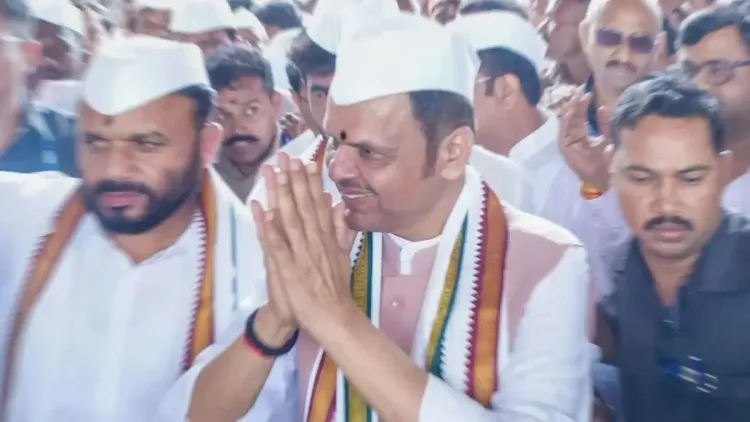
Chief Minister Devendra Fadnavis walked with Varkari pilgrims in Solapur on 23 July 2026, sought blessings at the padukas of Sant Tukaram and Sant Dnyaneshwar, and reviewed state-provided facilities — including AI-based crowd counting, Charan Seva foot-care, and mobile health teams — deployed for the annual Pandharpur Wari.
Key Takeaways
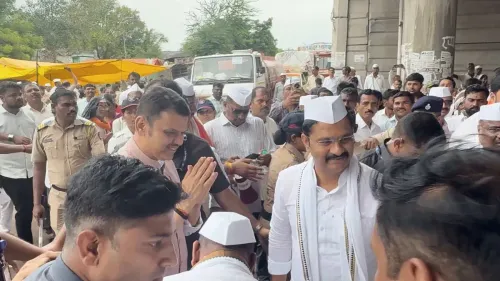
CM Devendra Fadnavis visited Solapur on 23 July 2026 and walked with Varkari pilgrims accompanying the Sant Dnyaneshwar Maharaj palanquin.
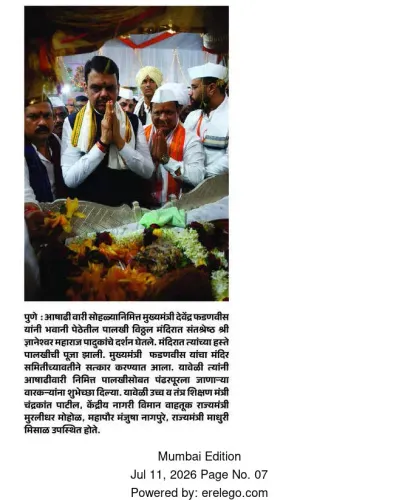
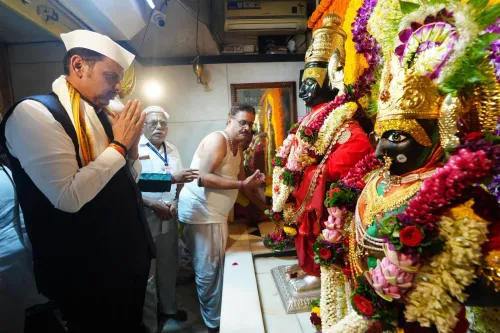
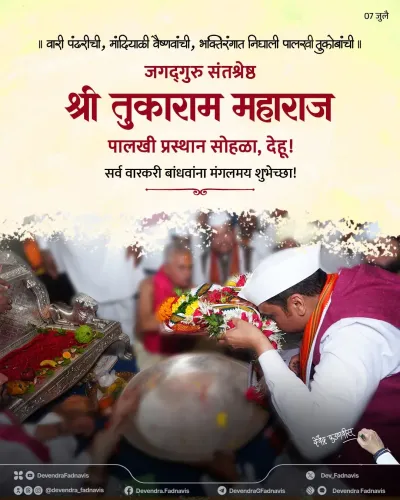
He sought the blessings of Jagadguru Sant Tukaram Maharaj and Sant Dnyaneshwar Maharaj at their sacred padukas.
The Chief Minister prayed publicly for 'good rainfall across the state and well-being for all.' The state is using AI technology to count pilgrims in real time during the Wari.
Facilities deployed include toilets, sanitation workers, drinking water, German hangar shelters, Charan Seva foot-care, and mobile health teams .
CM Fadnavis said the Wari's infrastructure has been 'completely transformed over the past two years .'
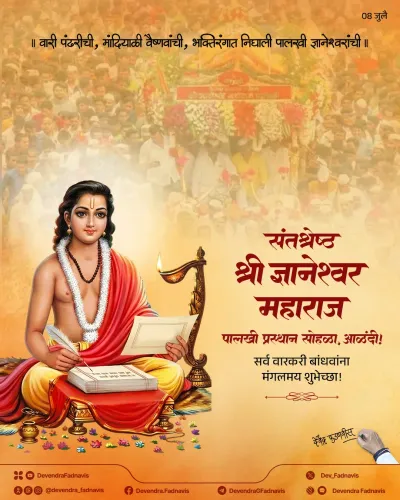
The Chief Minister's Office of Maharashtra announced on Thursday, 23 July 2026 that Chief Minister Devendra Fadnavis visited Solapur to seek the blessings of Jagadguru Sant Tukaram Maharaj and Santshreshtha Dnyaneshwar Maharaj at their padukas (sacred sandals) and walked alongside Varkari pilgrims with the palanquin of Sant Dnyaneshwar Maharaj during the annual Pandharpur Wari pilgrimage.
Context
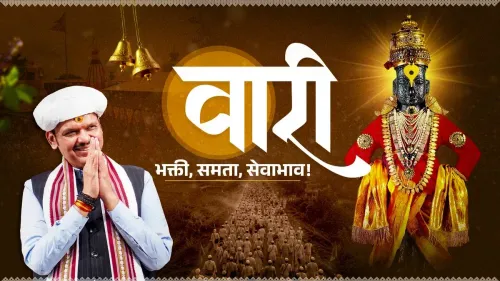
The Wari is one of Maharashtra's most revered annual traditions — a centuries-old walking pilgrimage in which hundreds of thousands of Varkari devotees carry the padukas of 13th-century saint-philosopher Dnyaneshwar Maharaj from Alandi and of 17th-century poet-saint Tukaram Maharaj from Dehu to Pandharpur. The procession passes through Solapur district, a key waypoint on the traditional route. The post opens with a verse from the Varkari canon: 'Avghachi sansaar sukhacha karin, anande bharin tinhi lok' ('I shall make all of creation joyful and fill the three worlds with bliss') — an abhang attributed to the tradition of Sant Tukaram Maharaj.
Expressing the devotional spirit of the occasion, CM Fadnavis described every Varkari walking in the procession as 'a living form of Mauli (the divine mother).' He publicly prayed to Mauli: 'May there be good rainfall across the state; keep everyone happy and well.'
Policy Backdrop
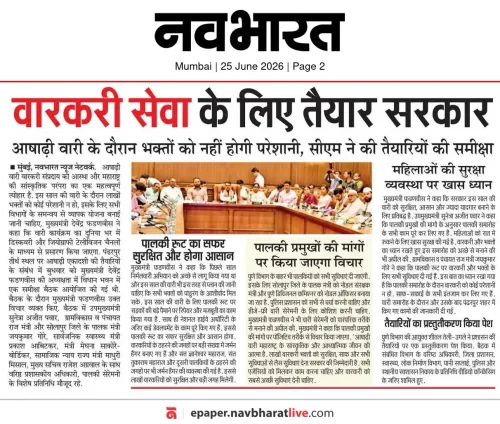
The Chief Minister stated that the character of the Wari has 'completely transformed over the past two years,' with the state government deploying a comprehensive range of facilities so that pilgrims face no hardship. He listed amenities including toilets, sanitation workers, adequate water supply, drinking water stations, German hangar shelters, the Charan Seva initiative (foot-care services for walkers), and mobile health teams.
Notably, the district administration is using AI (artificial intelligence) technology to count the number of pilgrims in real time — a step that aligns with broader e-governance efforts applied to large public gatherings across Maharashtra. Cleanliness has been accorded the highest priority, the Chief Minister said, adding that sanitation arrangements have been executed accordingly. Maharashtra governments have provided logistical support for the Wari for decades, with documented enhancements in sanitation and medical infrastructure across successive state budgets.
Stakeholders and Impact
The Wari draws an enormous number of pilgrims each year, and CM Fadnavis acknowledged that all arrangements have been made in proportion to the scale of attendance. The Solapur district administration has been credited with implementing the on-ground facilities. For Varkari communities — whose tradition is rooted in the devotional poetry of saints such as Dnyaneshwar and Tukaram — visible participation by the state's top executive carries both administrative and symbolic weight.
The Charan Seva initiative, which provides foot-care and medical assistance to pilgrims who walk long distances barefoot, represents a direct welfare touchpoint for the most physically vulnerable participants in the procession.
What's Next
The pilgrimage culminates at Pandharpur, the seat of Vitthal (Vithoba), the presiding deity of the Varkari tradition. The state government's use of AI-based crowd monitoring during the Wari could set a precedent for its deployment at other large religious gatherings across Maharashtra. Observers will watch whether the next state fiscal planning cycle includes dedicated budget allocations to institutionalise and expand these pilgrim-welfare measures.
Point of View
Blending devotional optics with administrative accountability. The introduction of AI-based crowd counting signals an attempt to modernise a centuries-old tradition's logistics, lending a technocratic credibility to what could otherwise read as purely ceremonial engagement. Framing the pilgrim welfare measures as a two-year transformation also serves a political purpose: it anchors the improvements to the current administration's tenure. Whether the AI and sanitation investments translate into sustained institutional budgets, rather than event-specific deployments, will be the real test of the state's commitment to Wari infrastructure.
NationPress
23 Jul 2026
Frequently Asked Questions
Why did CM Devendra Fadnavis go to Solapur in July 2026?
CM Devendra Fadnavis visited Solapur on 23 July 2026 to seek the blessings of Sant Tukaram Maharaj and Sant Dnyaneshwar Maharaj at their padukas and to walk with Varkari pilgrims during the annual Pandharpur Wari pilgrimage.
What is the Pandharpur Wari?
The Pandharpur Wari is an annual walking pilgrimage in which hundreds of thousands of Varkari devotees carry the padukas of 13th-century saint Dnyaneshwar Maharaj from Alandi and 17th-century saint Tukaram Maharaj from Dehu to the Vitthal temple in Pandharpur.
What facilities has the Maharashtra government provided for Wari pilgrims in 2026?
The Maharashtra government has deployed toilets, sanitation workers, drinking water stations, German hangar shelters, Charan Seva foot-care services, and mobile health teams. AI technology is also being used to count pilgrims in real time.
What is the Charan Seva initiative at the Wari?
Charan Seva is a state-run initiative that provides foot-care and medical assistance to Varkari pilgrims who walk long distances, often barefoot, during the Pandharpur Wari.
How is AI being used at the Pandharpur Wari 2026?
According to CM Fadnavis, the Solapur district administration is using artificial intelligence technology to count the number of pilgrims attending the Wari in real time, enabling better crowd management and resource deployment.