CM Fadnavis launches Drug Free Mumbai campaign with youth pledge
Synopsis
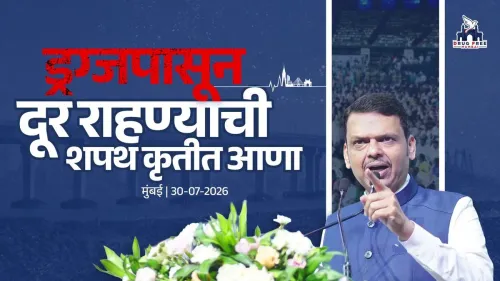
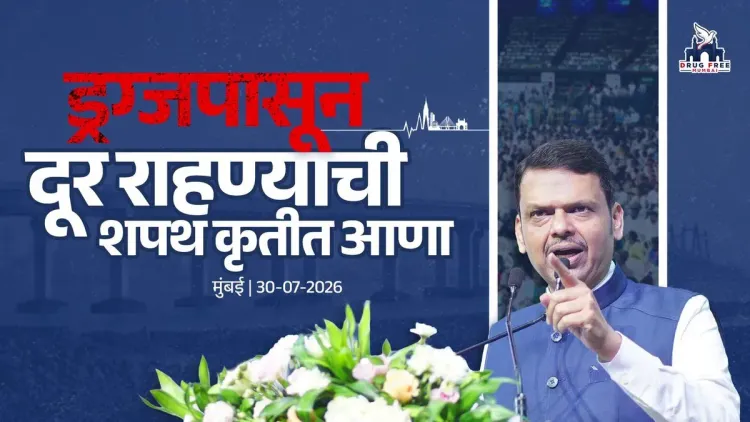
Maharashtra CM Devendra Fadnavis launched the 'Drug Free Mumbai' awareness campaign on July 30, 2026, anchoring the drive around a mass youth pledge against drugs. The initiative aligns with the central government's Nasha Mukt Bharat Abhiyan and targets Mumbai's urban youth through prevention-first community outreach.
Key Takeaways
Maharashtra Chief Minister Devendra Fadnavis launched the Drug Free Mumbai ( Nasha Mukt Mumbai ) awareness campaign on July 30, 2026 in Mumbai .
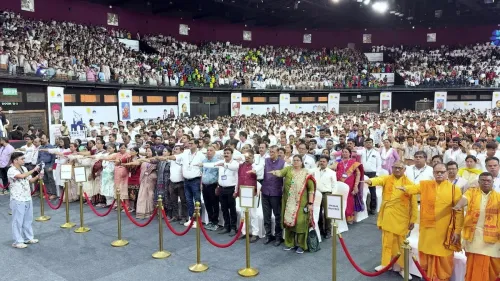
The campaign centres on a mass 'Say No to Drugs' pledge by youth as its launch centrepiece.
Fadnavis framed the pledge as a step toward building a 'drug-free India' , signalling national ambition beyond the city drive.
The initiative aligns with the Nasha Mukt Bharat Abhiyan , the central programme launched in 2020 by the Ministry of Social Justice and Empowerment .
The campaign adopts a prevention-first approach — awareness and community pledges — rather than enforcement alone.
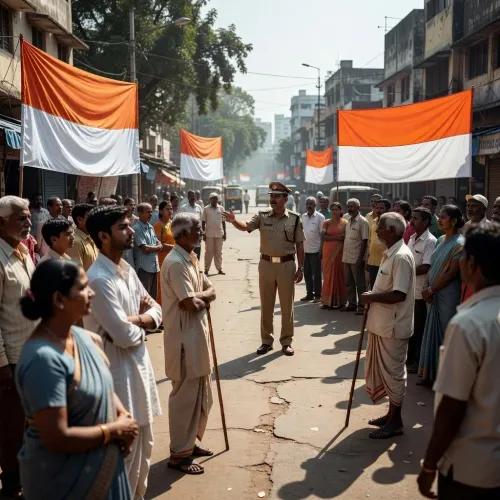
A city-wide pledge against drugs rippled through Mumbai on Thursday, July 30, 2026, as Maharashtra Chief Minister Devendra Fadnavis formally launched the 'Drug Free Mumbai' awareness campaign — a public mobilisation drive aimed squarely at the state's youth.
Sharing the moment on X, Fadnavis wrote in Marathi and Hindi: 'Aaj tarunaaine ghetleli Say No To Drugs hi shapatha vyasanmukt Bharat ghadavanyasathi mahattvapurna thareal' — 'The 'Say No to Drugs' pledge taken by the youth today will be crucial in building a drug-free India.' The bilingual post underscored the campaign's dual pitch: local roots, national ambition.
What the 'Drug Free Mumbai' drive sets out to do
The campaign, tagged #DrugFreeMumbai, centres on mass public pledges — a prevention-first approach that prioritises awareness and community ownership over enforcement alone. Mumbai, as Maharashtra's largest urban centre, has long been a focal point for concerns about youth exposure to narcotics, making it a logical anchor city for a state-level push.
The initiative draws from the architecture of the Nasha Mukt Bharat Abhiyan, the central government programme launched in 2020 by the Ministry of Social Justice and Empowerment to mobilise communities against substance abuse through outreach, rehabilitation support, and exactly these kinds of public pledge drives. Maharashtra's campaign plugs into that national framework while targeting Mumbai's specific urban youth demographic.
Youth pledge as the centrepiece
The choice to anchor the launch around a collective oath is deliberate. Anti-drug campaigns across India have repeatedly used public pledges as a tool to build peer accountability — the logic being that a promise made in public, alongside thousands of peers, carries social weight that a poster or pamphlet cannot. Whether that translates into sustained behaviour change is the harder, longer question.
For now, the Drug Free Mumbai drive has its launch moment. The real measure will come in the follow-up: how many institutions are enrolled, what support structures are activated for at-risk youth, and whether the campaign coordinates with central rehabilitation mechanisms already in place.
A pledge is a starting gun. The race is what comes after it.
Point of View
Using high-visibility pledge events to signal political seriousness on a public-health issue. For Fadnavis, the optics are straightforward — youth, Mumbai, and a moral cause that cuts across partisan lines. The harder test is institutional follow-through: Maharashtra's ability to connect this awareness moment to actual rehabilitation infrastructure and school-level prevention programmes will determine whether this is a durable policy push or a well-photographed launch.
NationPress
30 Jul 2026
Frequently Asked Questions
What is the Drug Free Mumbai campaign?
'Drug Free Mumbai' is an anti-drug awareness initiative launched by Maharashtra Chief Minister Devendra Fadnavis on July 30, 2026, in Mumbai, centred on a mass 'Say No to Drugs' pledge by youth to build community resistance against substance abuse.
What is the Nasha Mukt Bharat Abhiyan?
The Nasha Mukt Bharat Abhiyan is a central government programme launched in 2020 by the Ministry of Social Justice and Empowerment to mobilise communities across India against drug abuse through awareness, pledges, and rehabilitation support.
Why is Mumbai a focus for anti-drug campaigns?
Mumbai, as Maharashtra's largest urban centre, is a documented concern for youth exposure to narcotics, making it a priority target for state and central anti-drug awareness drives.
What did CM Fadnavis say at the Drug Free Mumbai launch?
Fadnavis stated that the 'Say No to Drugs' pledge taken by the youth would be crucial in building a drug-free India, sharing the message in both Marathi and Hindi on social media.
How does the Drug Free Mumbai campaign work?
The campaign uses mass public pledges as its core tool, building peer accountability among youth through community outreach — a prevention-first approach that complements central government rehabilitation mechanisms.