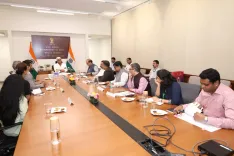
Shekhawat backs E20 fuel: 'Years of science, not a rushed call'

Synopsis
Union Culture and Tourism Minister Gajendra Singh Shekhawat defended E20 petrol on 30 July 2026, calling it the product of years of scientific testing and urging citizens to choose facts over rumours — backing India's accelerated ethanol-blending push.
Key Takeaways
Gajendra Singh Shekhawat posted on 30 July 2026 defending E20 petrol as scientifically validated, not a hasty policy decision.
E20 denotes petrol blended with up to 20 percent ethanol under India's Ethanol Blended Petrol Programme.
The National Policy on Biofuels 2018 originally targeted 20 percent blending by 2030 ; the government advanced the deadline to 2025 .
India achieved 10 percent ethanol blending in 2022 , triggering the accelerated timeline.
The minister urged the public to ignore rumours about engine damage or efficiency loss and trust scientific testing.
Nationwide retail availability of E20 and compatible vehicle models remain the key implementation challenges ahead.
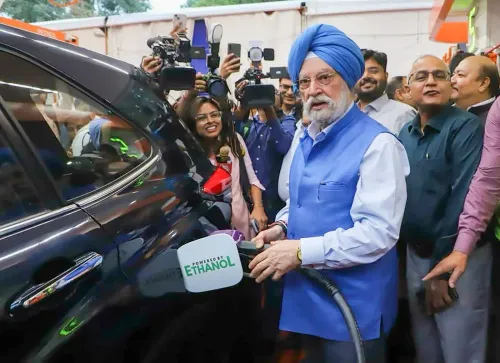
India's ethanol-blending push got a vocal defender on Thursday, 30 July 2026, when Union Culture and Tourism Minister Gajendra Singh Shekhawat took to X to cut through the noise — urging citizens to trust facts over rumours on E20 petrol, and framing the blended fuel as a win for their vehicles, the environment, and their wallets.
Posting in Hindi, Shekhawat wrote: 'E20 कोई जल्दबाजी में लिया गया फैसला नहीं, बल्कि वर्षों की वैज्ञानिक तैयारी और परीक्षण का नतीजा है' — 'E20 is not a decision taken in haste, but the result of years of scientific preparation and testing.' He urged the public to 'choose what is better for your vehicle, the environment, and your pocket — all three.'
What E20 actually means for the fuel in your tank
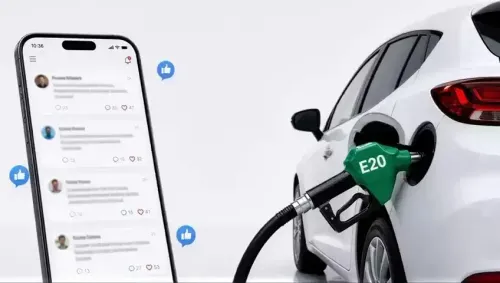
E20 is petrol blended with up to 20 percent ethanol, the headline target of India's Ethanol Blended Petrol Programme. The roadmap was first formalised under the National Policy on Biofuels 2018, which set 20 percent blending by 2030. The government accelerated that deadline to 2025 after cracking the 10 percent blending milestone in 2022 — a pace that surprised even optimists inside the programme.
The logic is straightforward: more ethanol means less imported crude oil, lower tailpipe emissions, and a domestic market for sugarcane and other agricultural feedstocks. Farmers, oil marketing companies, and every vehicle owner on Indian roads sit inside that equation. The government has consistently framed E20 as a choice backed by science, not regulatory pressure.
Why the rumour-busting message matters now
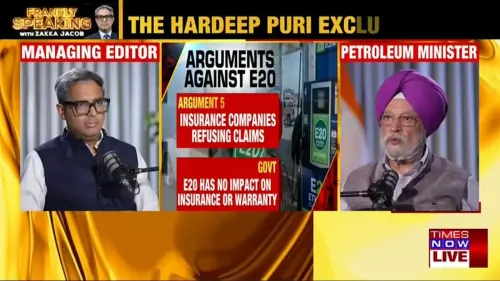
Shekhawat's post signals that misinformation around E20 — concerns about engine damage, fuel efficiency loss, or compatibility — has been circulating widely enough to warrant a direct public rebuttal from a senior BJP leader. The messaging playbook is deliberate: lead with scientific credibility, not mandate language.
The real test on the ground remains availability. Nationwide rollout of E20 at retail pumps and the parallel introduction of E20-compatible vehicle models by manufacturers are the two variables that will determine whether the policy lands in practice as cleanly as it reads on paper.
Point of View
Savings, environment — mirrors the government's broader effort to sell energy transition as consumer benefit rather than regulatory burden. The post also reflects a pattern of BJP leaders using social media to pre-empt opposition narratives on contentious policy rollouts. Whether the outreach shifts public confidence will depend less on messaging and more on whether E20 pumps and compatible vehicles are actually accessible to ordinary motorists.
NationPress
30 Jul 2026
Frequently Asked Questions
What is E20 petrol and is it safe for my car?
E20 is petrol blended with up to 20 percent ethanol. The Indian government says it has undergone years of scientific testing and is safe for compatible vehicles. Buyers of newer vehicle models should check manufacturer guidance on E20 compatibility.
When did India plan to roll out E20 fuel nationally?
The original target under the National Policy on Biofuels 2018 was 20 percent ethanol blending by 2030. After achieving 10 percent blending in 2022, the government advanced the E20 target to 2025.
Why is Gajendra Singh Shekhawat talking about fuel policy?
As a senior BJP leader and Union Minister, Shekhawat used his social media platform to counter public rumours about E20 petrol and reinforce the government's scientific case for the ethanol-blending programme.
Does E20 fuel damage engines?
The government states that E20 is the result of years of scientific preparation and testing and does not pose a risk to compatible engines. Vehicle owners should verify compatibility with their manufacturer for older models.
What are the benefits of E20 petrol for India?
E20 reduces dependence on imported crude oil, lowers tailpipe emissions, and creates domestic demand for ethanol from agricultural feedstocks such as sugarcane — benefiting farmers, the environment, and fuel costs over time.