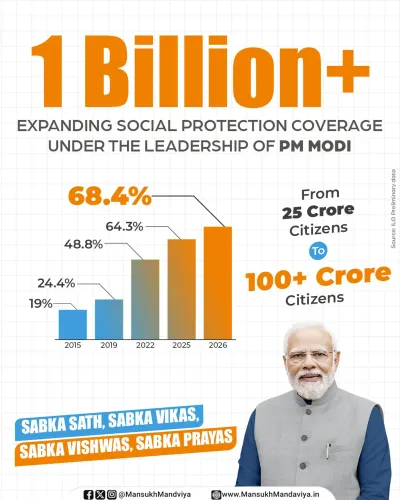
Mandaviya: Social security cover grew from 19 cr to 101 cr under Modi
Synopsis
Union Labour Minister Mansukh Mandaviya claims social security coverage in India has expanded fivefold — from 19 crore to 101 crore — under PM Modi, citing a decade of schemes like PM-SYM and the e-Shram portal targeting the informal workforce.
Key Takeaways
Union Labour Minister Mansukh Mandaviya stated on 30 July 2026 that social security coverage has grown from 19 crore to 101 crore under PM Modi.
The Pradhan Mantri Shram Yogi Maandhan (PM-SYM) scheme, launched in 2019 , extended pension coverage to unorganised workers with government co-contributions.
The e-Shram portal , launched in 2021 , created a national database to register and identify unorganised workers for benefit delivery.
Four consolidated labour codes passed between 2019 and 2020 are designed to provide portable social security benefits across sectors and states.
The specific figure of 101 crore and its underlying methodology have not been independently verified from established public records.
State-level implementation of the labour codes and future budget allocations for contribution subsidies remain key variables to watch.
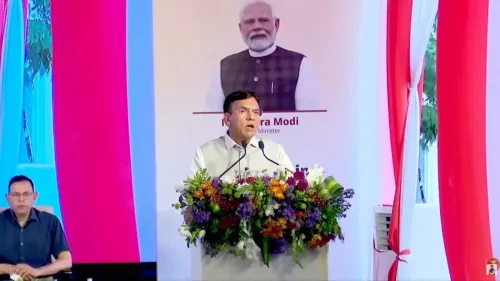
India's social security net has undergone what Union Labour and Sports Minister Mansukh Mandaviya describes as a fivefold expansion — from 19 crore to 101 crore beneficiaries — since Prime Minister Narendra Modi took office in 2014.
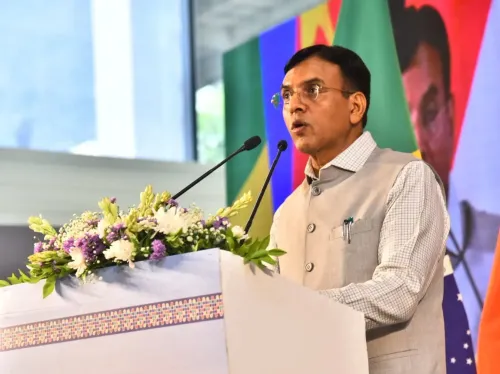
Posting on 30 July 2026, Mandaviya wrote: 'पीएम श्री @narendramodi जी के नेतृत्व में सोशल सिक्योरिटी का दायरा 19 करोड़ से बढ़कर हुआ 101 करोड़' — 'Under the leadership of PM Shri Narendra Modi, the scope of social security has grown from 19 crore to 101 crore.' The claim positions the Modi government's labour welfare record as one of the defining achievements of the past decade.
From formal payroll to the informal millions
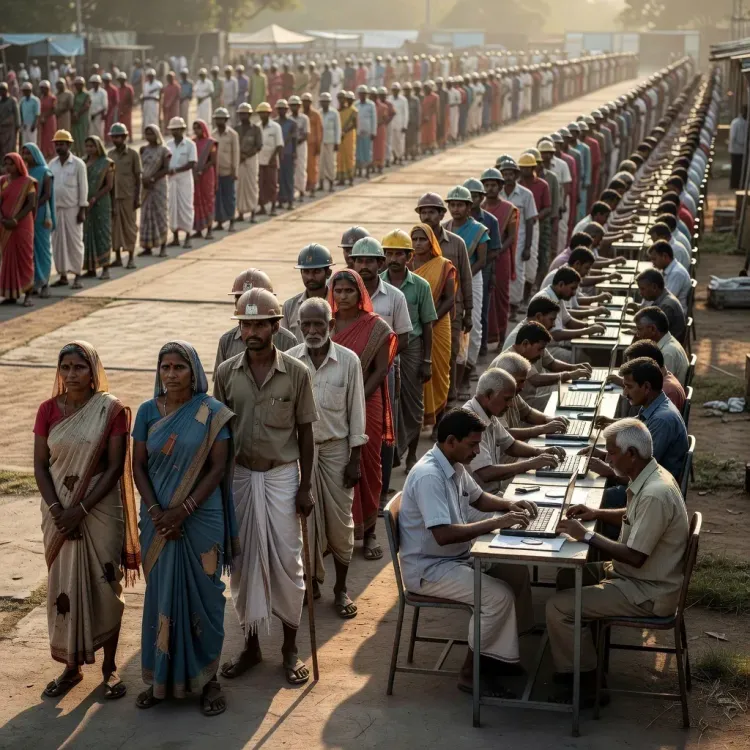
For decades, India's social security architecture — anchored by the Employees' Provident Fund Organisation (EPFO) and the Employees' State Insurance Corporation (ESIC) — largely served workers in organised, formal employment. The country's vast informal workforce, estimated at roughly 90 percent of all workers, sat outside that umbrella. The Modi government's stated strategy since 2014 has been to close that gap through digital registration and contributory schemes that follow the worker, not the employer. The Pradhan Mantri Shram Yogi Maandhan (PM-SYM) scheme, launched in 2019, was an early signal of that intent — offering a guaranteed monthly pension of ₹3,000 at age 60 to unorganised workers aged 18–40, with the government matching each worker's contribution. The same year saw the first of four consolidated labour codes passed by Parliament, folding dozens of legacy laws into a framework that, once implemented by states, is designed to extend portable social security benefits across sectors and state borders.The e-Shram portal and the push for worker visibility
The most consequential infrastructure piece may be the e-Shram portal, launched in 2021 as a national database for unorganised workers. By creating a universal identity for workers who previously had no formal record in any labour registry, the portal became the plumbing through which targeted welfare — from insurance to pension linkages — could theoretically reach construction workers, street vendors, domestic workers, and migrant labourers. Successive Union Budgets have continued to allocate resources toward expanding registrations and contribution subsidies under schemes linked to the portal. Mandaviya, as the minister overseeing both EPFO and ESIC alongside the broader labour ministry portfolio, has been the political face of this expansion push. His post frames the 101 crore figure as the cumulative result of that decade-long architecture — though the precise methodology and the exact combination of schemes aggregated into that headline number await official data confirmation. The real test, as labour policy watchers note, lies not in registration counts but in active, sustained coverage — whether enrolled workers actually receive benefits when they need them. State-level rollout of the four labour codes remains uneven, and contribution subsidy levels for schemes like PM-SYM will be a number to watch in the next Union Budget. A register of 101 crore is a headline. What happens next determines whether it becomes a legacy.Point of View
If substantiated, would represent one of the fastest expansions of social security coverage anywhere in the developing world, and the government clearly wants that framing to anchor its labour record ahead of any electoral cycle. The harder political question is whether coverage breadth translates into benefit depth — critics of the PM-SYM scheme have long pointed to low enrolment persistence and thin pension amounts. The minister's post signals confidence; the budget numbers and state code rollouts will tell the fuller story.
NationPress
30 Jul 2026
Frequently Asked Questions
What did Mansukh Mandaviya say about social security coverage in India?
Mandaviya stated on 30 July 2026 that social security coverage in India has grown from 19 crore to 101 crore beneficiaries under PM Narendra Modi's leadership since 2014.
What is the PM-SYM scheme for unorganised workers?
Pradhan Mantri Shram Yogi Maandhan (PM-SYM), launched in 2019, is a voluntary pension scheme for unorganised sector workers aged 18–40. The government matches the worker's monthly contribution, and enrolled workers receive a guaranteed pension of ₹3,000 per month after age 60.
What is the e-Shram portal and who can register on it?
The e-Shram portal, launched in 2021, is a national database for India's unorganised workers — including construction workers, domestic workers, street vendors, and migrant labourers. Registration gives workers a universal identity that can be used to access social security benefits.
Have India's four labour codes been implemented across all states?
The four labour codes were passed by Parliament between 2019 and 2020, but implementation depends on states framing their own rules. As of mid-2026, rollout remains uneven across states, which affects how quickly portable social security benefits reach workers.
Is the figure of 101 crore social security beneficiaries officially verified?
The figure of 101 crore has been cited by Labour Minister Mansukh Mandaviya, but the exact methodology — which schemes and databases are aggregated to arrive at this total — has not been independently confirmed from established public records.